“Mum, I already told you that!” She really is trying to remember when her daughter told her what she was doing at the weekend. But the information has vanished into the pressures of everyday life, with her thoughts entirely focused on work. It has been a race against time, accompanied by an inner voice constantly saying, “I just need to finish this one task, and then I can relax.” But as soon as one task is finished, another is knocking at the door, bringing its own deadline.
A bottle of red wine is opened, and their thoughts drift back once again to the time they lived in Australia, and to dreams of a life that involves more than working from eight to four. They talk late into the night, trying to work out how to live life to the fullest. They both know that one of the things that matters most is staying true to their values. They share a belief in living life now, in the idea that “to travel is to live”, and in never saying, “When I’m old and retired, I’ll…” Life is too short to keep putting things off. Tomorrow may be too late to follow a dream.
Surely there must be a way – but they have tried before. It suddenly hits her like a blow to the head: once again, she has ended up exactly where she promised herself she would never be again.
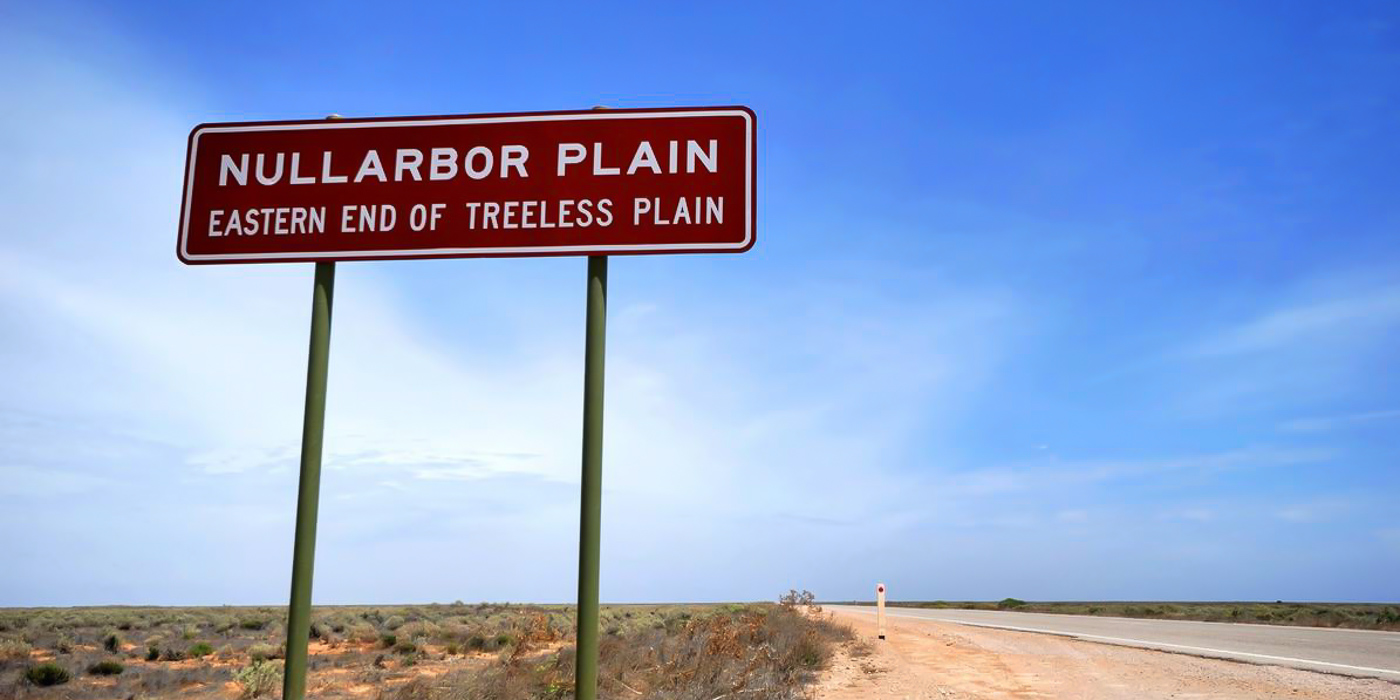
Driving across the Nullarbor in South Australia is said to be quite an experience. There is little but raw nature, and the seemingly endless journey demands courage and patience. They had set up camp for the night beside one of the many rather worn roadhouses. They knew what to expect from the journey around Australia that had begun in Sydney two months earlier. They knew it was definitely preferable to cook their own dinner. You can buy food at an Australian roadhouse, but you can be sure the flies have tasted it before you do. The barbecue, though, is always a gathering place where travellers exchange stories and experiences.
That evening, the whole family quickly struck up a conversation with some young men travelling from Melbourne to Perth. The atmosphere grew warmer and friendlier, a guitar came out, and they jammed around the campfire until late into the night. Perhaps it was meant to happen, because the decision to stay up late would prove life-changing.
Normally they would leave camp before eight in the morning, but this time they slept a little longer and postponed their departure by a couple of hours. Then they set off towards the Nullarbor, excited to discover for themselves what made this stretch of road so special.
They did not get far. At the next roadhouse they had to stop because the road was blocked. Cars, motorhomes, caravans and road trains crowded into the little roadhouse. The temperature rose, and everyone resigned themselves to drinking the pitch-black coffee that had been simmering in the machine since early morning. They were all waiting for answers. Why couldn’t they continue? Why had the only road ahead been closed?
Before long, the first reports came in. A large road train had crashed, taking several cars with it in a fatal accident. There were reports that an entire family was among those killed, and a profound silence descended on the little roadhouse. Everyone quietly thought of the relatives who would now have to receive such devastating news.
But it could have been them. If they had gone to bed early the previous evening and left camp at eight, as usual, they might have been caught in the accident themselves. In a split second, everything could have changed.
After a couple of hours, everyone was allowed to continue. They drove away cautiously. Of course, neither the road nor the Nullarbor itself was to blame, yet somehow the road now seemed more dangerous than before.
She sat lost in thought, watching the Nullarbor pass by. Someone who wasn’t paying attention might simply say, “Bush, bush, bush, grass,” as the scenery slipped past. But a more attentive traveller would notice how the landscape changes, with new shrubs and grasses appearing after every kilometre.
And suddenly, there it was. Completely unexpected, unlike anything they had seen before: a pure white horse standing beside the road. It was grazing, looking calmly at the passing motorists, as beautiful as an angel. They wondered where it could possibly have come from. There wasn’t a ranch for miles around. There was something very special about it. Perhaps it was the guardian angel that had been watching over them.
Life is only a nanosecond of eternity, and we are here for just a moment.
Every now and then, we become acutely aware of how vulnerable we are – when we lose someone close to us, or when life bares its teeth. Those are the moments that challenge us to stop and consider what we spend most of our time doing, and whether the balance is right.
The Decision
For many years, we have dreamed of returning to Australia, where we lived from 2007 to 2009. We often look back on those years as some of the best of our lives. Of course, everyday life still existed, with studies, assignment deadlines, client appointments and parent–teacher meetings, but somehow it all felt easier. Back then we learned to take things as they came, and “give it a go” became our mantra. I remember how often we had to pinch ourselves to remember that this was real, not a dream.
Our three-month journey around Australia, the experience on the Nullarbor and our two years in Fremantle all helped us understand what we value as a family and what matters most to us. We tried to hold on to those values when we returned to Denmark, but life soon accelerated to full speed again. Work once more took up far too much space, and earning money for a house, a car and a neatly trimmed hedge somehow became the driving force again.
The belief that “to travel is to live” was only truly put into practice during our annual holidays, when we returned to Australia whenever we could.
What if we could live differently, at a slightly slower pace? What if life didn’t revolve around just finishing one more task or ticking off another item on the to-do list? What if “to travel is to live” and “seize the day” could actually become a full-time occupation?
We have had this conversation many, many times. Over the years of our marriage, we have each developed our own role. I come up with the wild ideas, and Christian tries to work out what is financially realistic. He is remarkably good at bending mathematical formulas to make the impossible seem possible. But just as often, we have ended up looking thoroughly disappointed and climbed back onto the treadmill.
Sarah has grown used to her crazy parents, who one moment suggest buying a bed and breakfast and the next a horse farm in Australia. She has developed a special ability to let an idea sit for a while and see whether it actually develops before deciding what she thinks of it.
One thing is certain: all three of us have the travel bug. We share an enormous passion for travelling, meeting new cultures, seeing unusual animals, and observing and challenging Mother Nature. As if sent from heaven, the idea of exploring Southeast Asia emerged, and almost at the same time a door unexpectedly opened to the possibility of immigrating to Australia.
Deciding to leave for fourteen months was the easiest decision in the world. Some people will say we are brave. Others will say we are running away from something, or someone, and still others that we are trying to prove something. But none of those descriptions reflects how we see it. We are simply curious about life and want to experience as much of it as we can. Ultimately, it is the experiences we share that remain after we are gone, not the material possessions we have spent a lifetime collecting.
We bought one-way tickets to Sri Lanka, applied for three-month visas, handed in a resignation and made a long to-do list for closing down one chapter of our lives and beginning another. We searched the internet for advice, experiences and inspiration from others. Whole new perspectives opened up, and we discovered expressions such as “slow living”, “long-term travellers”, “professional hobo”, “freedom of choice”, “sharing economy”, “housesitting”, “Workaway” and “voluntourism”. We read about others who had taken the leap into an entirely new life, including the authors of “Just Do It”, an American couple who sold everything and travelled to Cambodia to volunteer for a couple of years. Five or six years later, they were still travelling, making use of housesitting opportunities along the way, including in Europe.
Through this website and blog, we hope to inspire others to live life to the fullest. I am not saying everyone has to travel around the world to do that. But I do believe it is important that we occasionally stop, take stock and ask ourselves what matters most, what takes up the most space in our lives, and whether there is a healthy balance.
On our journey, we hope to explore alternative ways of living and create a different kind of life. We are choosing to step off the treadmill for a while, to make room for reflection and seize the opportunities that appear along the way. Then we will see where the wind takes us.