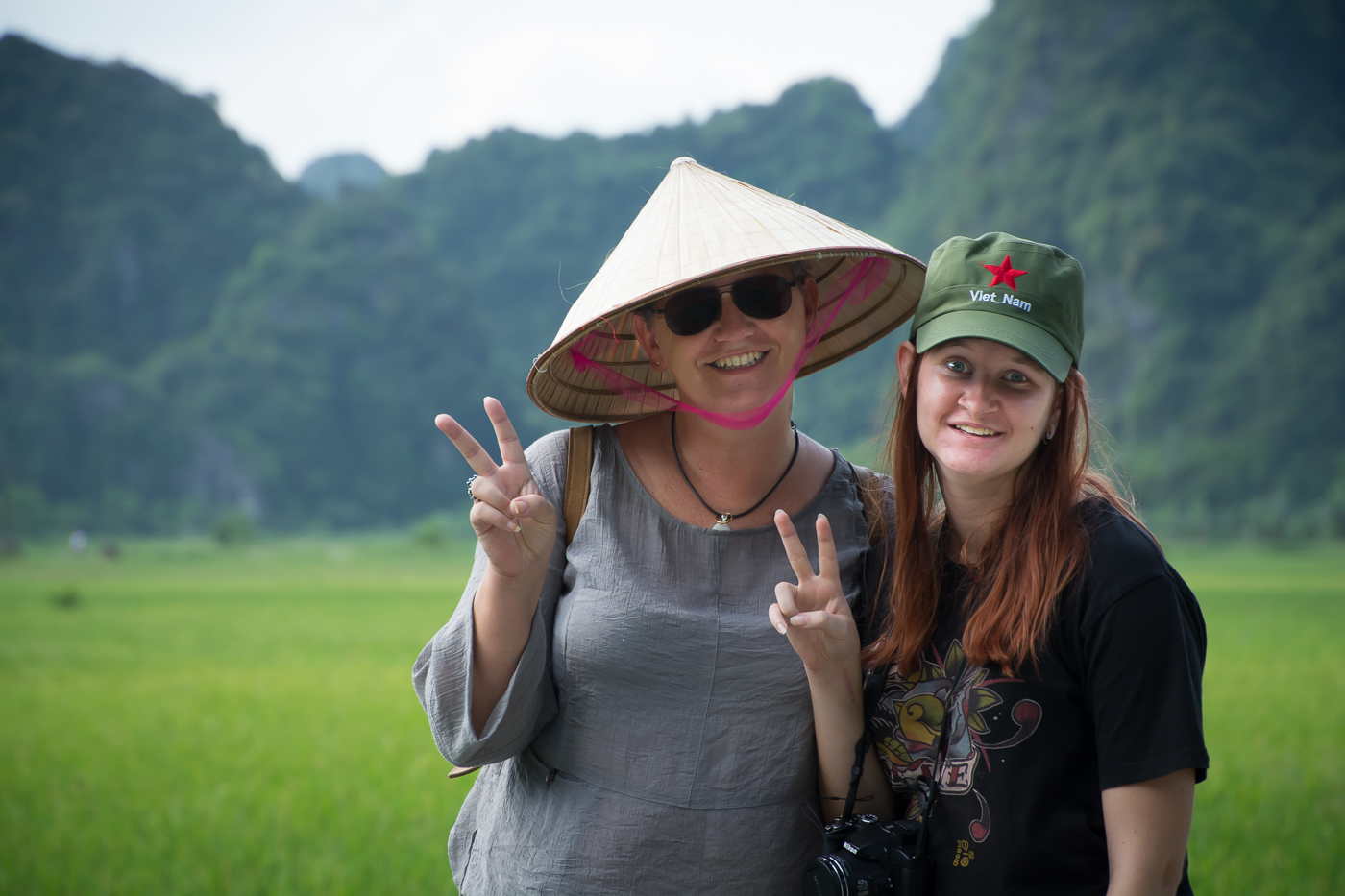
A sense of rootlessness forms the backdrop to our journey around Southeast Asia. We left Denmark five months ago, hoping to find inspiration for a different way of living. We’re looking for a direction and a purpose beyond simply filling our backpacks with experiences. Sometimes we lose our footing and become uncertain about where we’re heading. But that’s precisely the challenge we’ve set ourselves: to dare to lose our footing for a while, to challenge our understanding, embrace life and perhaps change direction.
Not a day goes by without us talking about what we’re going to do and where we’re heading. Our earlier saying, ‘We travel far to be close,’ is becoming more of a statement than a quotation. We’re trying different things and learning more about ourselves: what we’d like more of in the future, and what definitely shouldn’t be part of it.
After almost two months in the big city, we’ve realised how much nature means to us, and how much we miss being able to step straight outside into a green space.
We’re exploring and discussing several possible futures. We’re turning over every stone along the way, while filling our backpacks with encounters with wonderful people who want to help us find our way.
In Ho Chi Minh City we meet a Vietnamese woman who is a lawyer. She comes across as a strong woman and has lived in Paris for several years. Determined to improve the Vietnam she left behind, she returned after some years and started her own law firm, specialising in business law. We meet her just as she is launching an entirely new project. She wants to establish a school with a stronger focus on the individual, cooperative learning and nature. She proudly shows us the school, a four-storey building with a large schoolyard.
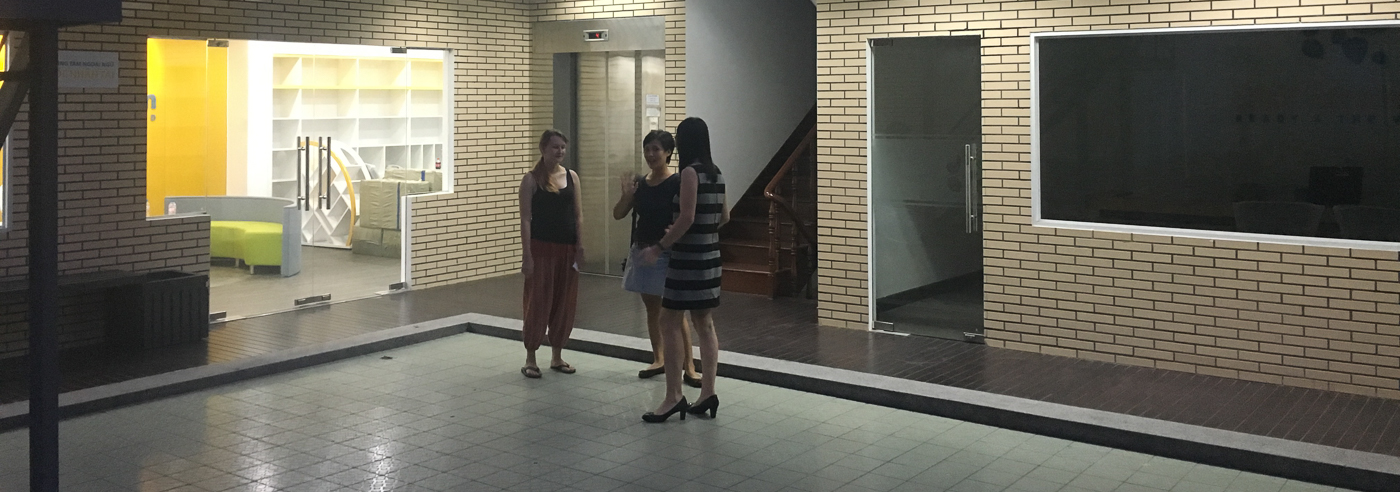
It’s an after-school school, you might say — an after-school programme, except that free time isn’t on the timetable. Vietnamese parents are very ambitious on their children’s behalf, and they also work very long hours. So free time is generally precious. Children first attend ordinary school from 8 a.m. until 3 p.m. Then they’re sent to private ‘after-school school’ from 4 p.m. until 7.30 p.m. Some also go to extra specialist lessons, such as piano or English. You could argue that some Danish children also spend the whole day in childcare, from early morning until late evening. The big difference, though, is that Vietnamese children are literally sitting at their school desks all day, and learning through play is certainly not a priority.
After a couple of meetings with the lawyer, it becomes clear how all three of us can contribute to her project. Christian will teach them how to incorporate play and nature into their curriculum. Sarah will design a new logo for the school, create a visual identity, paint a mural on a wall in the playground and involve the children in the painting project. I’ll contribute to business development and organisational development.
It’s a project that, in different ways, contributes to each of our own directions. Sarah wants to study for a Bachelor of Visual Arts. To gain admission, she’ll need to present a portfolio of work and projects she’s created or taken part in. During our travels she’s gathering her experiences in her online portfolio at revellation.gribdagen.dk.
With great precision and care, she creates a new logo for the school that will show it is a new and innovative school. She also gives a great deal of thought to how she can involve the children in the playground painting project.

Christian begins studying curricula and getting an overview of what’s possible. He wants to create activities in which children learn mathematics through play in the playground. The biggest challenge, though, is that on some days it’s difficult for the children to be outside when the temperature climbs towards 35 degrees. So his creativity is really being put to the test.
I begin getting an insight into the organisation and the challenges she’s facing.
The project is ready to be carried out in June. We’ll all contribute, and our payment will be ‘free’ accommodation and a little towards Sarah’s education fund. A small ‘Give it a go global’ family project.
Work has always been the main theme of our journey through Vietnam. There could be opportunities here for all of us, and particularly for me in international education. Both Danish and Australian educational institutions offer all or parts of their programmes here. Some have established their own campuses and have been very successful in contributing to Vietnam’s development.
We travelled to Hanoi on 25 April 2016. An assignment was waiting for me at the Danish embassy: a project to bring Danish expertise to the question of how educational institutions, businesses and government can work together to develop practice-oriented education. An incredibly exciting project, and one that suited me perfectly.
Our good friend, the lawyer from Ho Chi Minh City, quickly arranges for us to stay at a hotel in a safe neighbourhood with a good internet connection, so she can keep in touch with us about the project. That hotel room becomes our home for three weeks. Some people might say, ‘Wow, it must be wonderful to live in a hotel for so long.’ But sharing a small room between three people, with no window you can open and the same breakfast every day, isn’t always bliss. Still, it was free accommodation for three weeks, and that means the world to our carefully planned budget.
An everyday routine gradually creeps in. We all have tasks to complete, and time slips by. For a moment, we have found our footing — not because we want to stay in Vietnam, but because daily life gives us a framework.
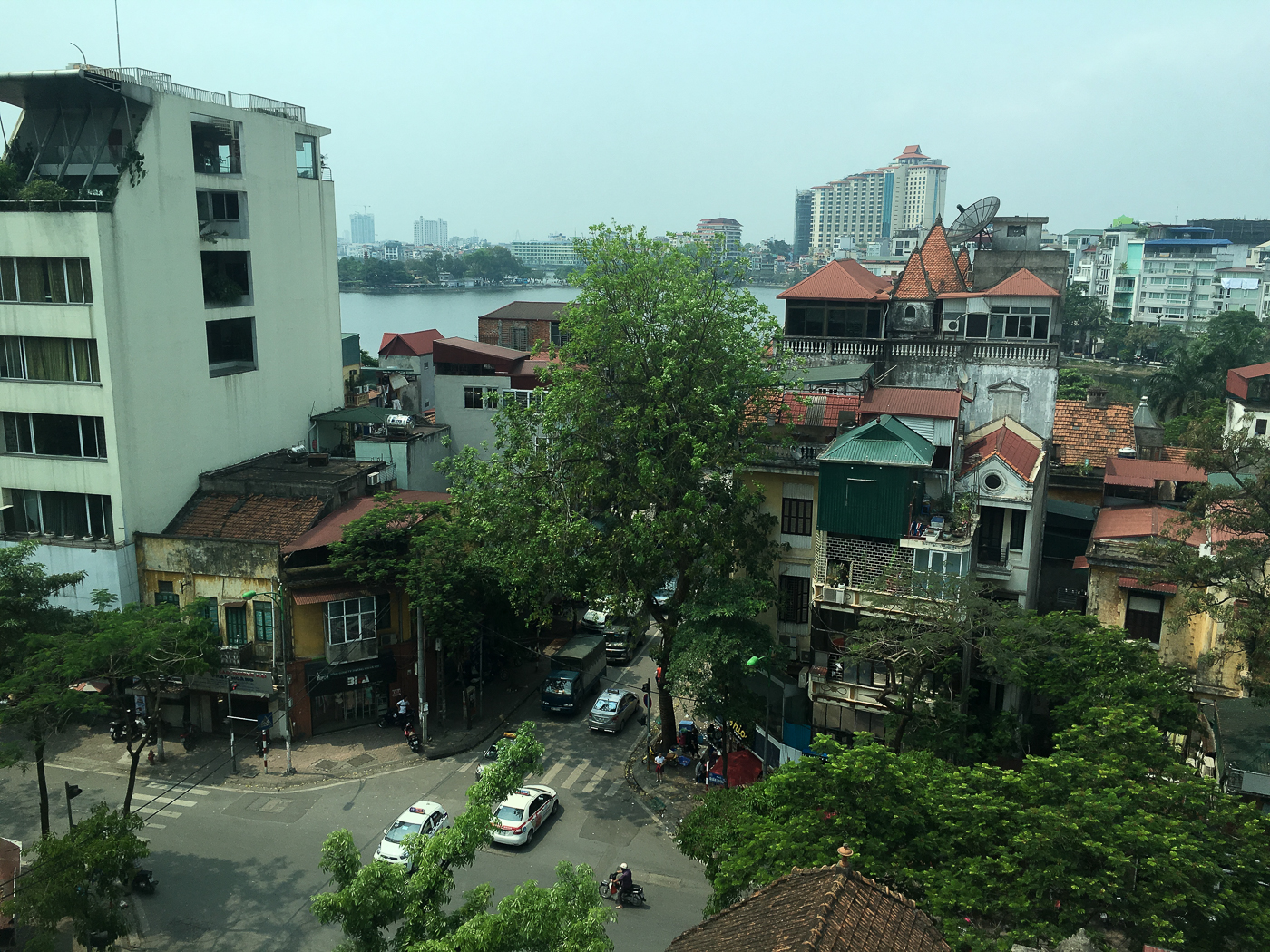
Hanoi is a big city like so many others, and yet it isn’t. The streets here are wider than in Ho Chi Minh City. The streets had to accommodate wide military vehicles. From here, the country’s communications are controlled with a firm hand. The government reaches into every corner of the city with its messages, even if you don’t read a newspaper or listen to the radio. Large loudspeakers stand on street corners, broadcasting government propaganda every morning. Personally, I think I’d prefer the sound of Buddhist chanting in the morning to a Vietnamese woman talking about politics.
From here, the government controls the flow of news to the population, and access to certain websites is simply blocked. BBC News is off limits online. Strangely enough, access to the Danish Accreditation Institution is blocked too. I can’t quite understand why Vietnam isn’t allowed to know anything about the quality of Danish education.
The houses stand close together, with narrow paths between them. Here and there, enormous high-rises shoot up among the little houses with tin roofs. In the Old Quarter, an absolute must for any visitor, the streets are organised according to what is sold. There are streets of small shops selling clothes, plastic toys, kitchen equipment, trips and much more. There’s something for every taste; you just have to work out the system.
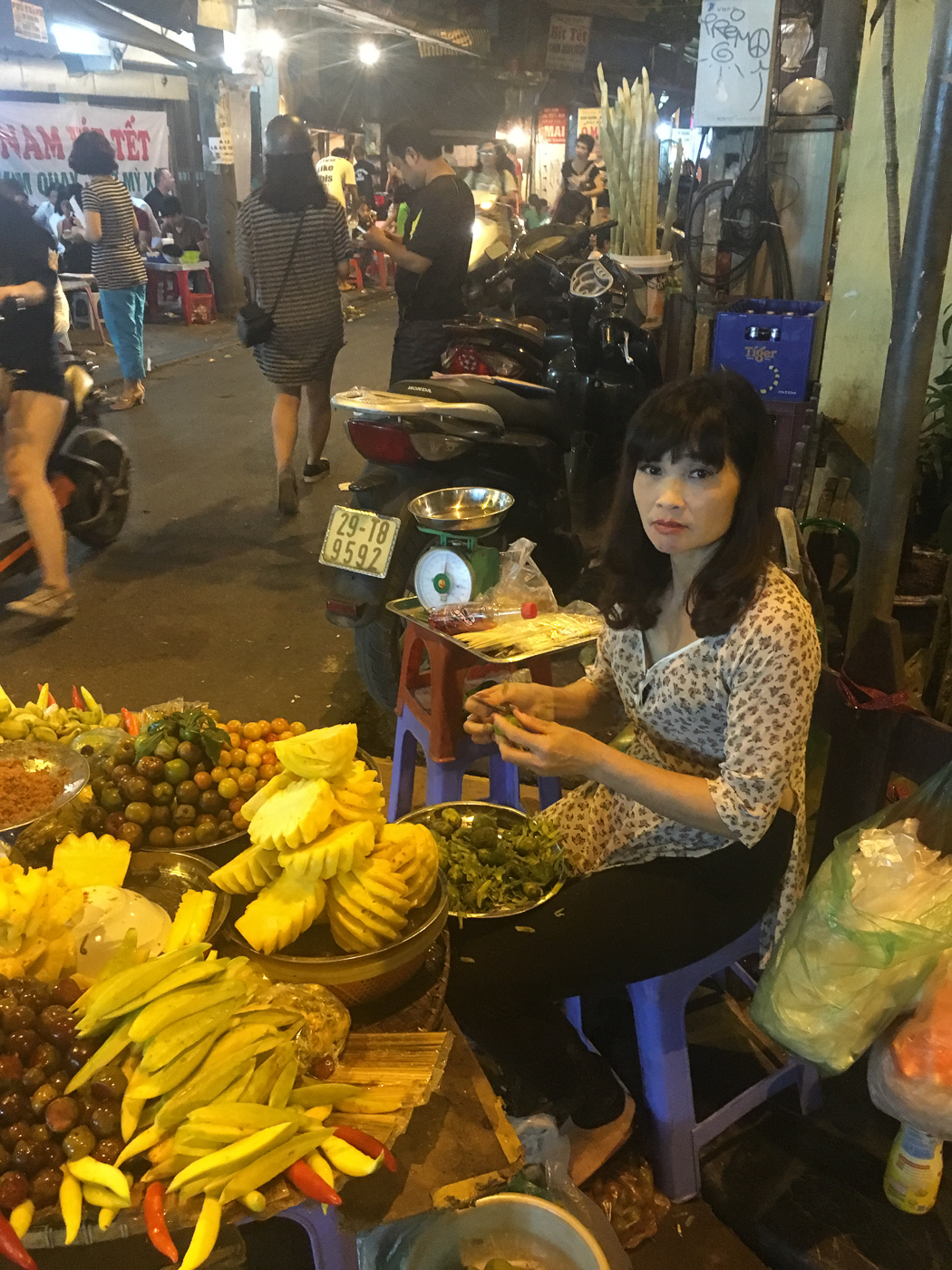
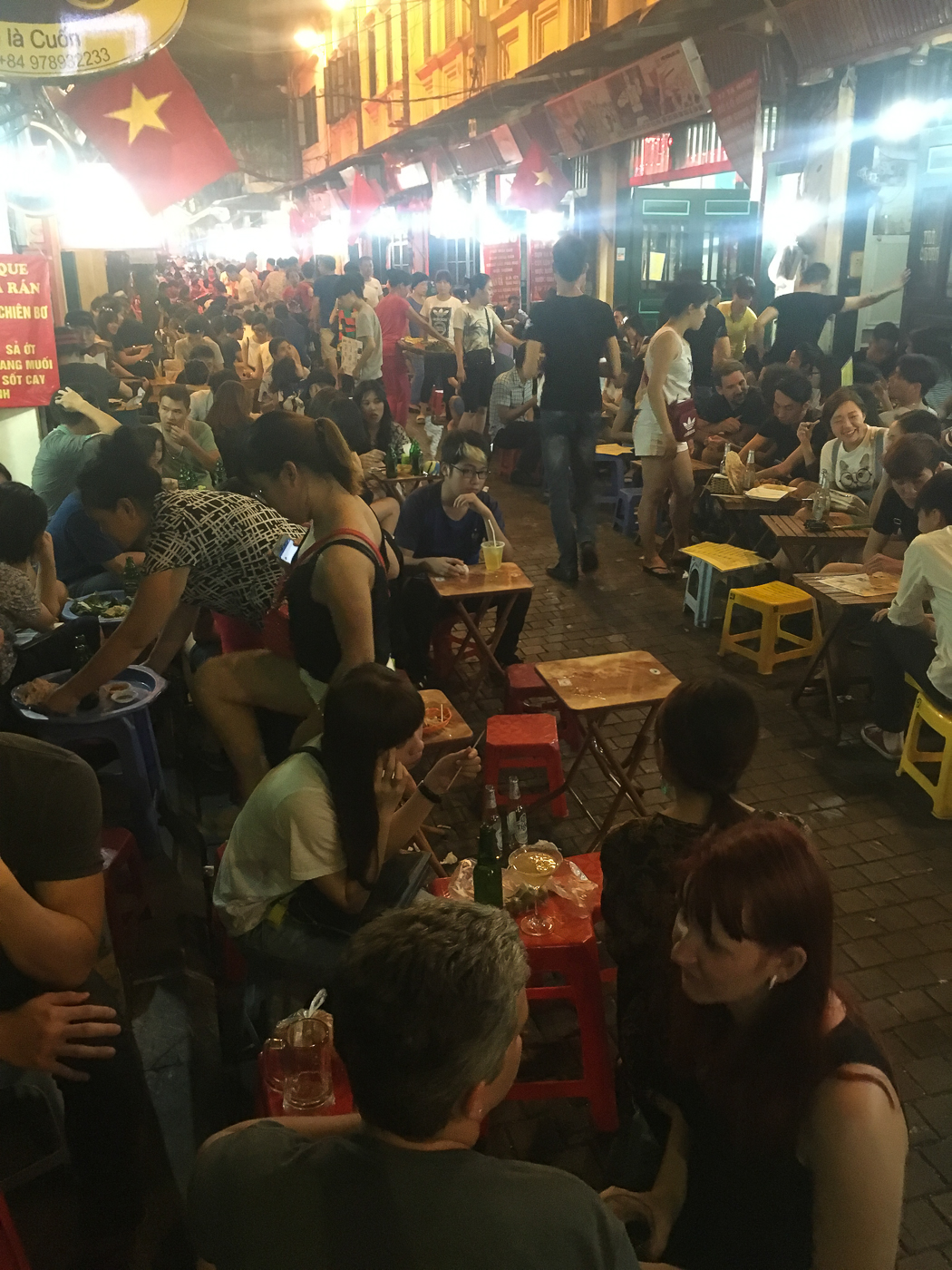
But the strongest impression of all is Hanoi’s street food. At mealtimes, little street restaurants quickly appear on the pavements, with tiny plastic chairs and tables. You can buy hot soups, grilled chicken legs, spring rolls, grilled tofu and all sorts of other interesting things. You have to find your favourites. We’ve certainly fallen in love with our little local street restaurant, which serves fish soup with small meatballs, spring rolls and heaps of salad and herbs. You can never have too many fresh herbs in Hanoi. They taste fantastic, and they’re always served in generous quantities.
Hoan Kiem is the lake at the heart of Hanoi. A broad walking path all the way around it provides a setting for the day’s exercise. Dance music plays from little radios, and people invite one another to dance. One group practises ballroom dancing. If you’re up early, you can also watch the locals doing tai chi. You may meet young students who would love to talk with you to practise their English. There are also people selling little pop-up cards, drinks, fruit and snacks. In the northern corner of the lake is a small temple. A beautiful red footbridge takes you safely across the water to the little island where Ngoc Son Temple stands. From there you can enjoy the lovely view across Hoan Kiem Lake.
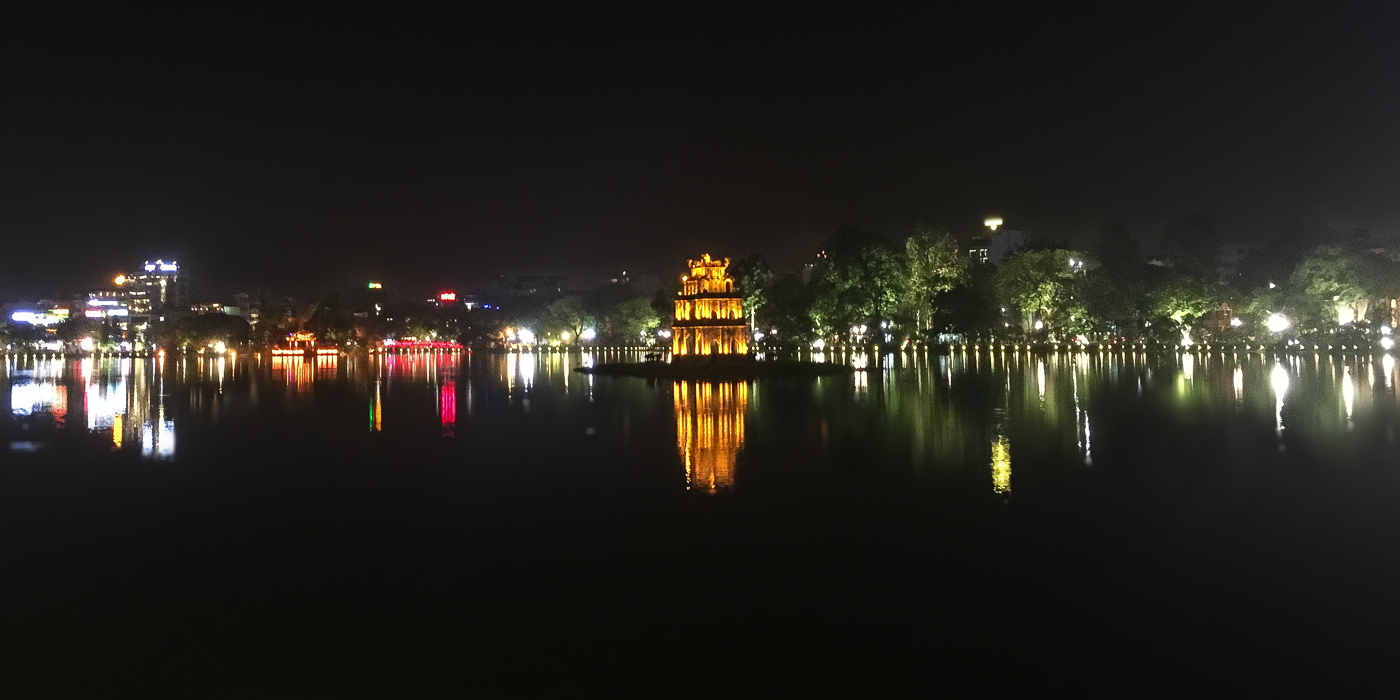
Hoan Kiem Lake is a beautiful oasis, a little breathing space in the bustle of the big city. It’s also always a good starting point if you want to explore the city’s restaurants and cafés.
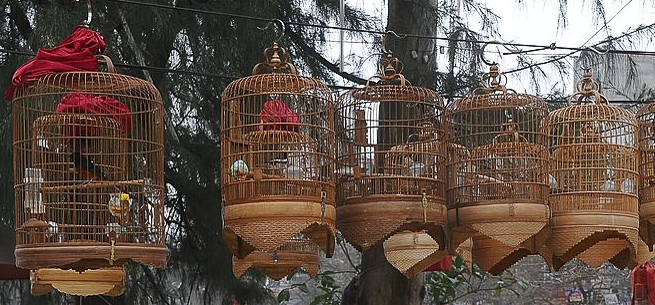
The loudest sound in Hanoi is the honking of cars and motorcycles, but every now and then you hear the most beautiful birdsong. You look up curiously to discover which bird has such a lovely singing voice. Yet it comes as a surprise every time, because the birds aren’t up in the trees; they’re in little cages hanging outside the small shops. Generally speaking, we haven’t encountered much birdlife here in Vietnam. It’s a little unsettling to be somewhere without even crows or pigeons.
But when we walk down to the park by Ho Chi Minh’s Mausoleum, where Ho Chi Minh is buried, our conversation is drowned out by a powerful buzzing sound. It almost sounds like an enormous electrical appliance humming away. It’s huge groups of cicadas sitting in the treetops. It’s as though they’ve been given their moment in the spotlight and are all competing to shout the loudest.
The humidity is high, and temperatures stay around 25 to 35 degrees. Sometimes it cools down a little in the evening, and a small breeze is very welcome. The heavy heat mixes with the smells of Hanoi. One moment you’re met by the aroma of food being prepared at a street kitchen; the next, by the sharp smell of sewage.
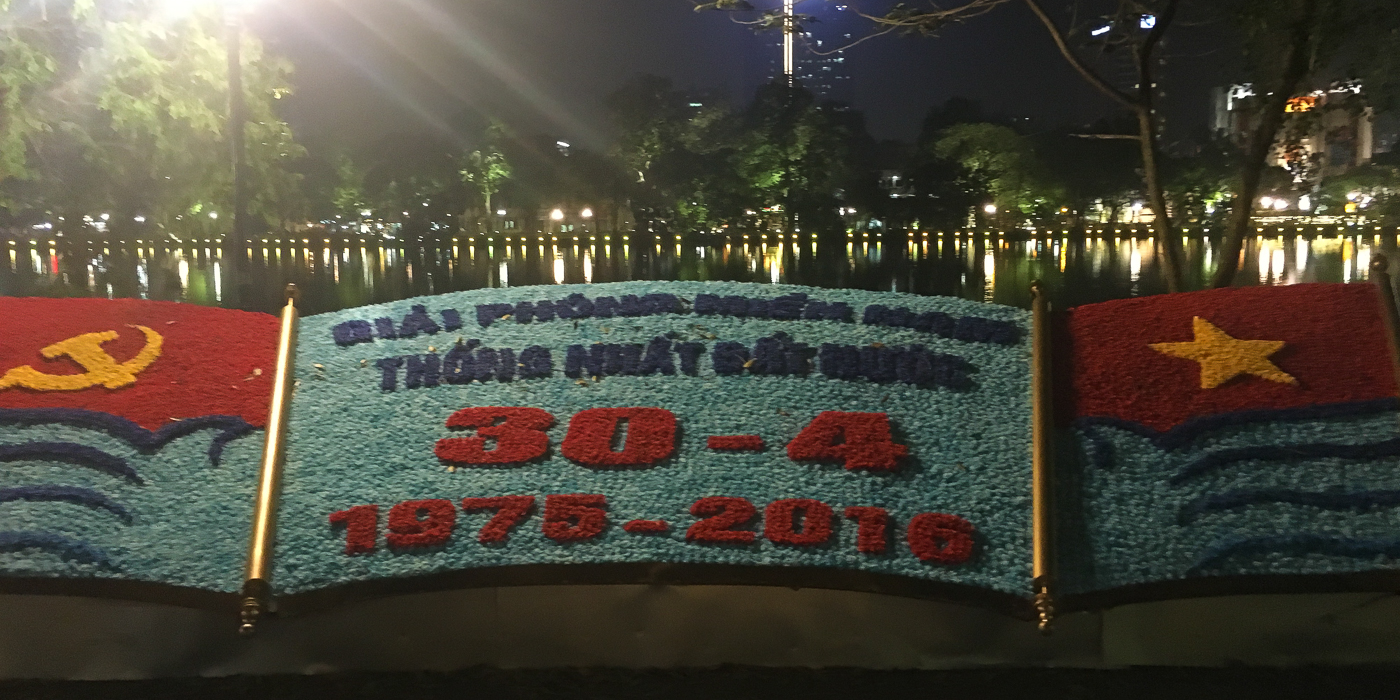
Hanoi offers a multitude of impressions, and you sense a certain pride among the local people. Once again, doors open for us, and our good friend from Ho Chi Minh City invites us to dinner with her parents. She’s originally from Hanoi and is now visiting them. It’s a national holiday, and Vietnam has a long weekend. The occasion is the anniversary of North Vietnam’s victory in the war. Of course, opinions differ on whether this is really a day to celebrate, but one thing becomes clear when we talk with our good friends: it’s an important day for the government, and they fear unrest from several directions.
Our friends tell us about the terrible disaster along Vietnam’s central coast. The water has become polluted, and millions of fish have died. As well as having an enormous impact on nature, it has had a devastating effect on the local people in the area. They make their living from what they can catch in the sea, and if the water is poisoned, their catch cannot be sold.
It is unclear whether the cause is a toxic discharge from a large company in the area, or yellow algae and changes in the climate. The government, naturally, claims the latter. But people are uncertain and worried. Some feel the government isn’t doing enough, and that something is being swept under the carpet.
That makes this national holiday particularly significant for the government. Access to Facebook and other news sites is shut down to prevent unrest and political demonstrations.
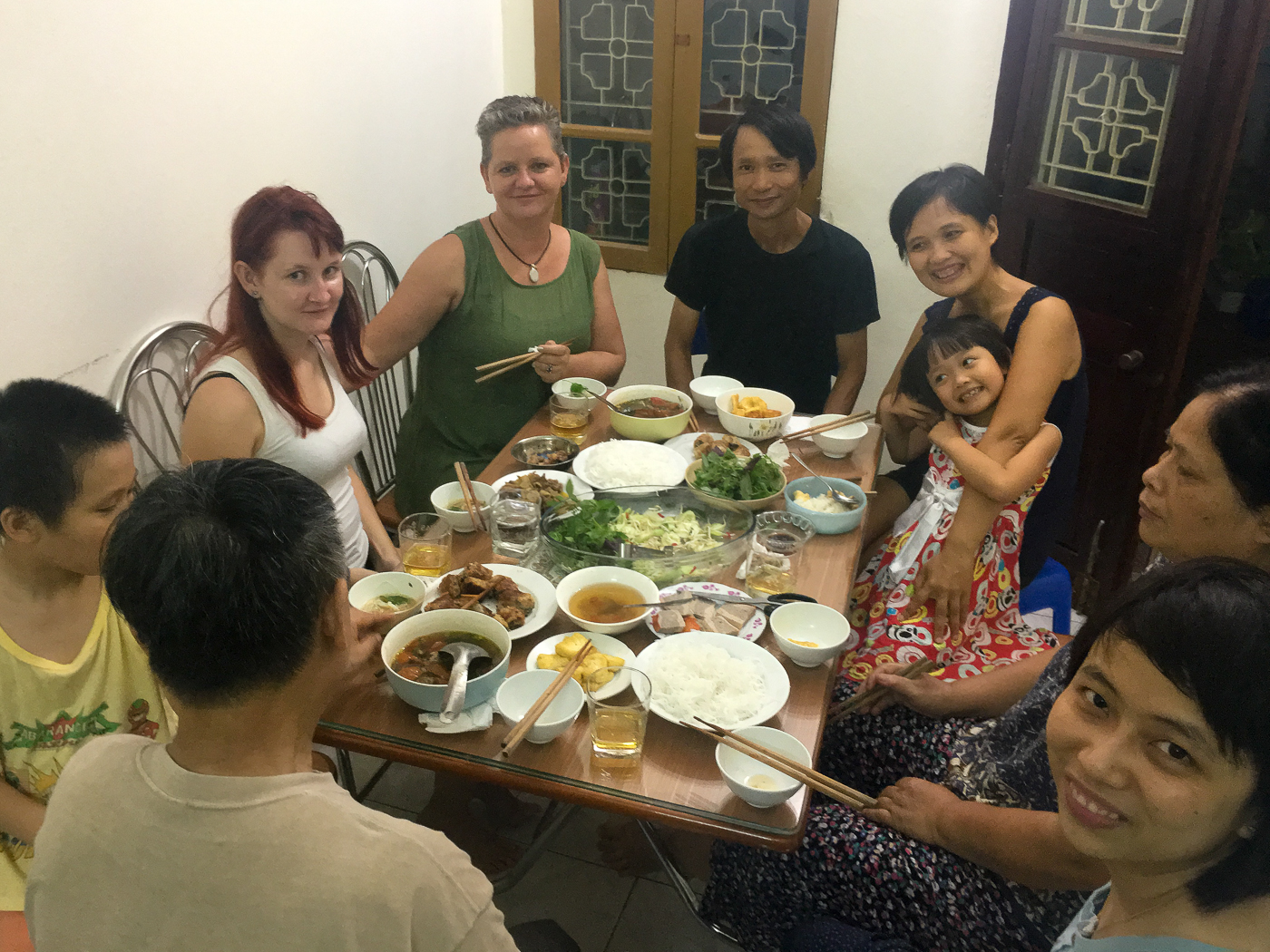
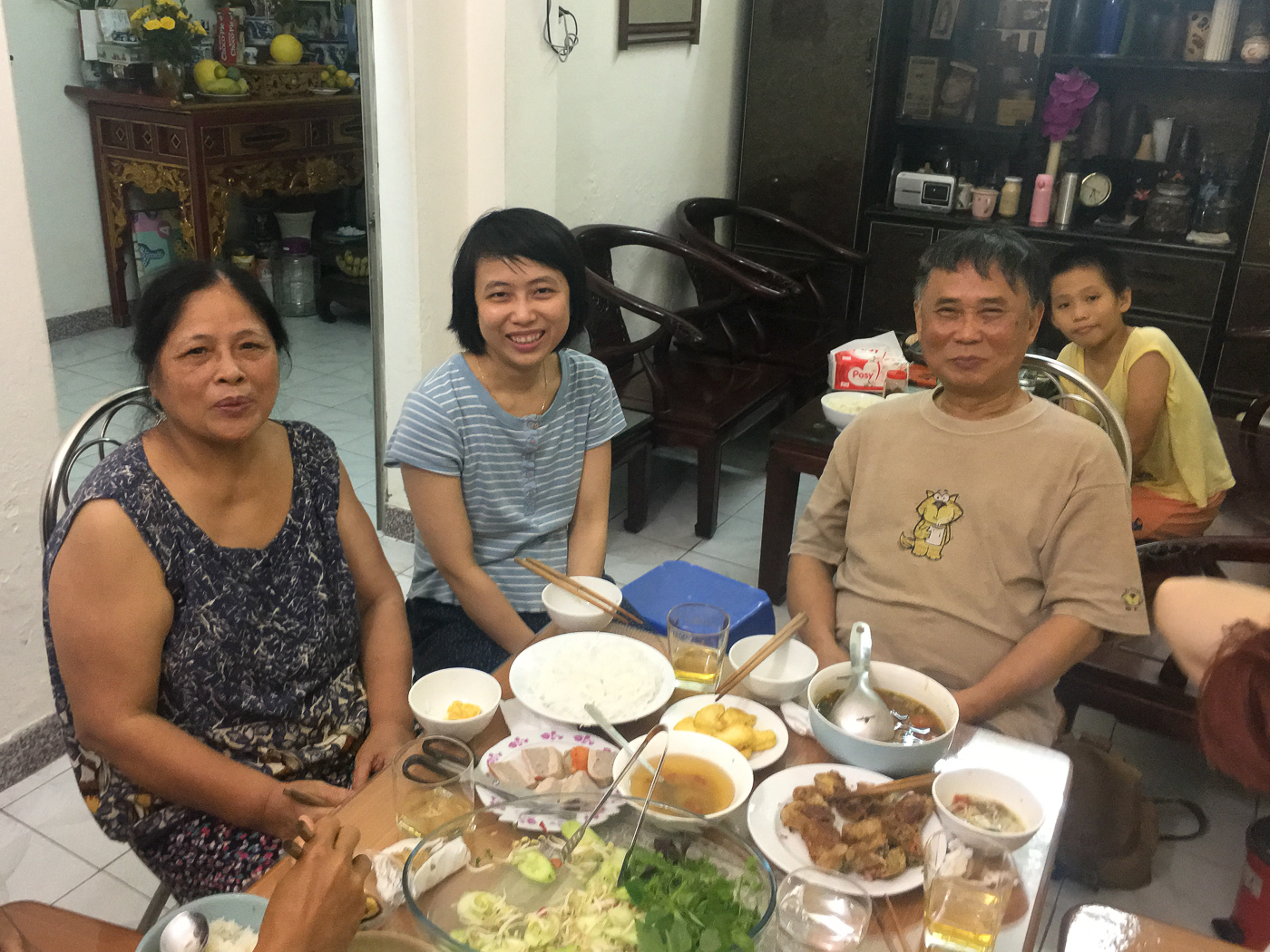
But we have a lovely evening with our friends, who serve us a home-cooked meal. She tells us that here in northern Vietnam, it is considered bad manners — very rude, in fact — not to eat all the food put on the table. Her mother has spent the whole day in the kitchen, and the table is overflowing with food, as though we’d been invited to my dear aunt’s house. We do our best to eat the beautifully prepared dishes, and late in the evening we waddle out to a taxi and head back to our hotel room.
A daily routine has taken shape, and we’re invited to the home of a good colleague of mine from the embassy and his lovely wife. They’ve lived in Vietnam for almost a year, and we get a glimpse of what life is like for a Danish expat here. They’ve arranged tickets for us to a very special embassy event. The Sri Lankan embassy has invited guests to a cultural evening at the local theatre. The performance is opened by Sri Lanka’s female ambassador, who speaks proudly about her country — a country with four different climates, magnificent natural scenery and a society that is developing. She shows photographs of Sri Lanka, while talented dancers perform traditional Sri Lankan dances. For a moment, we’re transported back to our own experiences in Sri Lanka, and we realise just how deeply the country has touched our hearts. We all agree that one day we’ll return to this beautiful country.
But the news also brings terrible reports. Sri Lanka has once again been struck by a natural disaster. Torrential rain has caused massive mudslides that have buried several villages in central Sri Lanka. Reports come in of deaths and of several thousand people forced to leave their homes. Over the following day, we’re all anxious, but we manage to get in touch with all our friends in Sri Lanka, and thankfully everyone is safe.
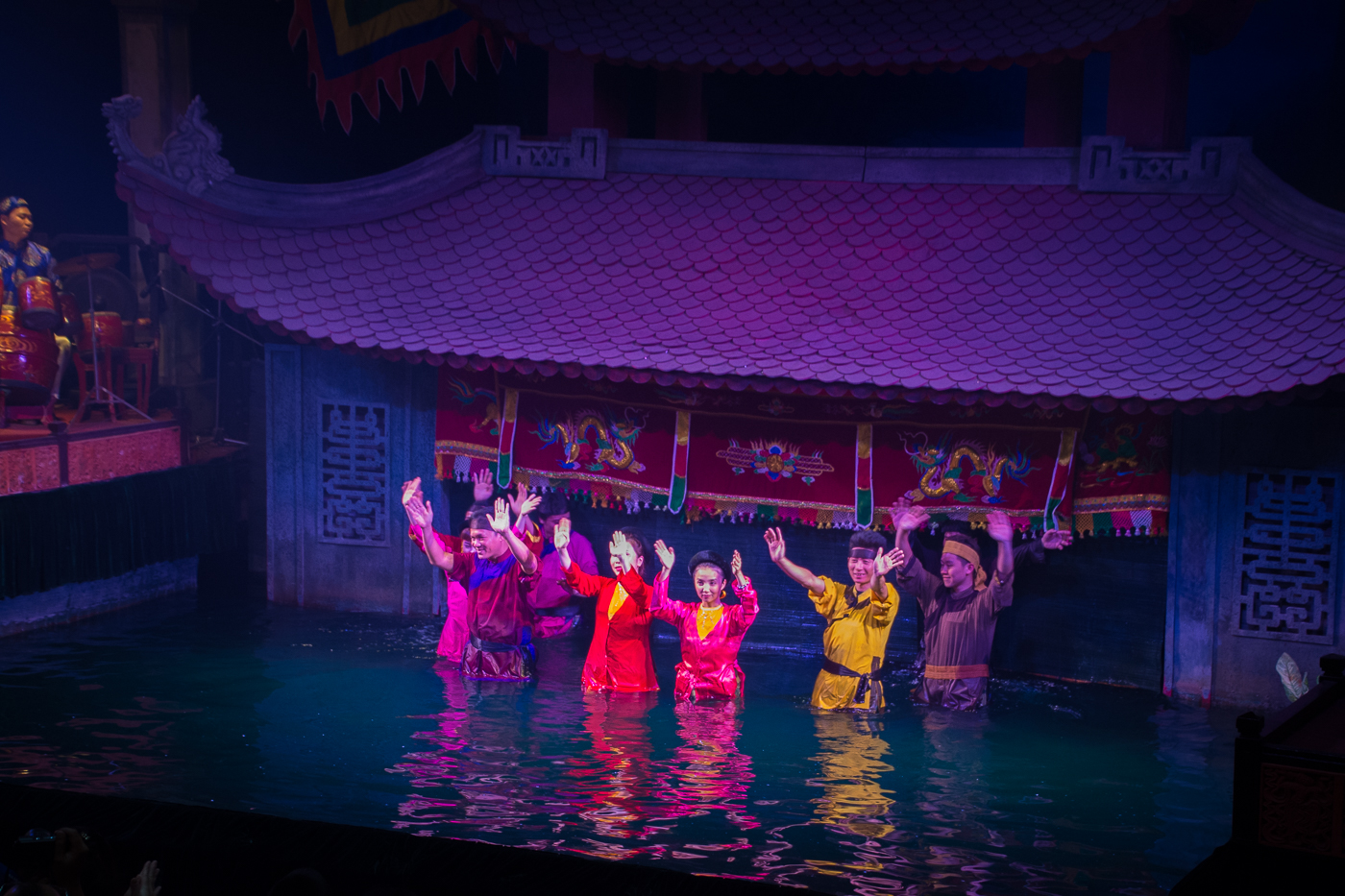
We also use our free time in Hanoi to see some of the must-visit attractions. We’d heard that the water puppet theatre was an absolute must. Near Hoan Kiem Lake, in its northeastern corner, there’s a theatre that puts on traditional water puppet performances several times a day. It’s a very special experience, telling stories about rural life, Vietnamese mythology and the country’s history.
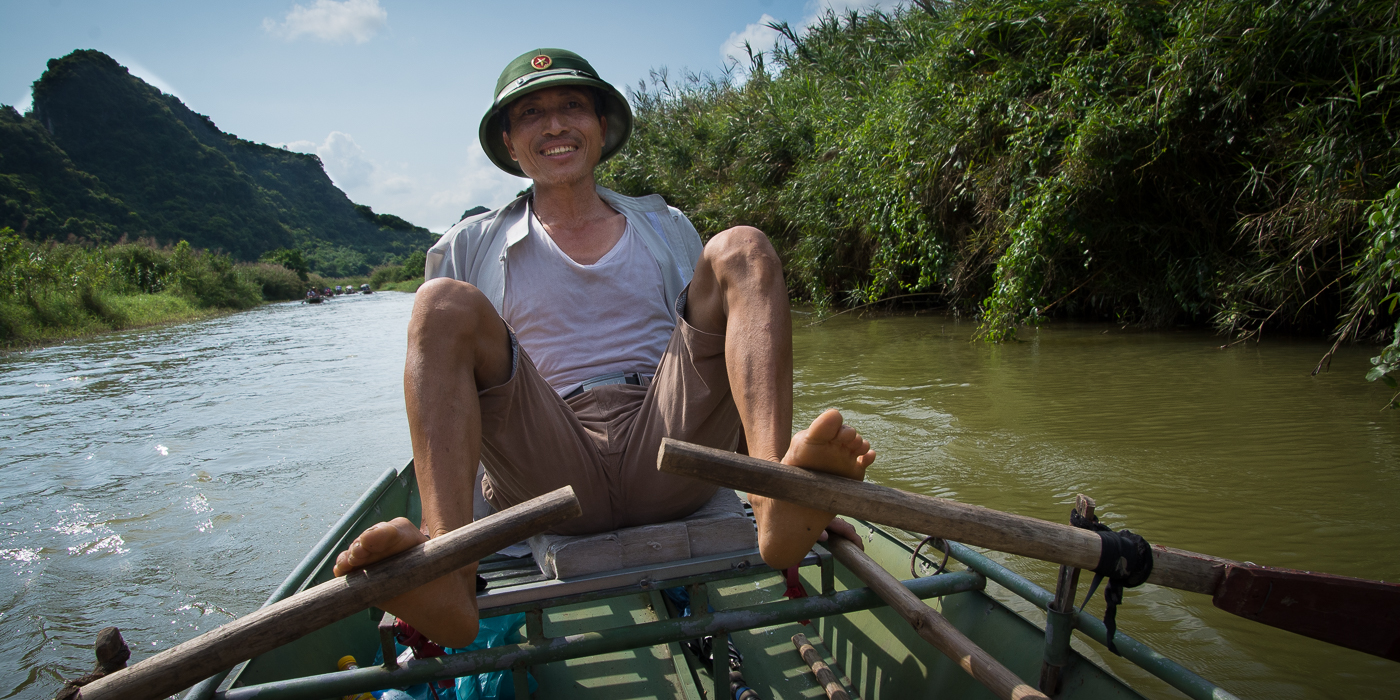
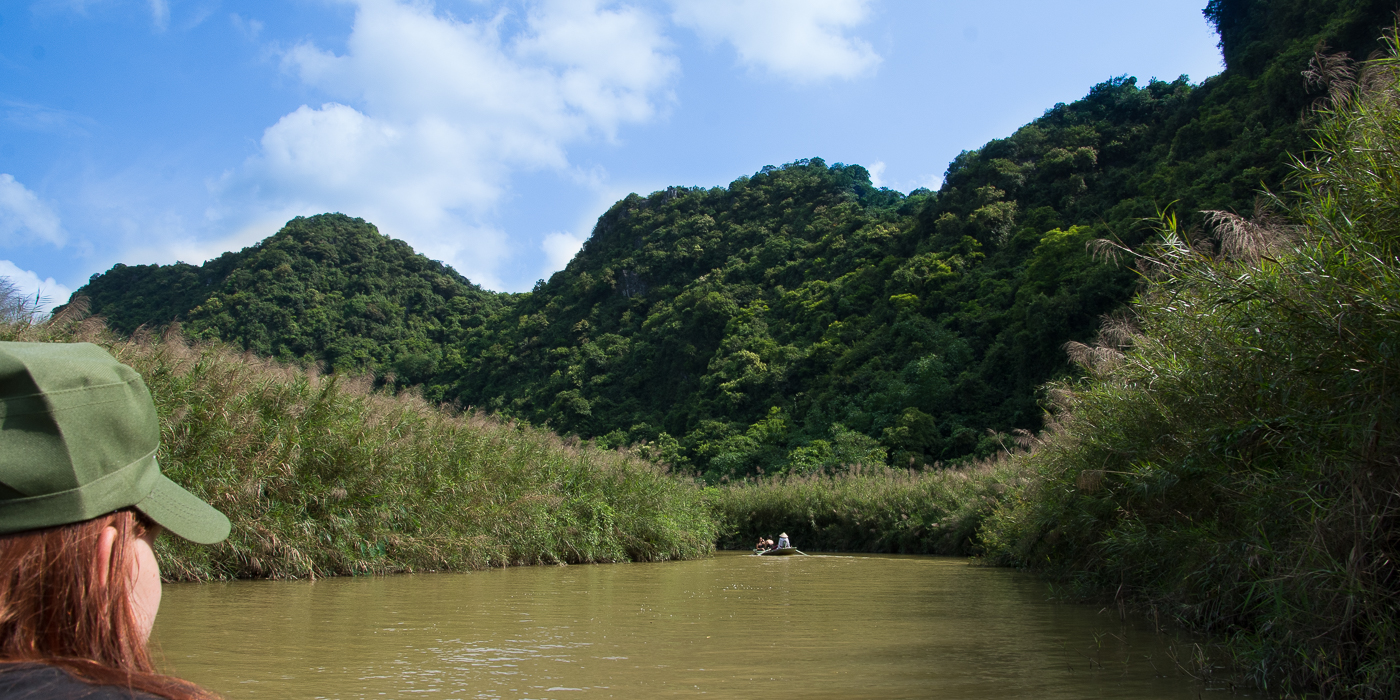
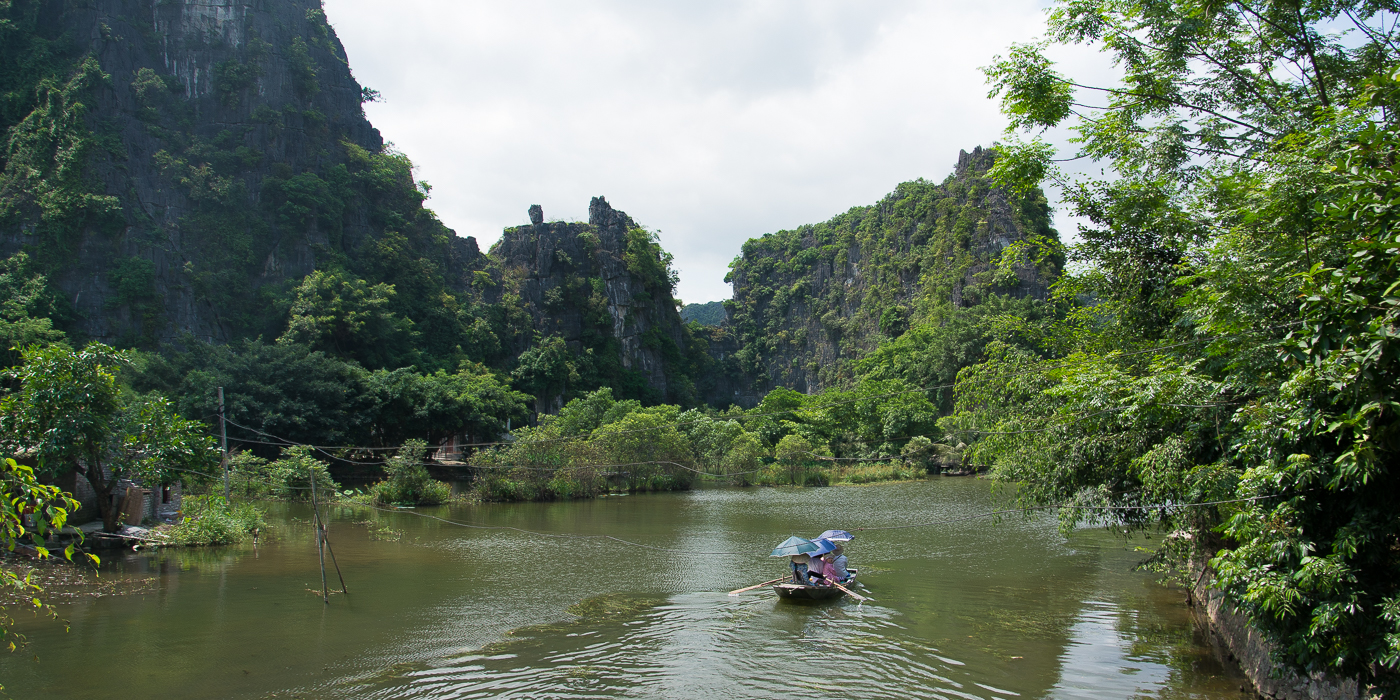
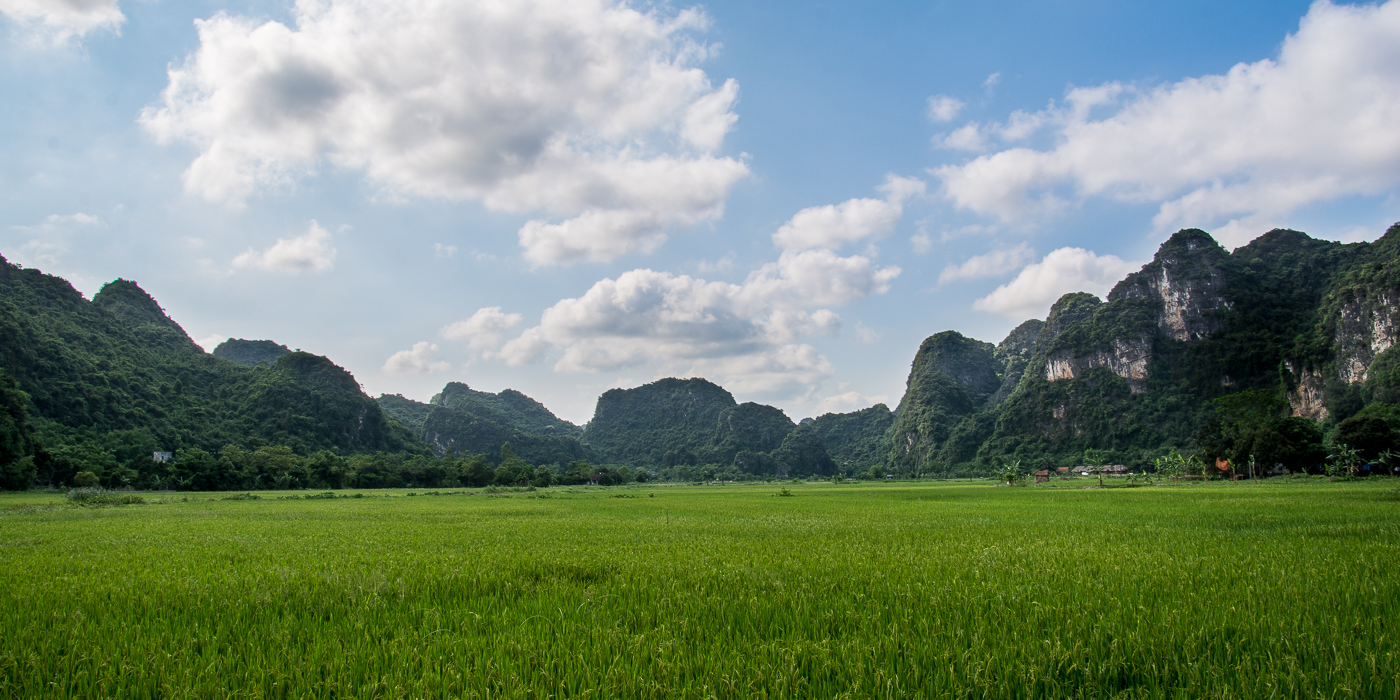
Eager to escape the city’s traffic, noise and bustle for a while, we book a day trip to Ninh Binh, Hoa Lu and Tam Coc — a three-hour bus journey from Hanoi. The area is a little like Halong Bay, only inland. Here, too, towering limestone cliffs are covered in dense forest. A small river winds between the mountains. On a boat trip with one of the locals, who rows with their feet, we travel along the river, pass through three caves and enjoy Mother Nature’s painting. Suddenly, we realise how much we’ve missed nature and the blue sky.
It was an absolutely perfect day trip from Hanoi, and one we’d definitely recommend.
For a moment, time stands still, and the solid ground beneath our feet — our everyday routine — disappears. We learn that our school project in Ho Chi Minh City has been cancelled. Our lawyer friend has fallen out with her business partner, and the entire project has been put on hold indefinitely. For a long time, we’d enjoyed knowing there was a clear plan ahead: we would go to Ho Chi Minh City in June to work on and contribute to an exciting school project. That was quite a blow. What were we going to do now? Once again, we have to shake ourselves, look at everything from a new angle and rethink our plans. It’s a good thing our little family is so adaptable.
My assignment at the embassy has come to an end, and we no longer have any reason to stay in our hotel room in Hanoi. We book a five-day trip to Sapa, leaving that very week.
We leave Hanoi at 6:30 in the morning. The trip we’ve booked was cheap, and we hadn’t exactly been given all the details. Providing tourists with service and information isn’t always a top priority here. You could say there’s occasionally room for improvement when a group of tourists is standing on the pavement, not quite sure whether a bus is coming to pick them up.
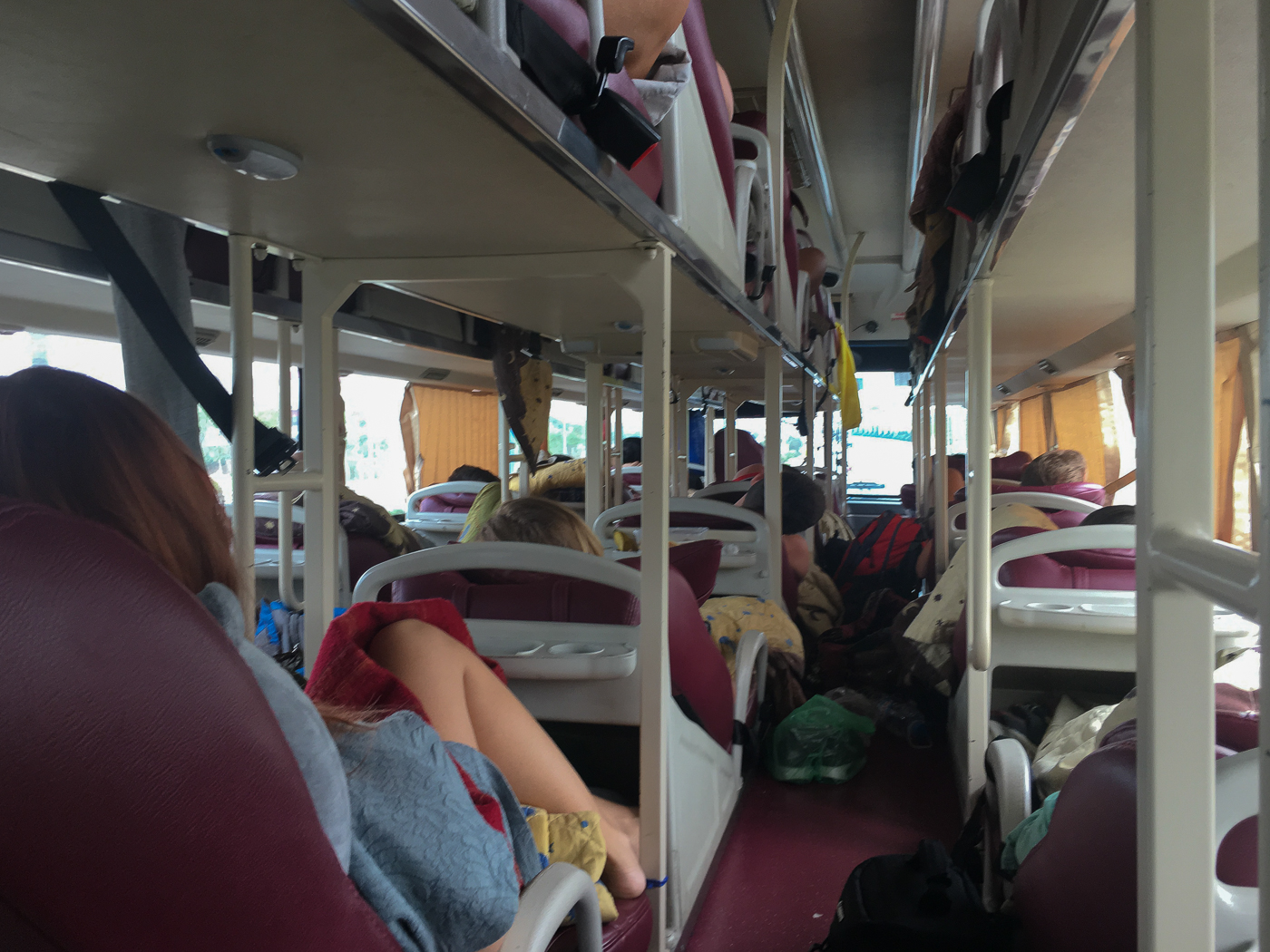
But then an enormous bus rolls up, and we all climb aboard. Another thing we hadn’t expected was that it would be a sleeper bus, with beds on two levels. Christian and I were both convinced we’d have a claustrophobic episode at some point during the six-hour journey from Hanoi to Sapa. There isn’t much room, but you can actually lie down quite comfortably, and once we’d settled into our little beds, it wasn’t bad at all.
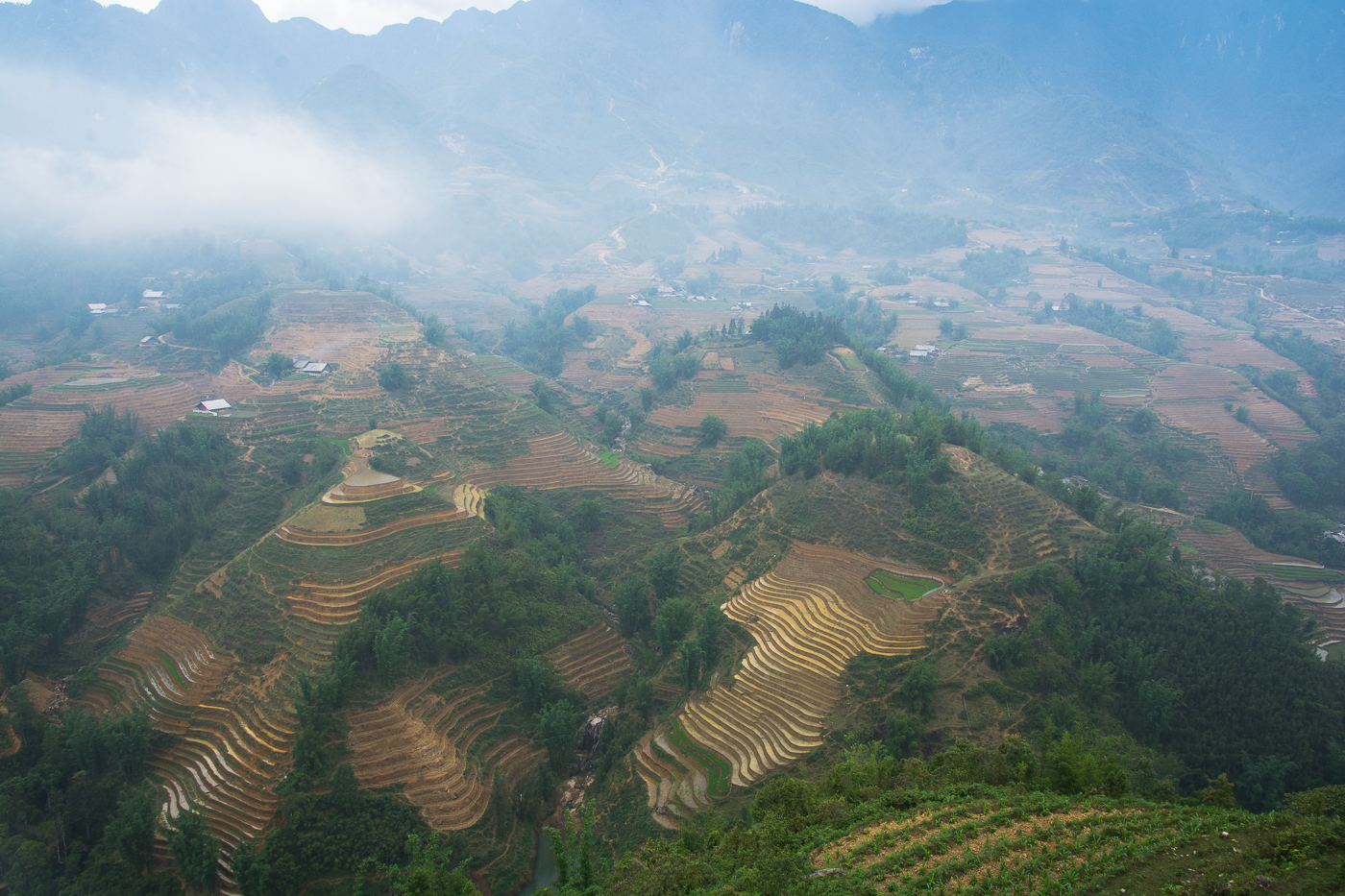
Once we’re well outside Hanoi, a beautiful landscape opens up. It’s fantastic to see so much green again. Nature seems to be competing to show off its splendour. The land becomes hillier, and as we approach Sapa, mountains rise into view. On the steep hillsides live local farmers who work the rice terraces every day.
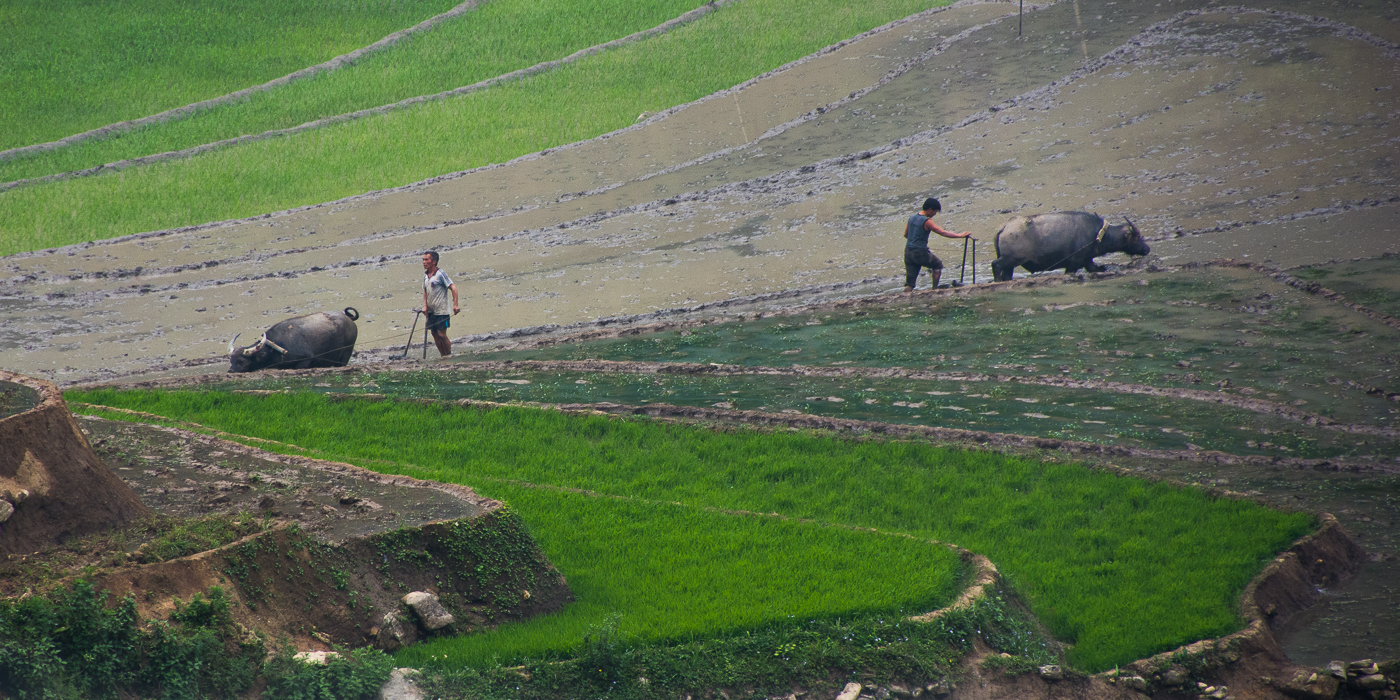
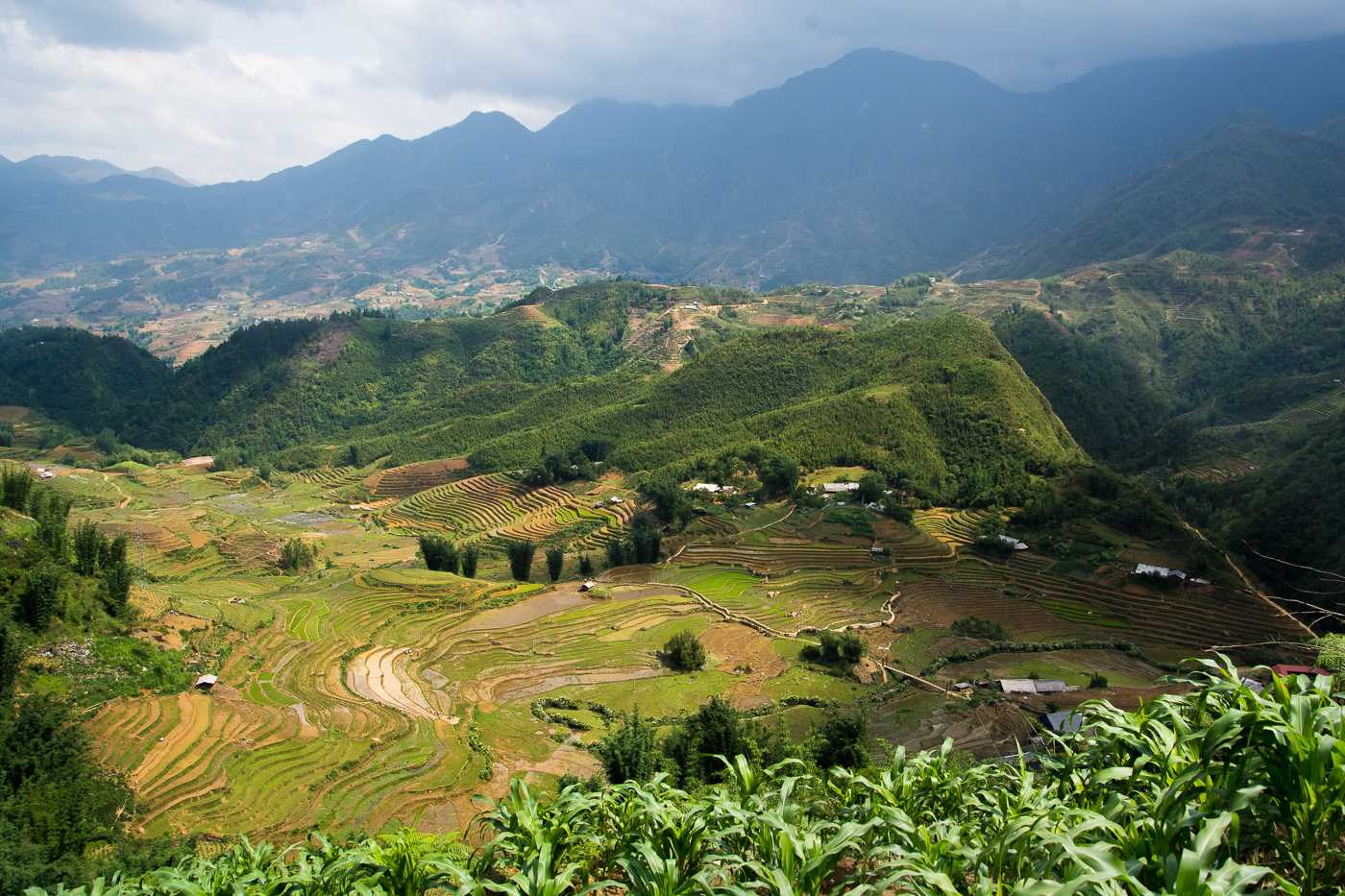
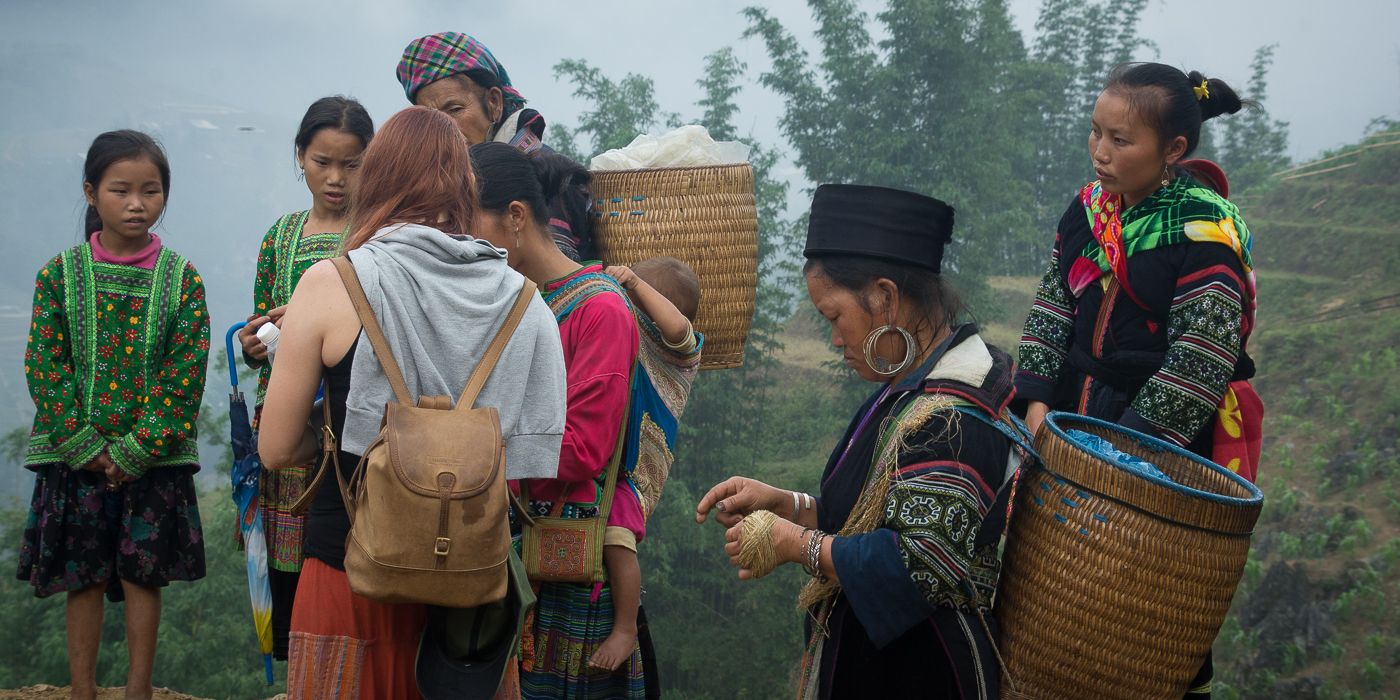
Sapa is a mountain town at high altitude, close to the Chinese border. The town was established by the French in 1922. It’s well known to tourists and well prepared to welcome visitors with money to spend. The local H’mong people are skilled traders. After their long walk from their villages, they’re ready to sell their handicrafts as soon as you step off the bus. A firm ‘No, thank you’ is enough to turn them down, but only stop if you actually intend to buy something.
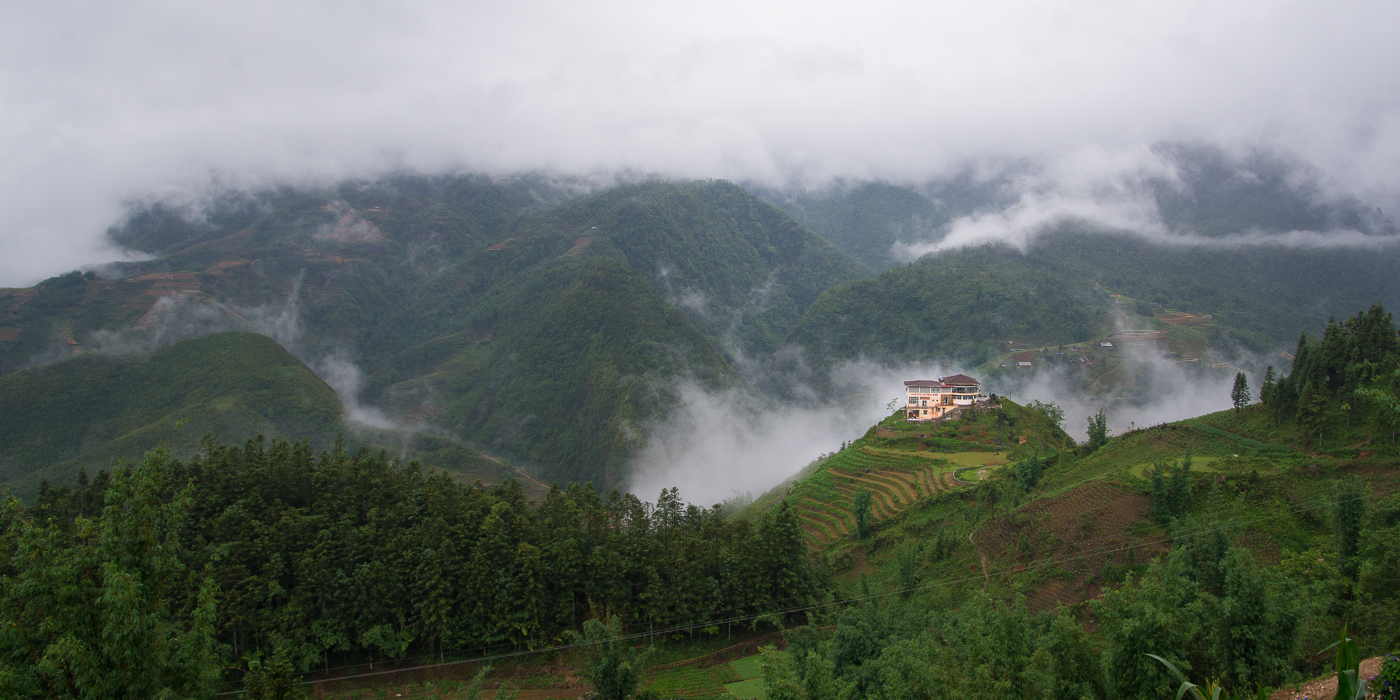
Spectacular views of mountains and rice fields are what Sapa is all about on a cloudless day. When we arrive late in the afternoon, thick fog surrounds Sapa, and when we wake the next morning, clouds have embraced the entire town. But we’re lucky. Before long, the mist lifts and the mountains emerge. The rice fields are revealed, and an entirely new, almost mythical landscape opens up. We enjoy the fresh air, a welcome change from Hanoi’s traffic fumes.
But Sapa is also about hiking through the mountains with local people. Early in the morning, we’re ready to set off with our group of travellers from India, the USA and Singapore. A small woman from the local H’mong minority is waiting to guide us safely to the village where we’ll spend the night. Our first day’s hike is planned to be ten kilometres.
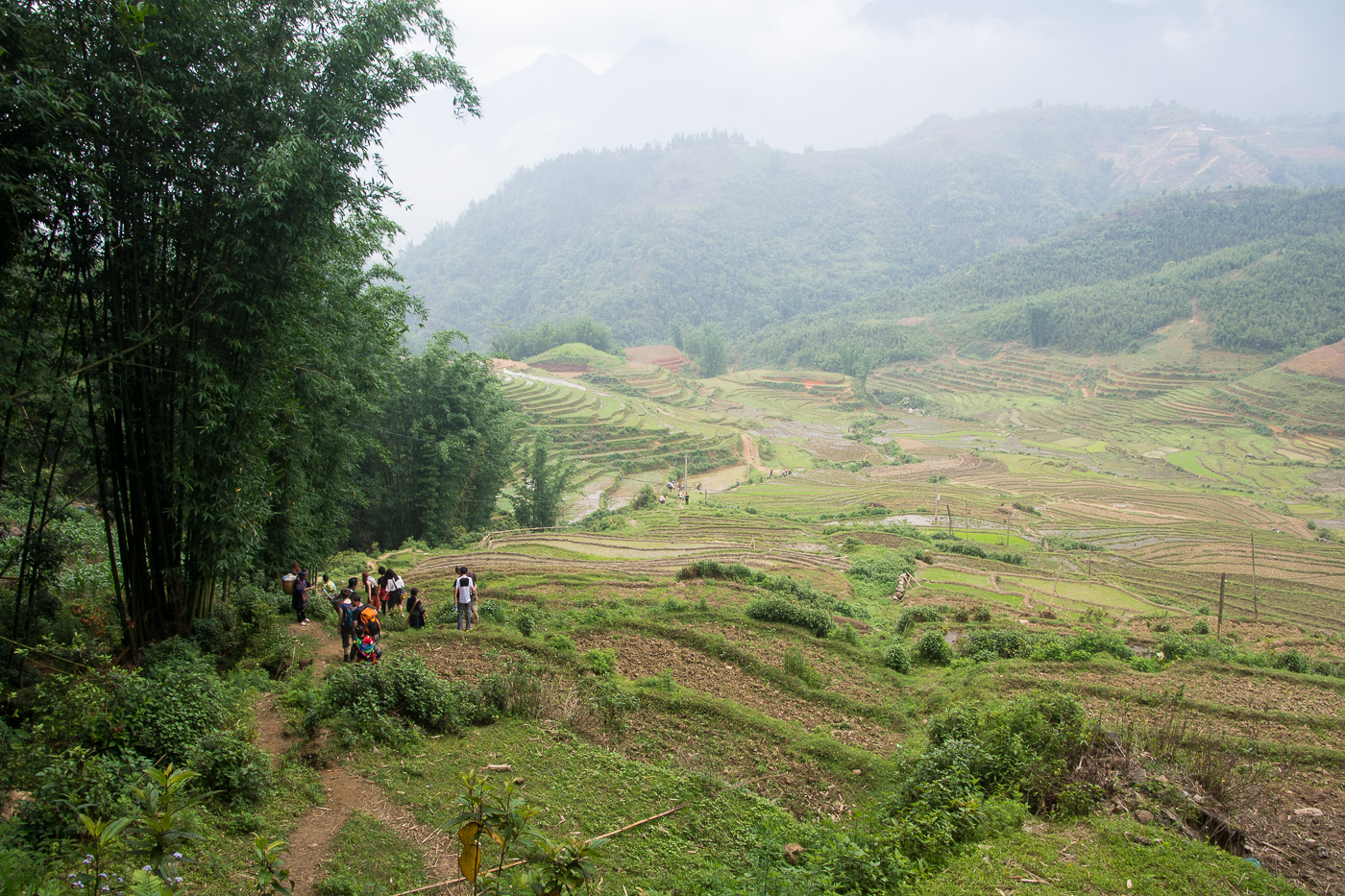
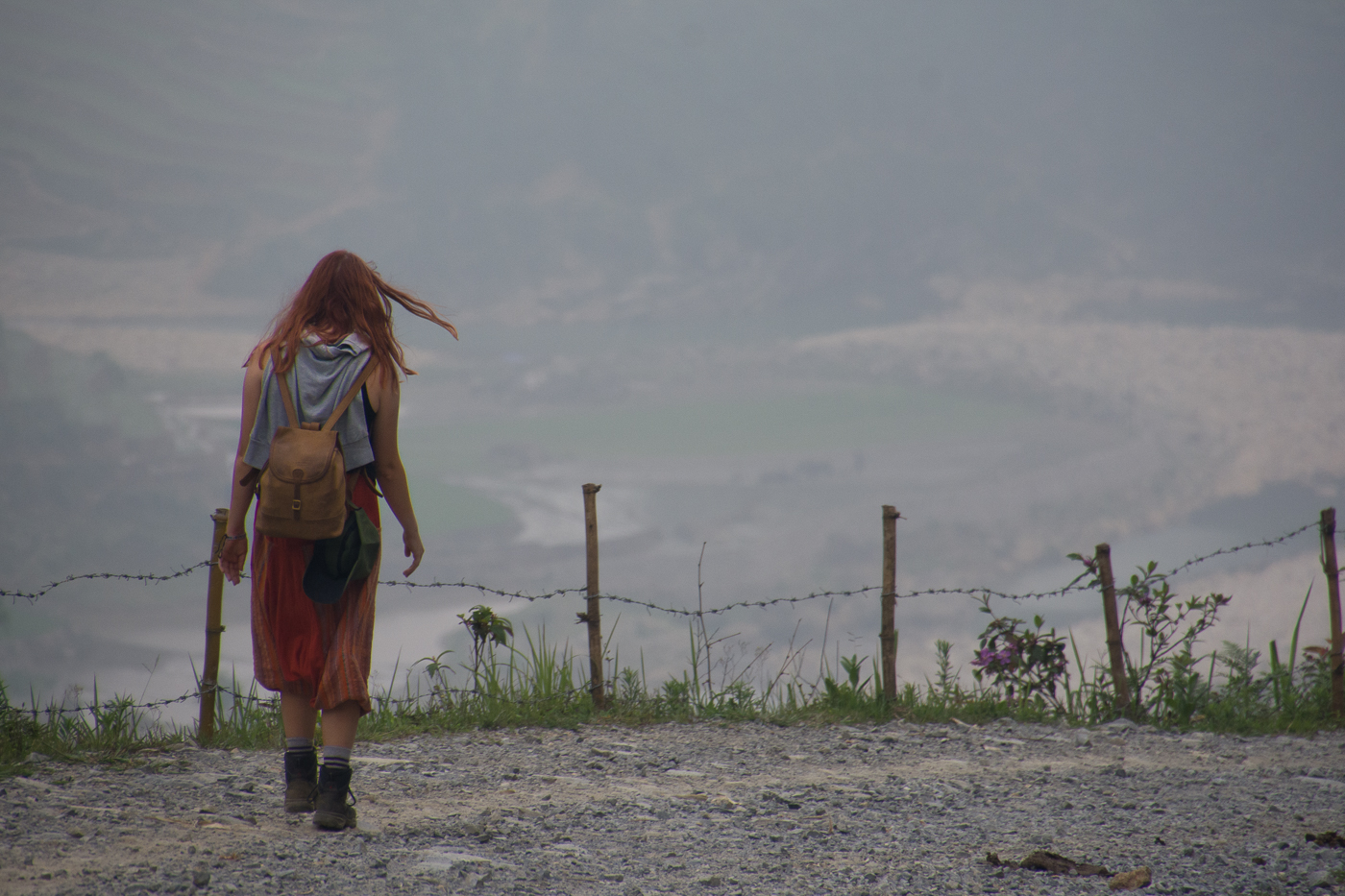
We walk down into the valley, up the mountainside, between the rice fields and on to the summit, with a fantastic view across the valley. Local H’mong women follow closely, offering a helping hand whenever we’re about to slip. Of course, this help is paid for later when you buy some of their handicrafts. But I had my very own little helper: a woman, surely as strong as an ox, who walked steadily along with her eight-month-old baby on her back while still being ready to lend a hand to the naïve European.
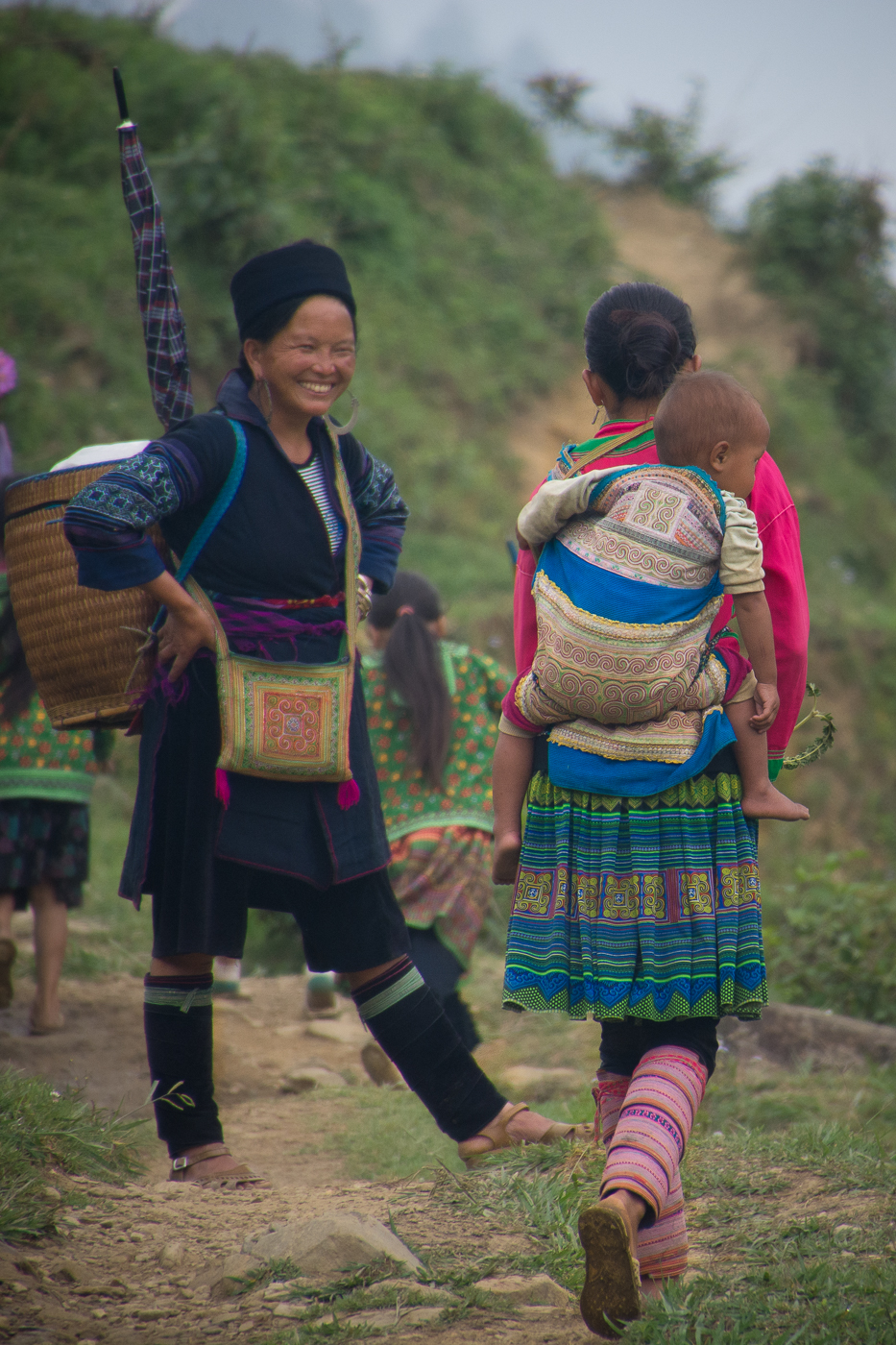
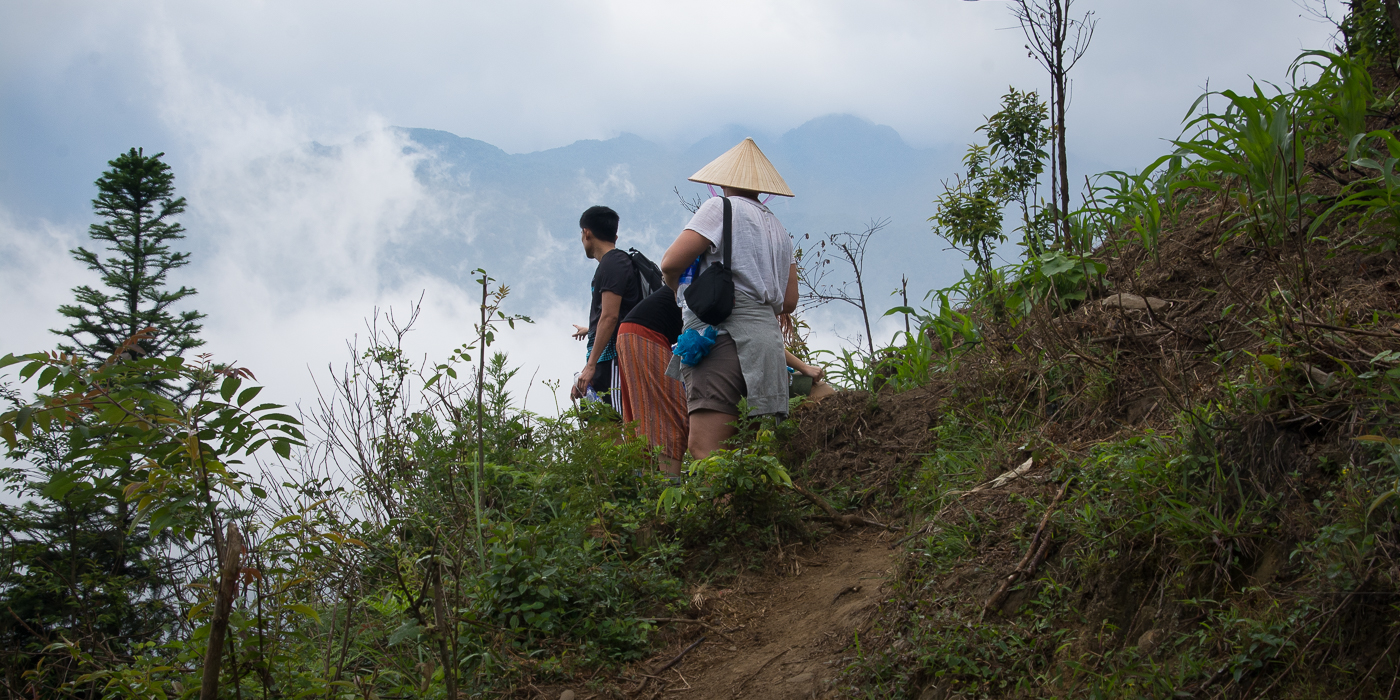
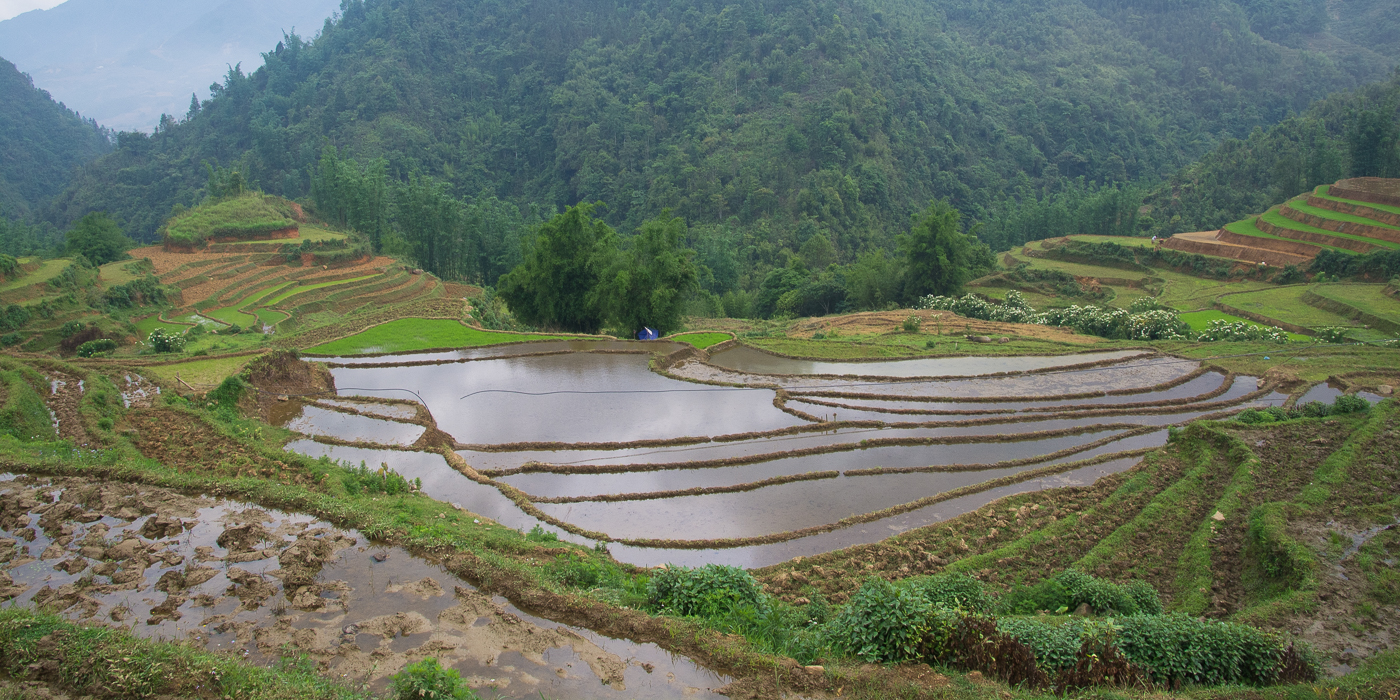
The scenery is magnificent and beautiful. Sarah just powers on, and thankfully she’s forgotten all about her fear of falling and hurting her wrists. She’s amazing. I, on the other hand, have to admit defeat: my knee is wrecked. I cry with pain every time we have to walk downhill. Our mountain hike on Adam’s Peak in Sri Lanka has left its mark on my body. After lunch, I’m taken the rest of the way on a motorcycle.
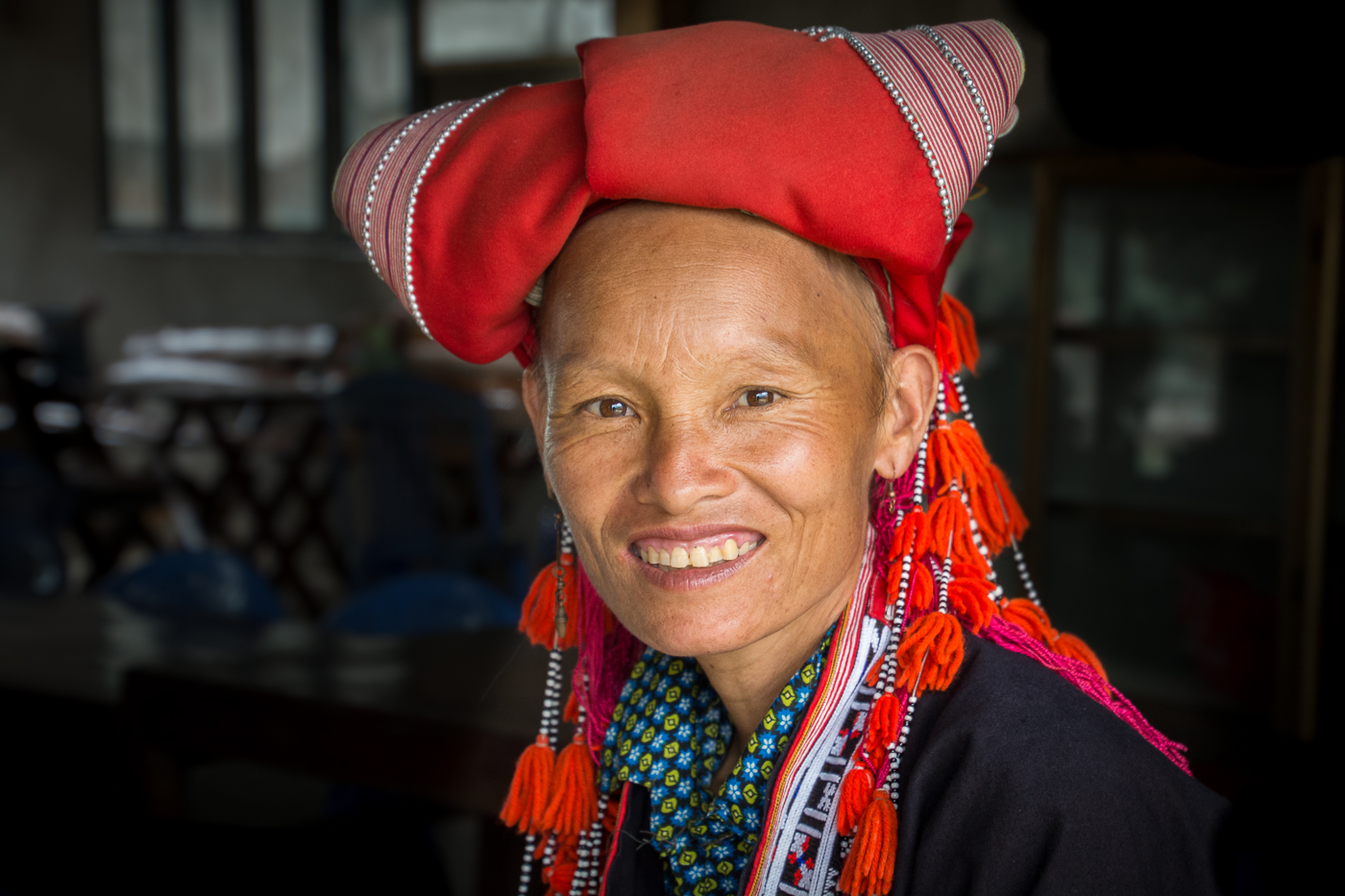
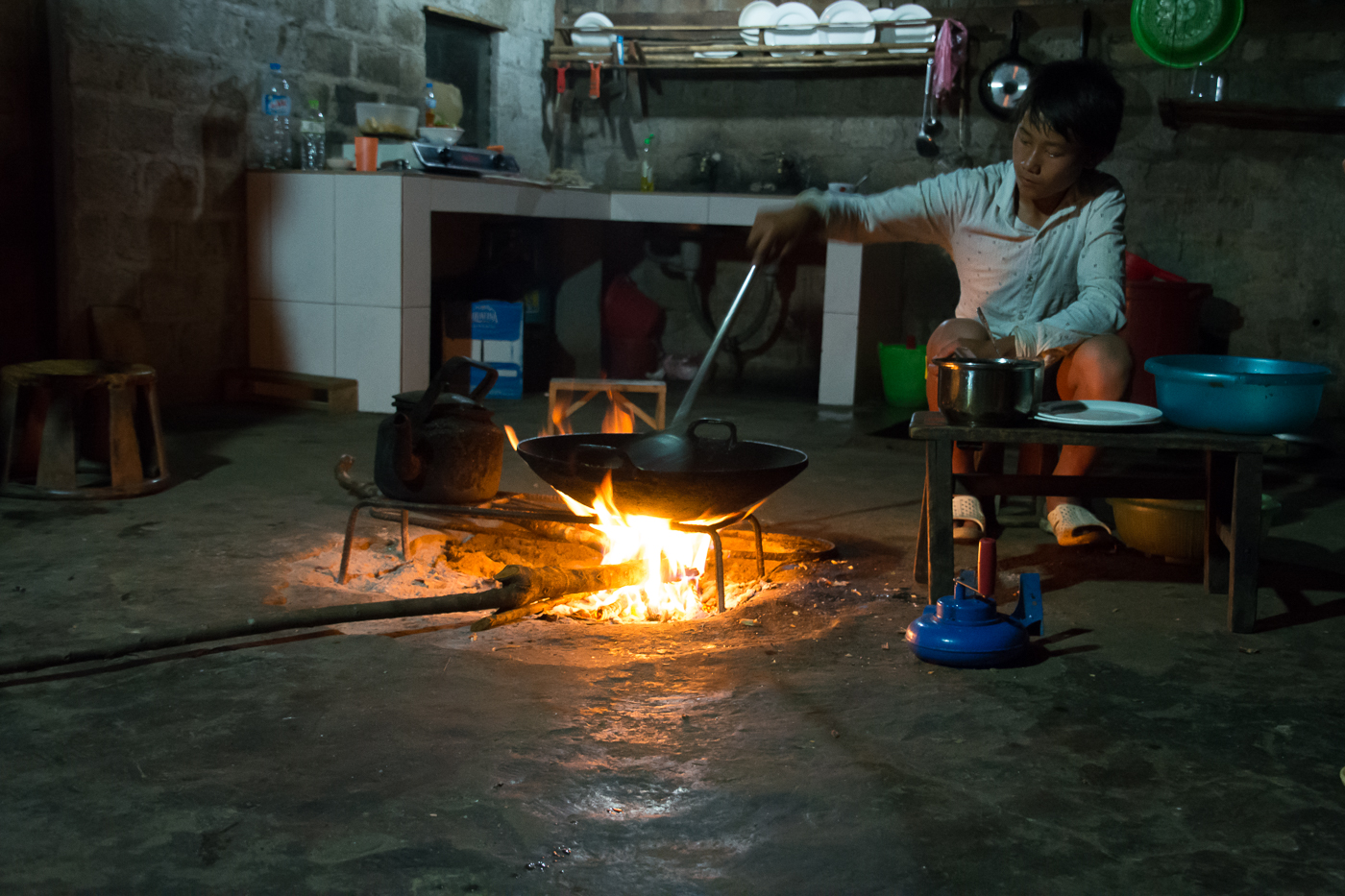
We spend the night in the home of a local H’mong family. Their house sits on a small mountainside, with a front-row view of the mountains. The family consists of a mother, father and four children aged between one and eight. The father works in the rice fields while the mother looks after the groups of tourists who arrive each day to stay in their home. It’s a wonderfully authentic experience, with all the food cooked over a fire inside the house.
Thoroughly tired, and with my leg bandaged up, we enjoy a cold beer on their terrace, looking out over the beautiful mountains. The view keeps changing as the sunlight moves across the slopes. In the evening, we’re served homemade food and ‘happy water’. The locals say happy water makes you happy, but can also make you blind if you have too much. It doesn’t taste particularly good, and most people pull the same face as when they’ve just swallowed a Danish schnapps. You have to give yourself a moment to recover.
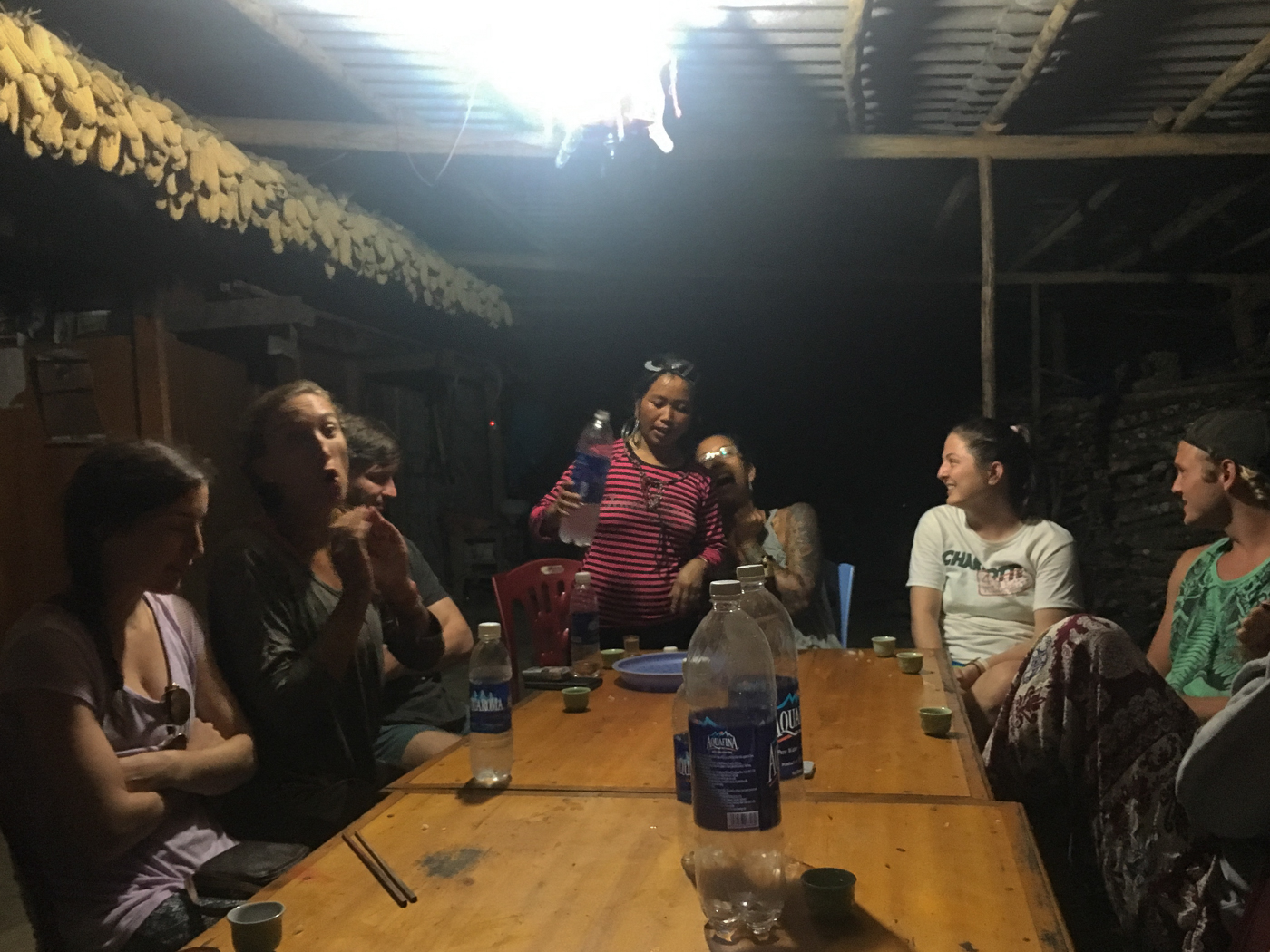
It’s a lovely evening in our little international group. We exchange travel experiences and stories. Some have been travelling for more than nine months, while others are just passing through Vietnam on a short trip. But we all have one thing in common: we enjoy meeting new cultures and want to understand them.
Night falls, and we all climb up to the first floor, where mattresses with mosquito nets are waiting for us. After such a demanding day, falling asleep and enjoying a good night’s rest ought to be easy. But it proves almost impossible. Sharing a room with fourteen other people means sharing all the noises people make. One person snores loudly all night, keeping much of the group awake.
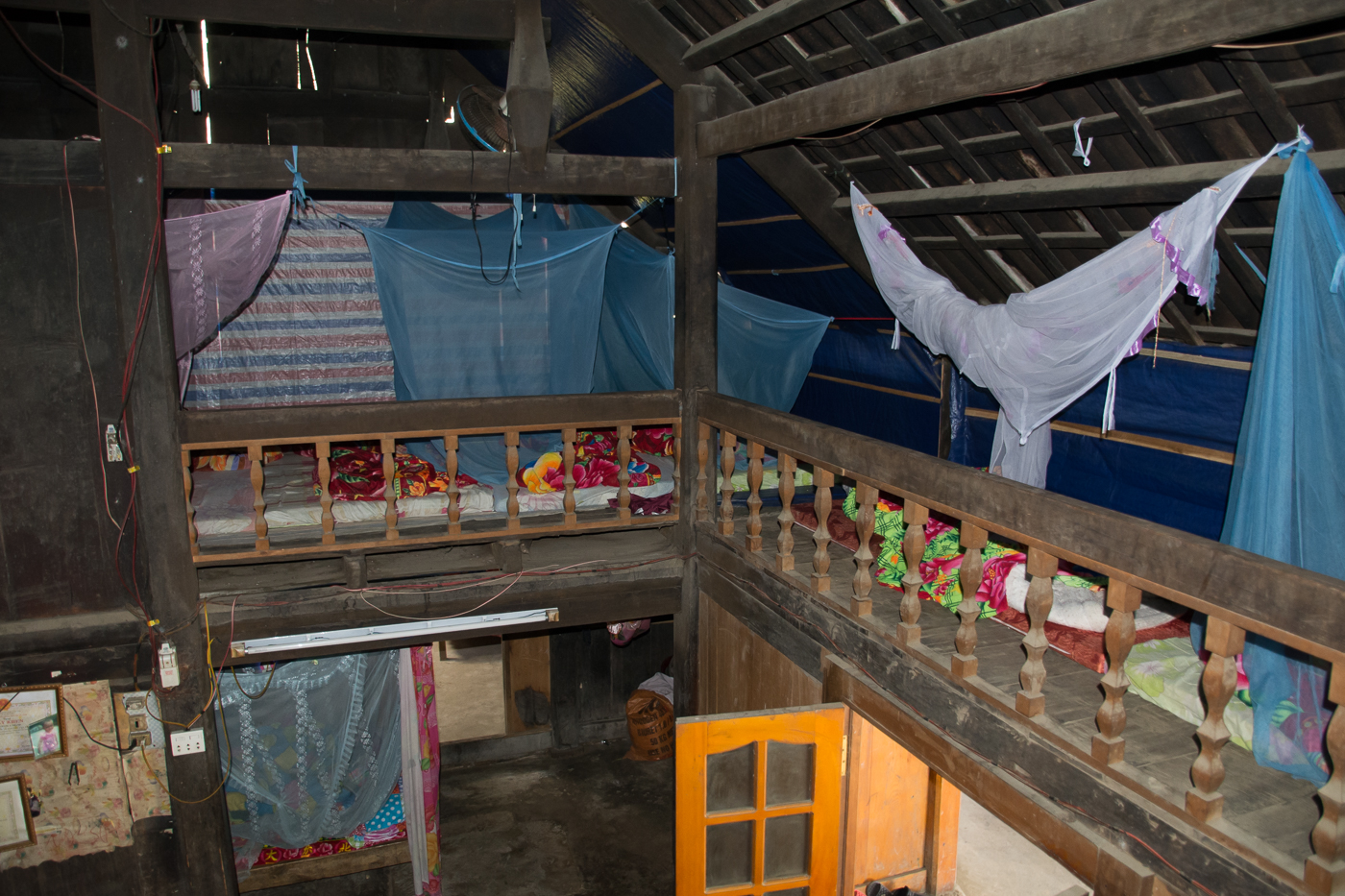
In the middle of the night, we also discover that Sarah has developed a very high fever. She’s spent quite a lot of time in air-conditioned rooms, so we think it may be a virus. It’s at moments like this that we both appreciate Dad’s ‘little’ three-kilogram pharmacy, which we’ve been carrying around for the past five months.
We have to cut the trip short the following day, and all three of us are taken back to Sapa on motorcycles.
We were incredibly lucky with the weather. The first two days of our trip were planned as mountain hikes, and we had dry, clear conditions. They say Sapa’s weather is very changeable. ‘It can change a lot in a single day, just like a woman,’ the receptionist at our hotel tells us. Christian nods knowingly after travelling with two women for the past five months. I think he’s definitely looking forward to Sarah’s friend Mathias coming out to join us.
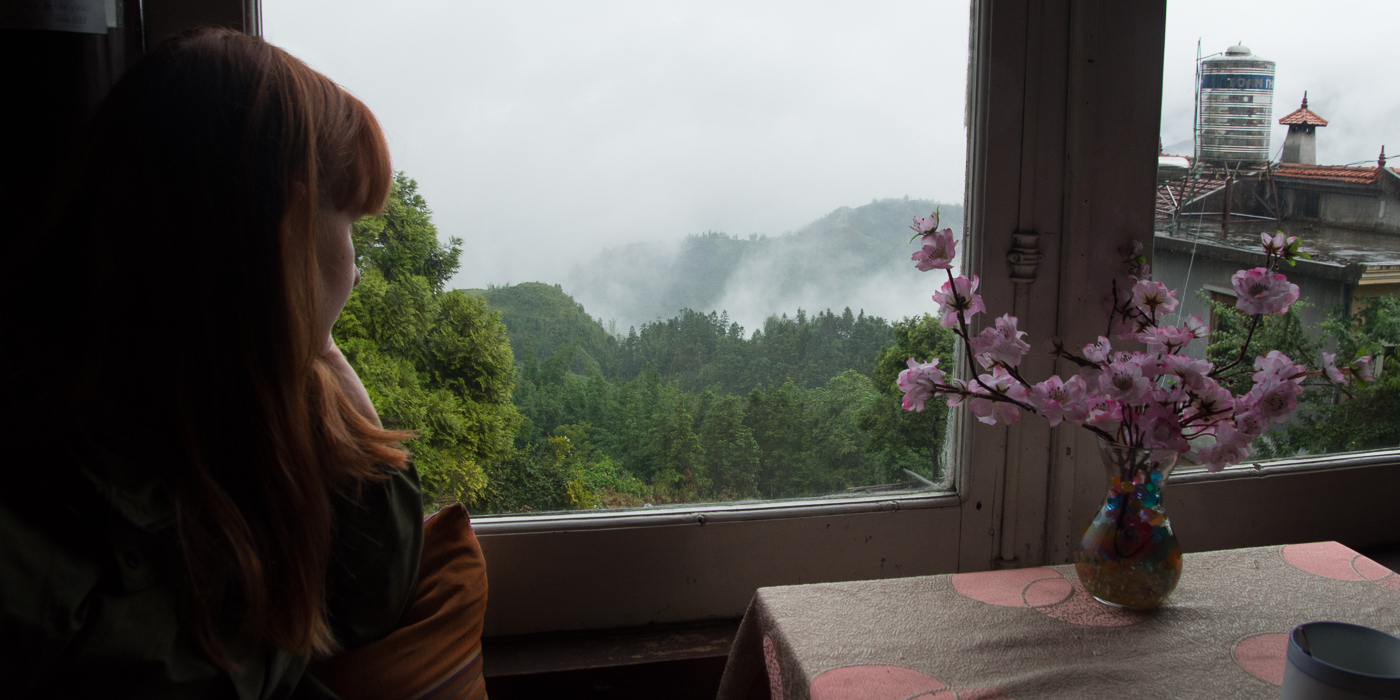
Sapa is all about the views, and we’d taken care to find a reasonably priced hotel with a good one. We’re staying at Sapa House Hotel, enjoying the scenery and nursing our aching bodies and Sarah’s fever. We almost manage to get both under control before leaving for Hanoi.
The skyscrapers appear in the distance. They are proof of Vietnam’s rapid growth. Construction is going on everywhere: high-rise buildings, huge hotels and office blocks. In the distance, ugly neon lights are glowing. Yes, we’re back in Hanoi.
After almost a month in hotels, our new New York-style apartment is a real treat. We found it at a very good price through Airbnb. It will be our home for the next couple of weeks. We’re thoroughly enjoying having our own kitchen, dining room, living room, bedrooms and two bathrooms — and panoramic views from every part of the apartment. Yesterday we had a home-cooked meal, and for the first time in ages we sat around a dining table in our own private home. It was wonderful!
Christian needs to have some dental work done. We’d always planned for him to have it done here in Asia, where it costs a fraction of the price in Denmark. On our very first day back in Hanoi, he has an appointment at a local dental clinic that he’s chosen carefully. It turns out that the treatment will take a little longer than we originally expected. Once again, we have to rethink our plans — for about the 117th time.
But after a little more discussion, we finally settle on a plan. We need a framework, and we need to know: ‘Where are we going?’ ‘How do we get closer to our dream?’ — and is the dream still the same? We turn everything over in our minds, and Australia is still shining brightly like a guiding star. We long to experience Australian nature again, spend time with our Australian friends again, enjoy a cloudless sky, a beach beside a turquoise sea and a night sky full of stars that can take your breath away.
We all have a few things to finish before we can say goodbye to Hanoi. Christian needs to complete his dental treatment. It’s really inexpensive, and the dentists are extremely professional, so we can certainly recommend them. Sarah needs to finish her painting on a canvas made of lotus leaves and her lacquer painting — two projects she’s become involved in here in Hanoi.
There are also a few places we’d like to visit before leaving. For the next month or so, we’ll be in and out of Hanoi, using it as a base for trips to places including Halong Bay and Ba Be National Park.
Once we’ve finished here in Hanoi, we’ll fly to Bangkok around 19 June 2016. From there, we’ll travel around northern Thailand until Sarah’s good friend arrives on 7 July 2016. Then we’ll journey through Cambodia with him and return to Ho Chi Minh City.
Suddenly the heavens open, and the rain comes pouring down, bringing welcome relief and a moment of fresh air. We’re sitting in our New York-style apartment, enjoying the sound of rain falling in torrents. The rainy season has begun, as if to signal the opening of a new chapter in our lives.
I hope you’ve made it all the way through this newsletter. It’s taken me a little longer to write this time, and there’s been a great deal to tell.
Wishing you all a wonderful summer!