
The little family had packed their backpacks for the very first time and arrived in Thailand — the Land of Smiles. Everyone was excited about the adventures ahead, but worries were jostling for attention too.
“Mum, look at those funny little sausages!” The six-year-old girl pointed eagerly at the little cocktail sausages. A cross had been cut into one end of each sausage, so that when they were fried, the ends curled up and made them look like tiny octopuses.
Everything was a first: the lavish breakfast buffet, overflowing with everything from little pancakes, eggs and bacon to delicious Thai dishes; the turquoise water and dazzling white beaches; the smiling Thai people who kept wanting to touch the little girl’s fair hair, much to her growing annoyance.
Before leaving, the mother had been full of worries. “Is it really sensible to travel so far with a six-year-old? What if something goes wrong?” The luggage was packed to bursting point, with provisions for every imaginable challenge. Even the teddy bears, “Muffy” and “Huffy”, had their very own suitcase.
A good colleague had told her how she always packed a surprise bag full of little presents for long flights. The mother immediately adopted the idea, and it was a huge success: whenever the little girl grew impatient, out came a new drawing pad or some fresh felt-tip pens. Later it became a family tradition, and something the little girl always looked forward to on flights.
They were staying at a hotel with little bungalows arranged in rows through a beautiful, lush, flowering garden. The mother thought it might be just a little too close to the “jungle”, and there did not seem to be much light as she dragged her suitcase along the narrow paved paths through the garden.
On the very first evening, she encountered one of the creatures of the East. A small lizard expertly climbed the wall and, quick as lightning, disappeared behind a large painting. She jumped in fright at the thought of sharing a bed with a lizard. Her husband tried in vain to catch the little creature, but without success.
That little lizard later became one of the things the family loved so much about Asia. From then on, all little lizards were called “Fido” — welcome little visitors that ate those irritating mosquitoes and flies.
That first trip to Thailand 15 years ago was the beginning of a life full of travel. Since then, our travel CV has grown to include Venezuela, Malaysia, Australia and much more. Travelling together as a family has become something of a drug for us, something we keep craving. All three of us have been bitten by the travel bug.
And here we are, 15 years later, back in Thailand. This time we will be staying in Hua Hin, about a three-hour drive from Bangkok.
We have learned a great deal since that first big trip. We have made major life choices to satisfy our travel bug. We have learned to relax on long journeys — these days, a 24- or 26-hour flight to Australia is nothing to us. We have learned that a journey begins the moment you step outside your front door, so we count everything as part of the experience, including flight delays and all the rest.
We have learned to be curious and to explore the country we are visiting. Trying to understand its culture and people has always mattered to us. A good chat with a taxi driver is always worthwhile. They can usually answer the most basic questions about their country and culture — provided they speak English, of course.
We take things as they come and act accordingly. Sometimes plans or directions change along the way — sometimes several times in a single day. We have learned to listen to one another as a family and try to understand each other’s needs. Of course, travelling together as a family also brings its own challenges.
We still pack too much. Clearly, learning to travel light will take a little more intensive practice. But these days we sometimes pack just a couple of hours before departure, rather than several days in advance.
After our camping trips in Australia, I have gradually become accustomed to all sorts of creepy-crawlies. I am still not particularly friendly with the big cockroaches, though.
We have a special relationship with Thailand. We feel safe here, and we more or less know what to expect. It largely lives up to those expectations, and things are certainly a little easier when the taxi driver speaks English.
We chose Mango Bay Spa and Resort in Hua Hin so that I could recover after my stay in hospital. I needed peace, cleanliness and relaxation. The place was made for just that. The resort was seven kilometres from Hua Hin, surrounded by lush nature — a striking contrast to Hanoi’s throbbing traffic chaos and pollution. Here we would enjoy the silence and gentle breeze for eleven days.
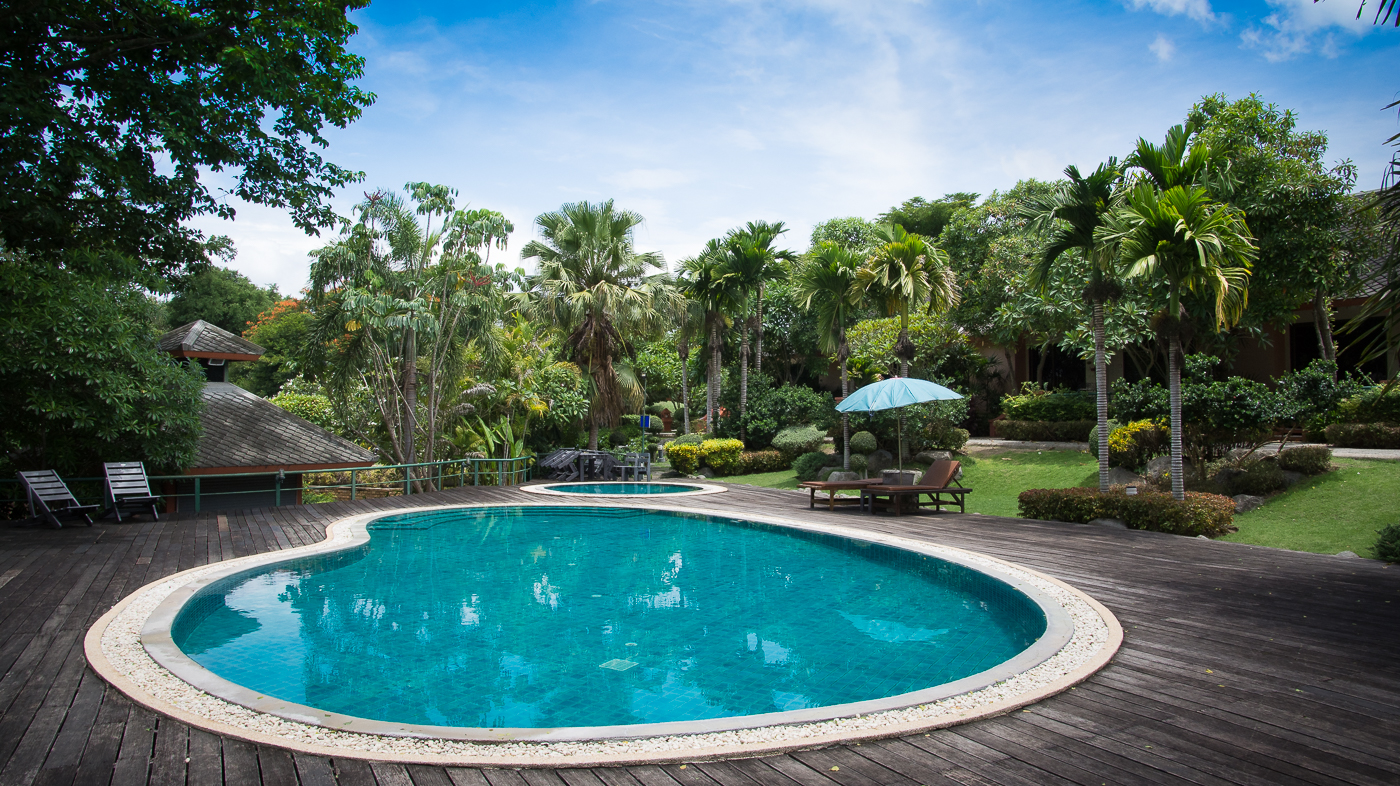
The property consisted of private two-storey bungalows, hotel rooms in two-storey buildings and several little swimming pools strategically placed between the bungalows. We found it through Airbnb, and the privately owned bungalow we rented belonged to a man from Sweden.
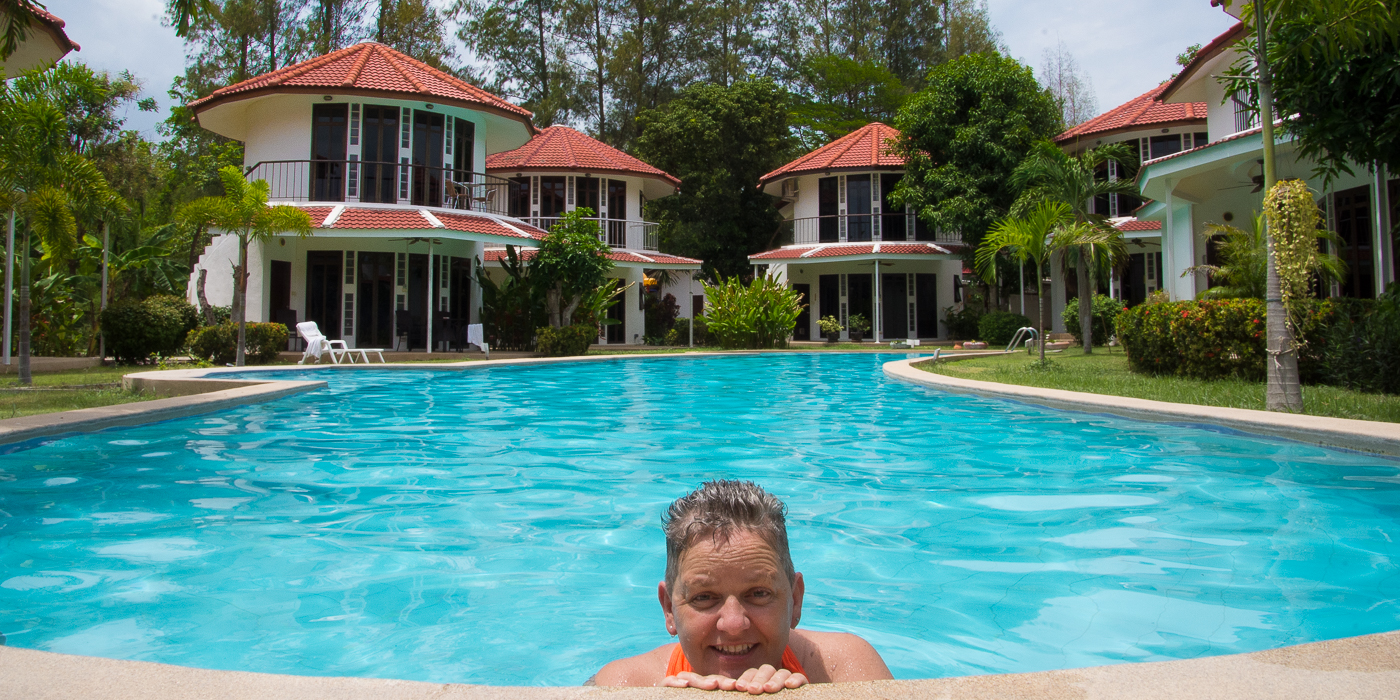
It was obvious that it was the low season, with everything running at a much slower pace. But we also enjoyed having so few other guests around. I think there were days when we were practically the only people in the entire resort.
Sarah and Christian had booked a three-day adventure in the rainforest. They have a particular interest in snakes, something our female taxi driver simply couldn’t understand. She called us ‘the dangerous family’.
I, meanwhile, enjoyed the swimming pool while Christian and Sarah were in the rainforest. It was conveniently situated right beside our bungalow. So I can’t tell you about their three days in the rainforest myself. Instead, here’s Sarah’s account of those three days with her dad:
What were your expectations for the trip?
I have to admit that at first I was a little nervous about sleeping in a tent out in the rainforest. I’d definitely imagined we’d be pitching the tent on the forest floor. What if an elephant suddenly wandered into our camp? I’d go into a complete panic and die of fright!
I knew it was going to be a rather nerdy trip, but I was still really surprised when I met the people who came to pick us up. Our guides were a young married couple: he was Dutch and she was Thai. The Dutchman was just as much of a photography and reptile nerd as Dad. Then there was ‘Mowgli’. His real name is Utt, but he really looks like Mowgli, with his shorts and bob haircut. He even walks a bit like the character from the Disney film. So that’s what we call him.
That made five of us on the herping trip: Dad and me, plus the three nerds. They were seriously nerdy and absolutely devoted to reptiles. It was pretty funny watching three adults running around the forest making animal noises. When they picked us up, they asked whether we’d mind taking just a tiny detour past a pineapple plantation, which is a magnet for spitting cobras. ‘Not at ALL!’ Dad and I said in unison.
Our guides were absolutely fantastic. Every moment was spent looking for anything that was alive.
Can you explain what the trip was actually about?
It’s a herping trip, which means going out to look for snakes and other reptiles. Although herping is the main focus, we also look for everything else that’s alive, including birds, monkeys and mammals.
We also find out that Mowgli is actually writing a book about Thai frogs and other amphibians, so we spend some of our time searching for unusual frogs. He’s extremely good at it and has found animals on several occasions that hadn’t previously been recorded.
When we went looking for snakes, we often headed off the trail and sometimes spread out in different directions so we could cover as much ground as possible. It was quite important to look up now and then to see where the guide had gone, so you didn’t get lost. At other times we drove incredibly slowly, with all four of the others hanging their heads out of the car. The moment anyone spotted something moving, the car came to an abrupt halt and everyone jumped out to see what it was.
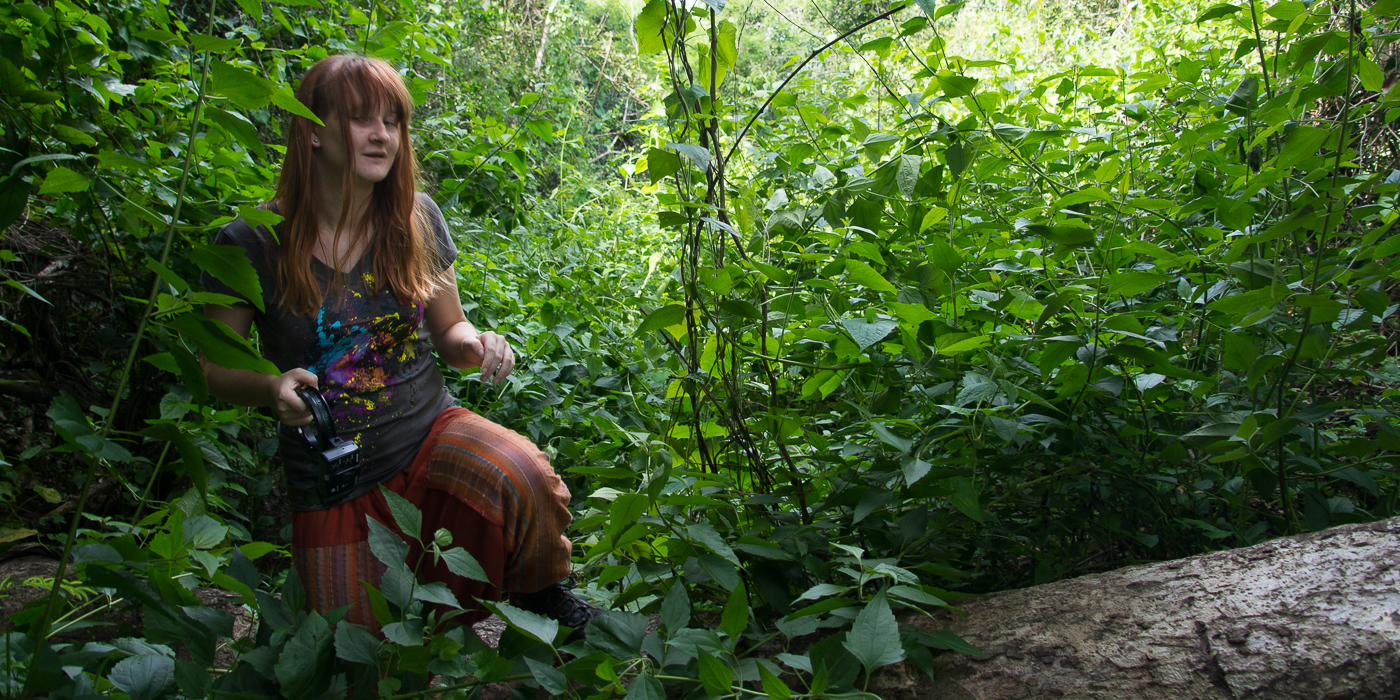
Tell us about some of the highlights of the trip.
At the start of the trip they asked us what we most wanted to find. ‘PYTHONS and cobras!’ Dad and I answered in unison. We really wanted to see a python, but we both knew there was no guarantee we’d find anything. Dad had read about other people who went on a three-day trip and hardly saw a thing for the first two days. So we came armed with plenty of patience. After all, this was nature, not a zoo.
The first place we searched was a meadow where the grass came up to our belly buttons, which makes a perfect hiding place. It was a little nerve-racking, since we could have stepped on a beautiful but venomous cobra. We didn’t spot a single snake there, though.
At our second stop, we were much luckier. We walked through an area of dense scrub and trees leaning over two man-made lakes, one on either side of a path. I found a snake skeleton and wondered what might have eaten it. Then Mowgli suddenly pointed high up at a branch of a tree leaning over one of the lakes and exclaimed, ‘Python!’ And sure enough, there was a large snake curled up on the branch. Score!
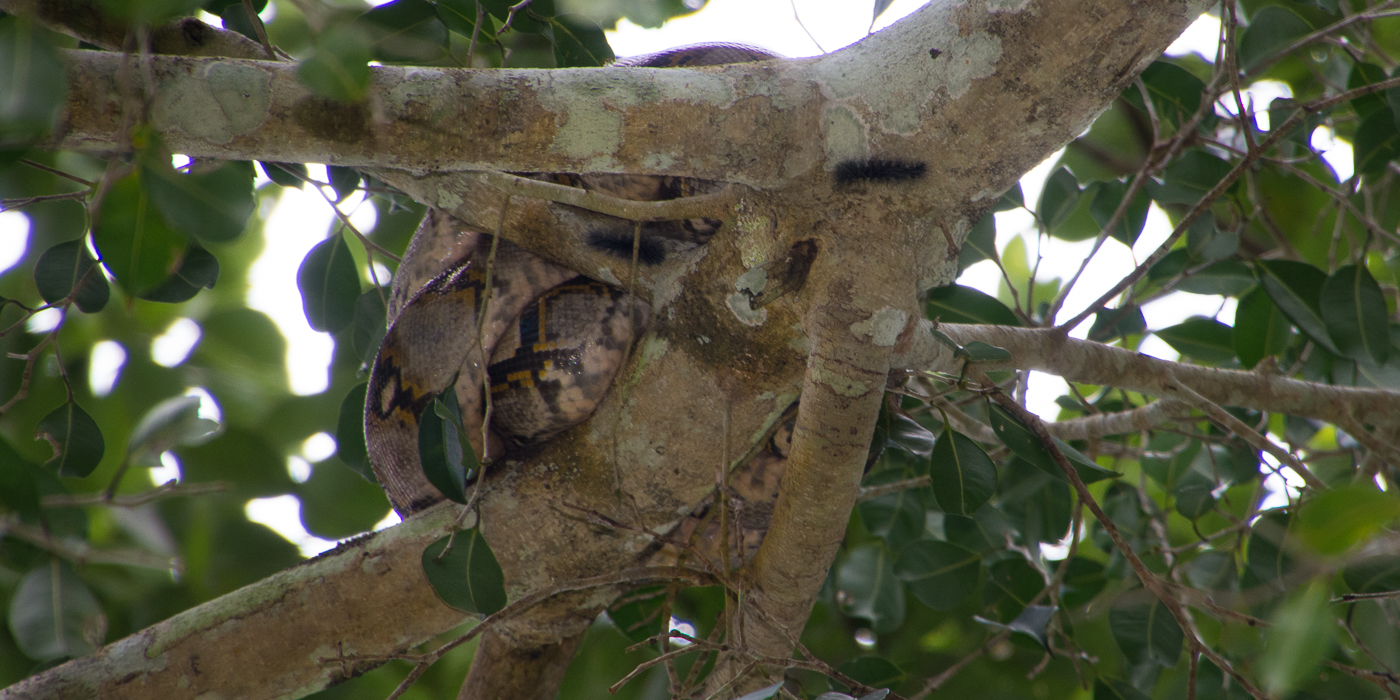
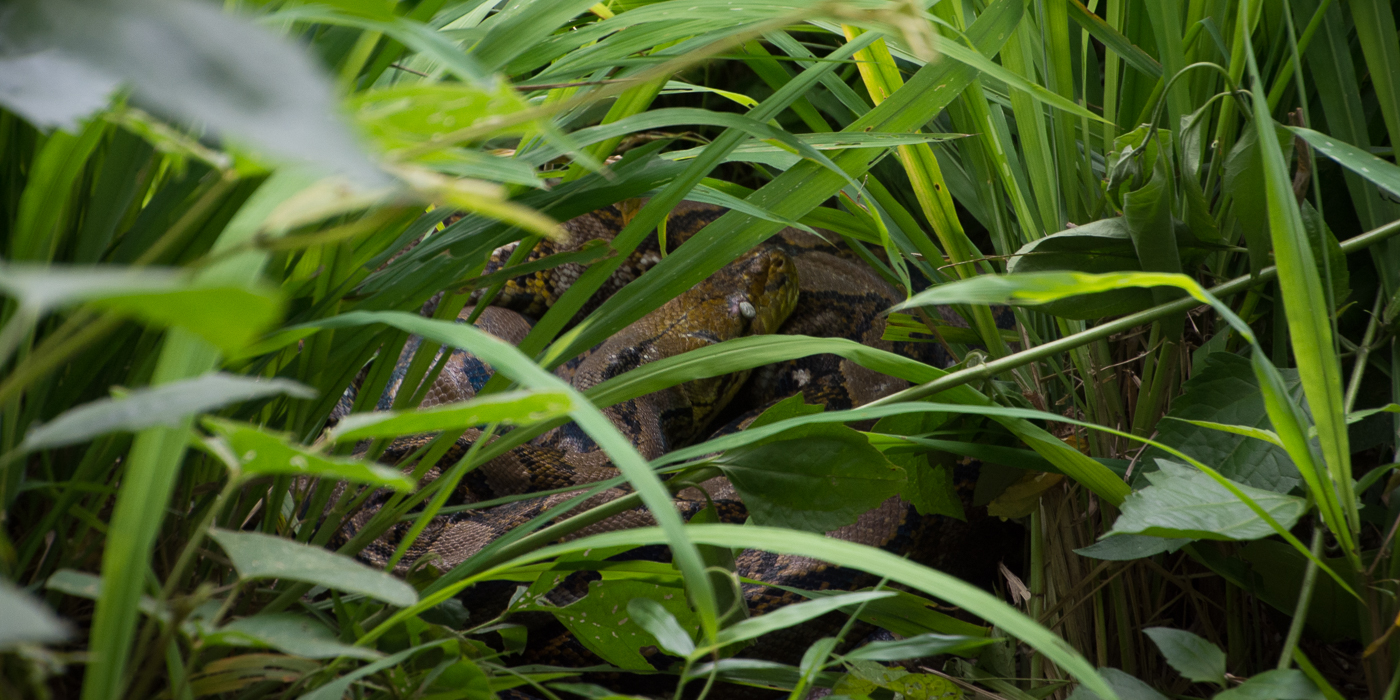
To the left of the tree, the Dutchman pointed down into the grass. There, among the tall reeds, lay probably the biggest snake we’d ever seen. Its head was the size of a large guinea pig, and its body as thick as my thigh. Judging by the size of its head, the Dutchman reckoned it was five metres long. It was lying there coiled up, but when it spotted us it slid into the water with a huge splash. What an incredible experience!
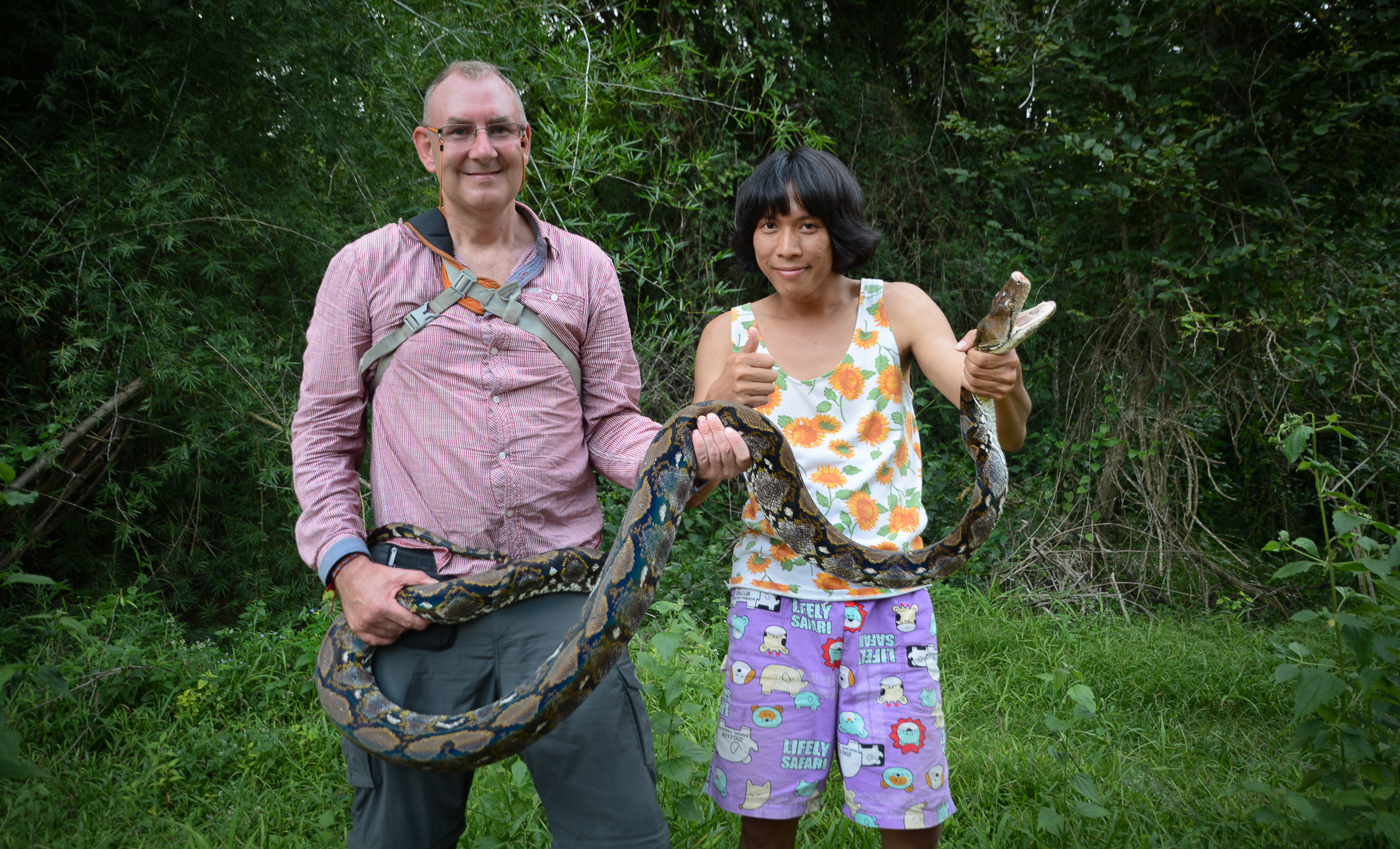
Then we turned about 90 degrees to the right and spotted snake number three. Mowgli and the Dutchman raced over to grab the snake as it tried to get away, and Dad caught hold of its tail to bring it onto land. Dad was beside himself with excitement, threw his usually precious camera at me and told me to keep snapping away. Holding this enormous snake in his arms, he tried to instruct me on exactly how to adjust the camera settings. I was clueless, and in the end the Dutchman took over. I don’t think I’ve ever seen my dad so excited. Let’s just say that after that experience, Dad and I were pretty hyped, and the guides definitely had our complete, undivided attention!
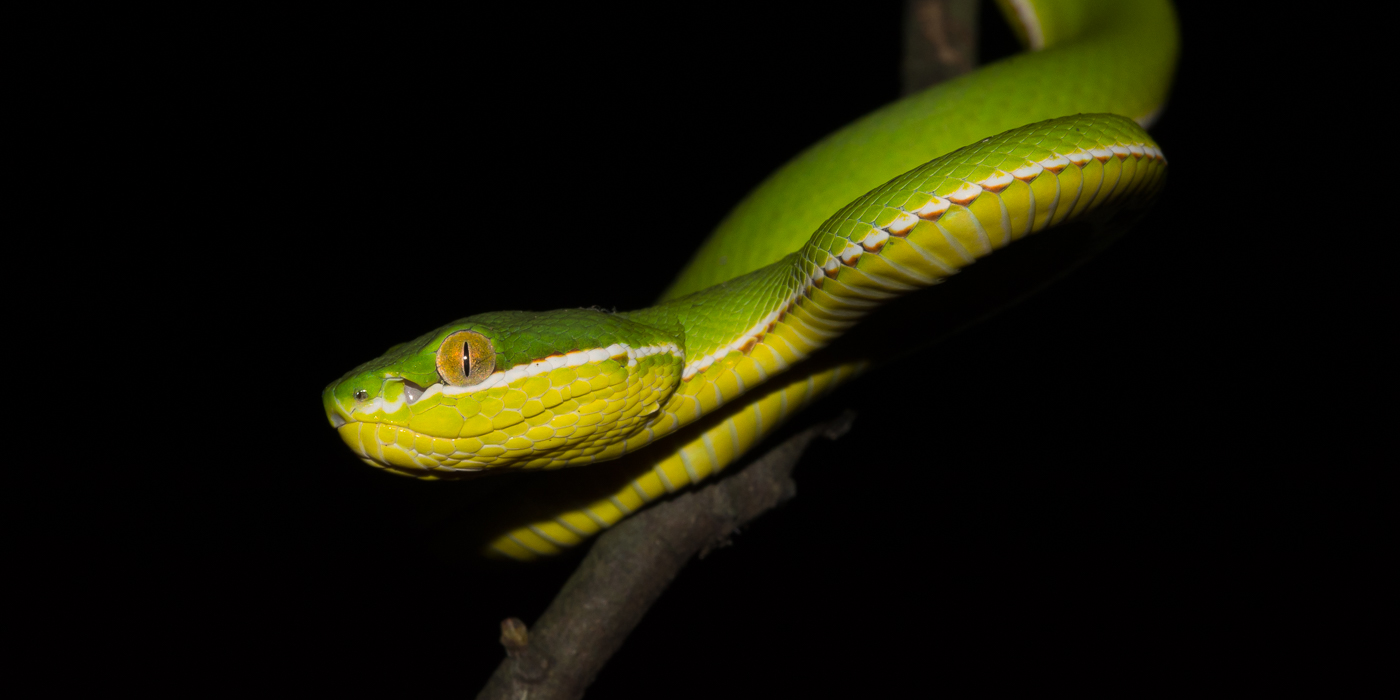
Another special experience was on a rainforest trail. We’d spent ages looking for pit vipers without much success. But on our way back, right where we’d just been walking, there were two little pit vipers. I’m not afraid of snakes — I think they’re wonderful — but these are quite venomous, and they’d been rather close to our ankles a short time earlier.
We were out exploring all day, every day, from early morning until late evening. After dinner it was time for a night walk. Mowgli, the Dutchman and Dad were equipped with the most incredible high-tech gear, in true Ghostbusters style. Yes, they were a bit nerdy.
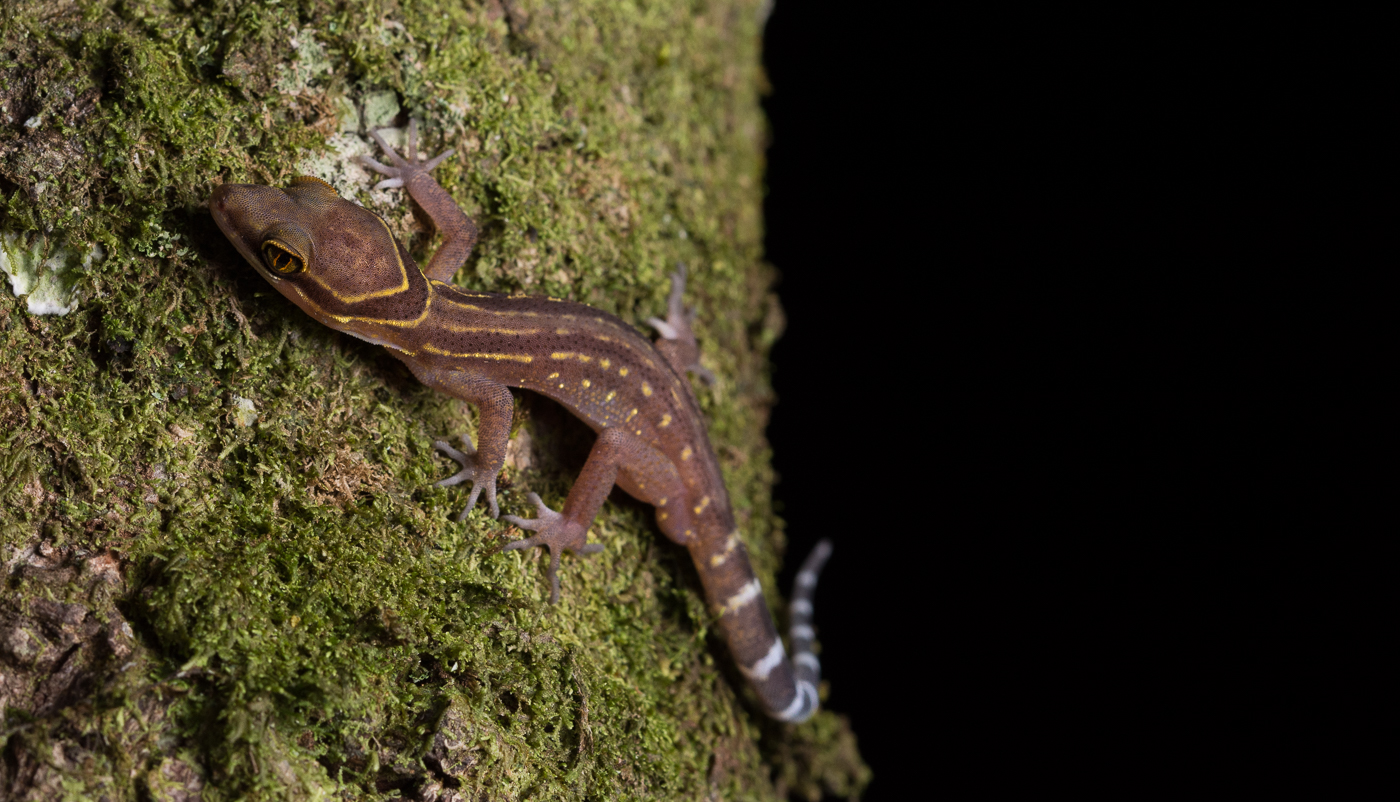
Mowgli, who runs around in nothing but flip-flops, is naturally the first to find an animal. A little gecko gets the kind of photo shoot any supermodel would dream of. Flashlights are aimed at it from every direction, and I do my best to hold the light at just the right angle so Dad can take the photograph of the year of this tiny gecko.
Although reptiles are our main interest, we also look out for other animals. One evening I see a civet, a striped, cat-like animal, strolling through the camp. It and I practically make eye contact, and I frantically gesture and whisper to get Dad’s attention. But Dad doesn’t hear or see a thing: he’s completely absorbed in a hairy spider.
What was the scariest experience?
The most terrifying — but also amazing — experience was when I decided to wander a little way from the group into the dense undergrowth to look for snakes on my own. In the thicket I suddenly spotted a large snake’s tail slowly sliding down a tree just a few metres from where I was standing. Unable to call anyone over, I got to experience it entirely on my own. I didn’t quite dare try to catch it, though. It’ll probably be a few more years before I go full Steve Irwin.
I’d expected sleeping in a tent in the rainforest to be awful, but it actually wasn’t a problem at all. We camped on a site with short grass, and we had self-inflating mattresses and good sleeping bags. After a long day full of experiences, we fell asleep quickly, too. We had to be up early the next morning to continue the search.
For me, those three days with Dad are definitely among the greatest experiences of our whole journey.
That was Sarah’s account of her rainforest trip with Christian.
We had been planning it for a long time, and at last the day Sarah had been looking forward to arrived. Mathias, Sarah’s good friend from Denmark, landed at Bangkok Airport one afternoon in July. He would be travelling with us for the next three weeks.
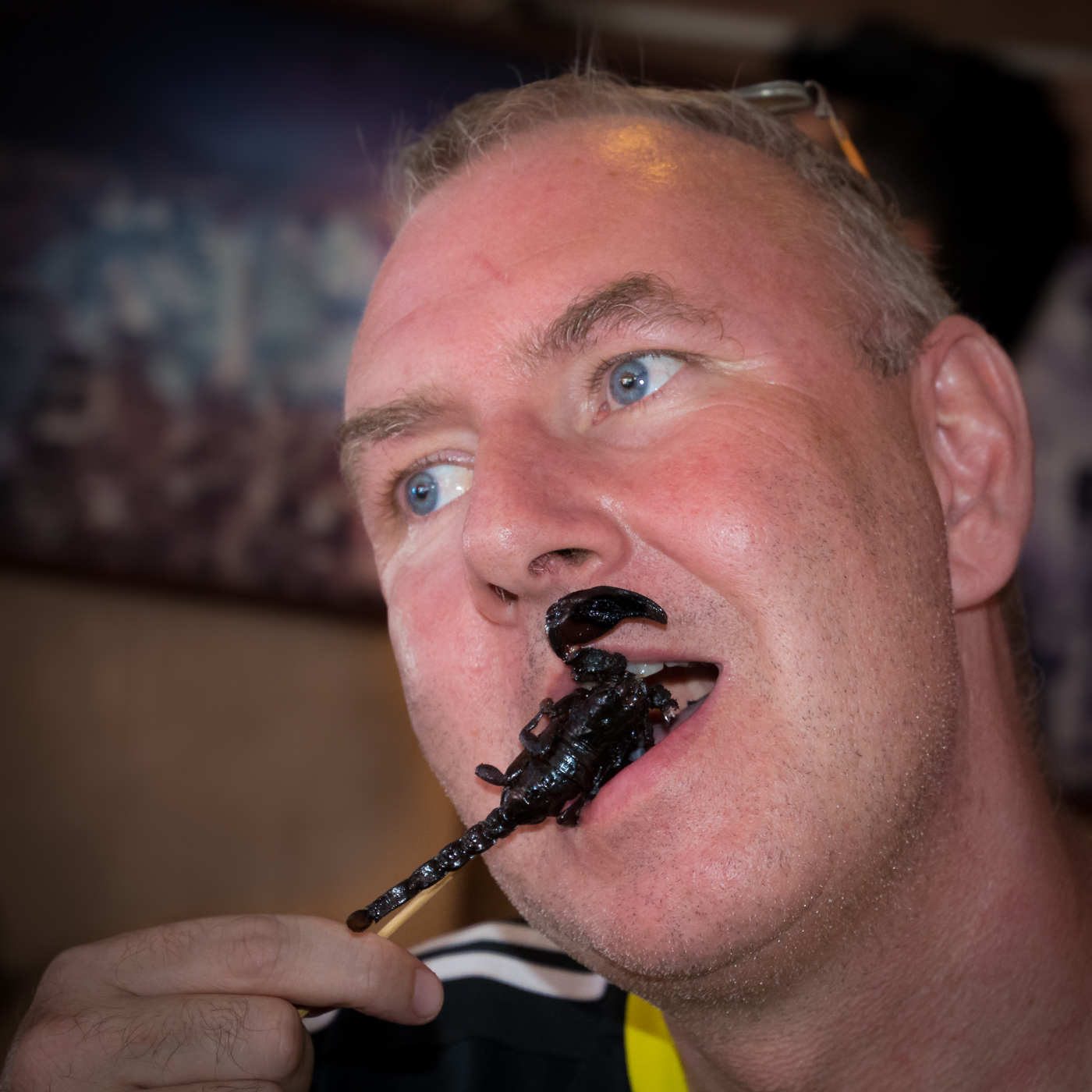
We stayed in bustling Bangkok for two days. We began by introducing Mathias to the backpacker street, where you can find pretty much anything you might want. Whether it’s watching a ‘ping-pong show’, eating fried cockroaches, tarantulas or larvae, dancing until dawn, or drinking beer and cocktails by the pitcher for a fraction of Danish prices — it’s all here.
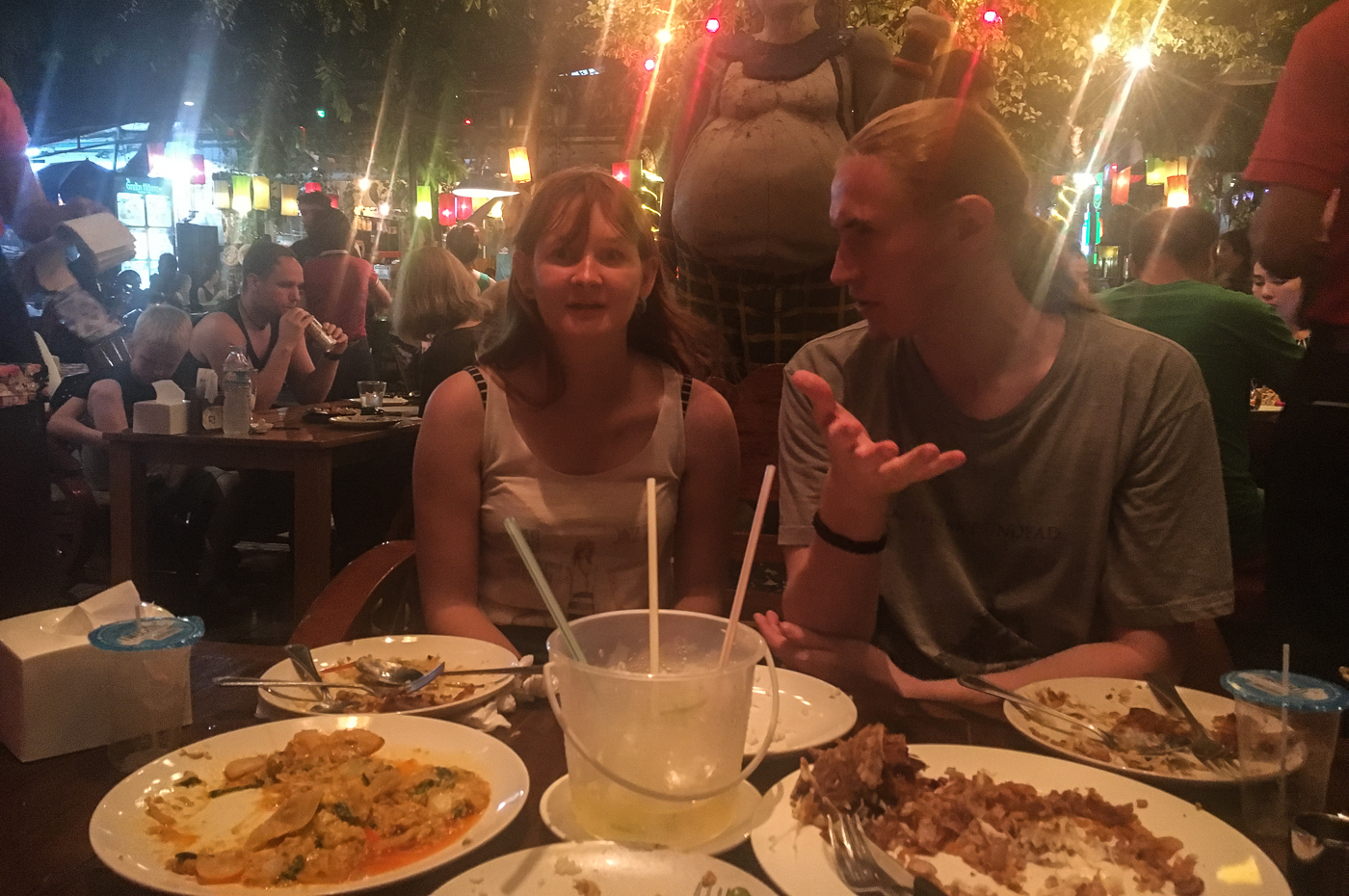
Sarah, Mathias and Christian tried various fried creepy-crawlies. They chewed on the little legs and wings, which crunched between their teeth. A little ‘hmmm…’ escaped them, and they all agreed that they tasted a bit like pork crackling.
The following day we wandered around Bangkok without any grand plans, apart from seeing a little more of the city before moving on. We got talking to a man on the street who suggested taking a tuk-tuk around for a couple of hours to visit some of the smaller temples. It sounded like a good idea at first, but what was his real motive? Our common sense and scepticism immediately tried to warn us, but we climbed into the tuk-tuk anyway and decided to see what happened.
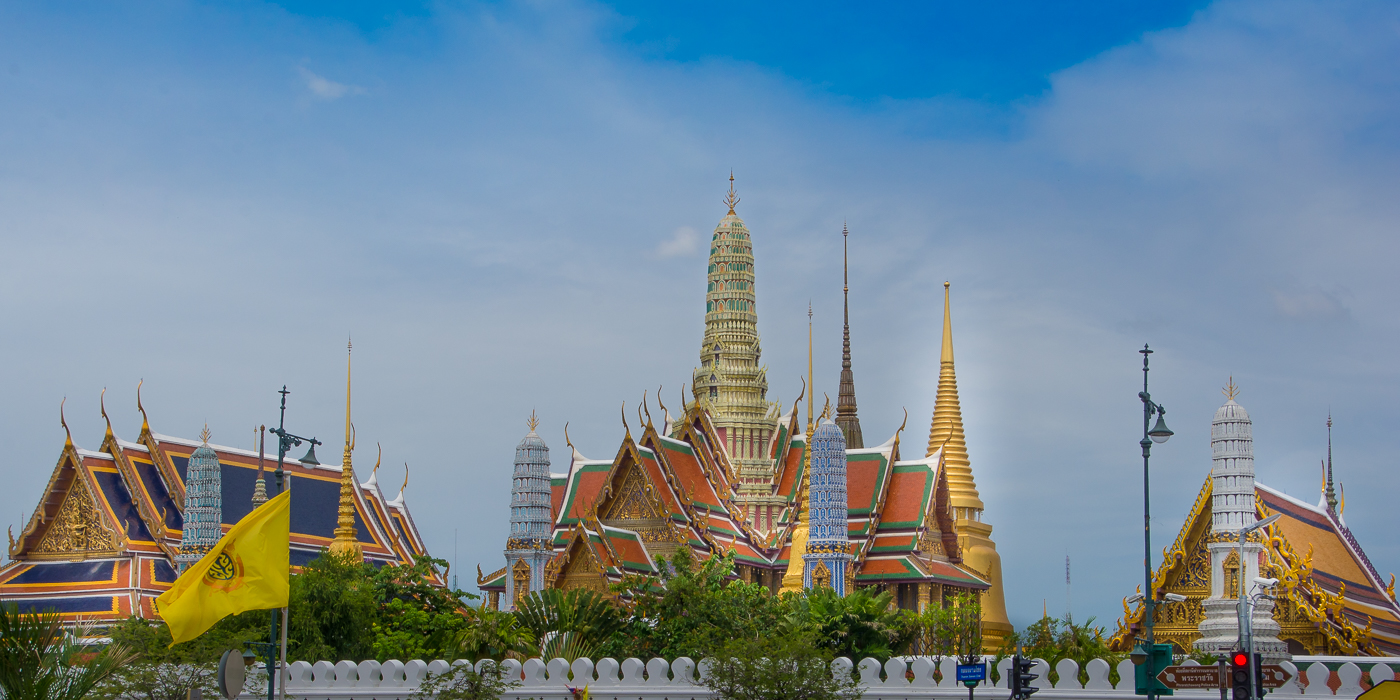
Of course there was an ulterior motive. After visiting the small temples and a large Buddha statue, we were expected to stop at a tailor’s shop. We knew from previous visits that Thailand has some excellent tailors, and in the end Mathias bought his first tailor-made suit.
Our female driver, who had driven us safely to and from Hua Hin, was waiting for us early one morning in Bangkok. She told us to settle in for a three-hour drive to our next stop: Hotel Lilawalei, about 30 kilometres from the Khao Yai rainforest in northeastern Thailand.
We knew we’d booked somewhere luxurious, especially as we’d secured it at half price in the low season. But Lilawalei was an extraordinary place, with an incredibly beautiful garden full of flowering frangipani trees. It was far more luxurious than we’d dared hope. Who would have thought we’d stay somewhere with so many of my favourite flowers that it was almost like a plantation?
We’d booked a trip into the rainforest — not the same challenging expedition Christian and Sarah had been on, but simply an introductory one-day walk in the forest.
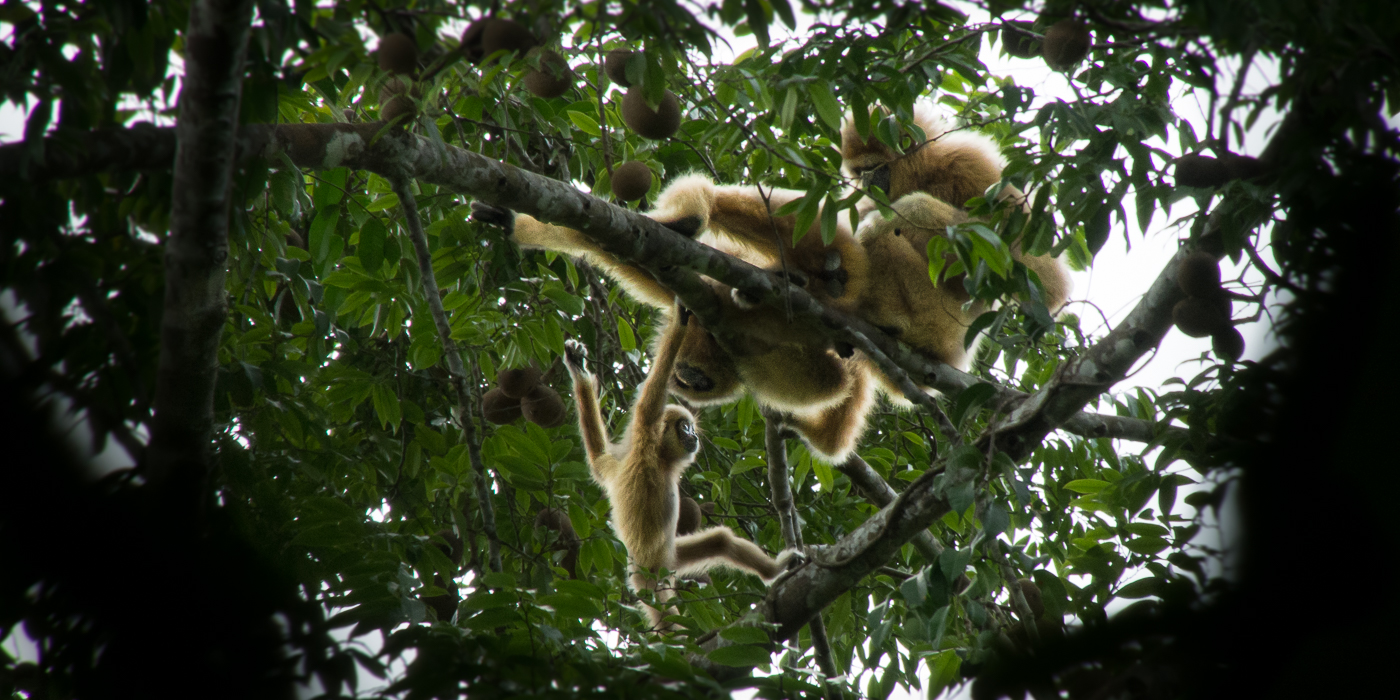
We were picked up early in the morning and set off again with a guide who spoke good English. We hadn’t gone far before we stopped to watch a group of gibbons playing in the treetops. We could only see one group, but we could hear two groups calling to each other.
We walked four kilometres towards a waterfall, following narrow forest trails that went up and down. Some stretches were muddy and slippery, others flat. We were all paying attention both to where we stepped and to what we saw, so there wasn’t much conversation between us.
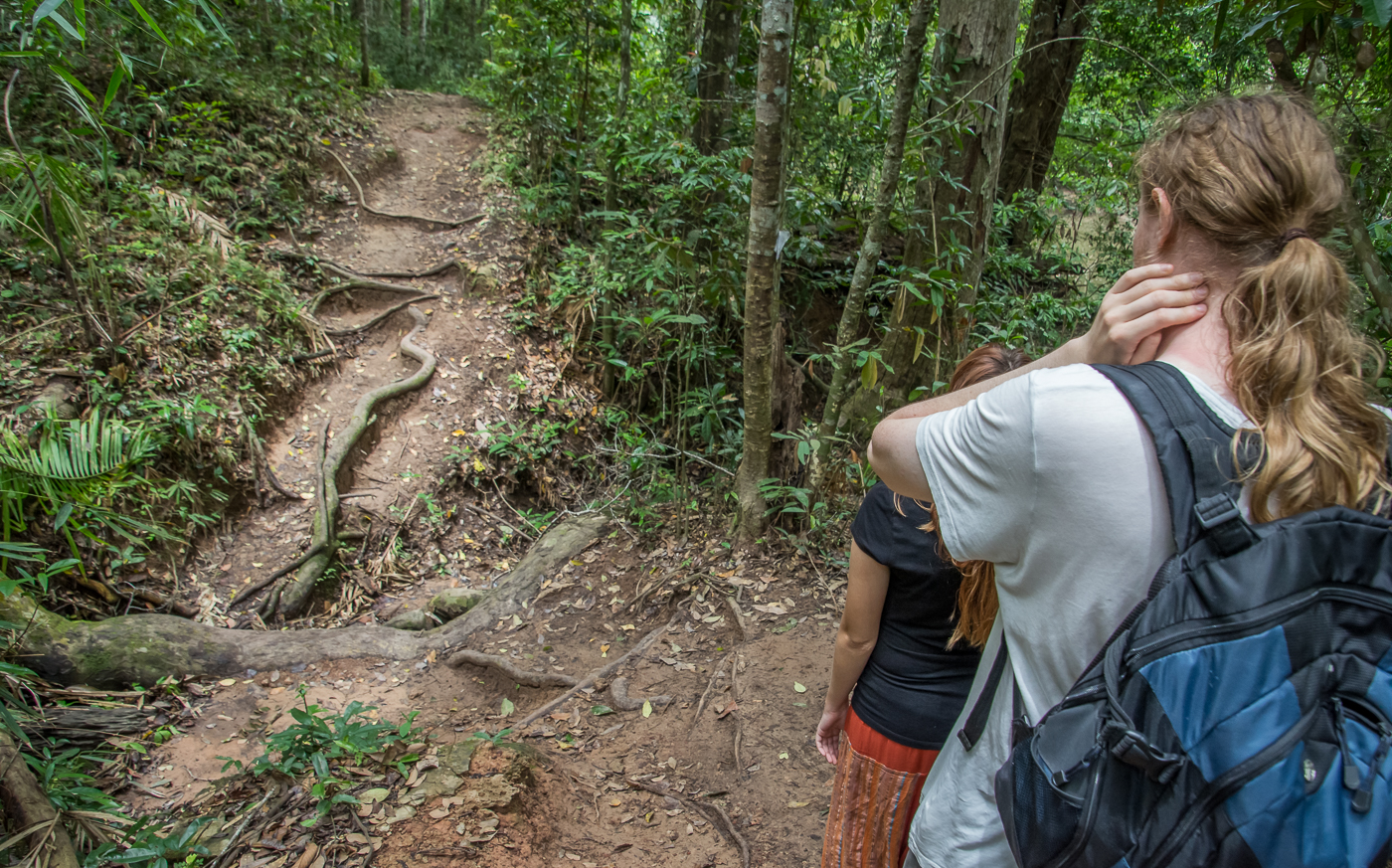
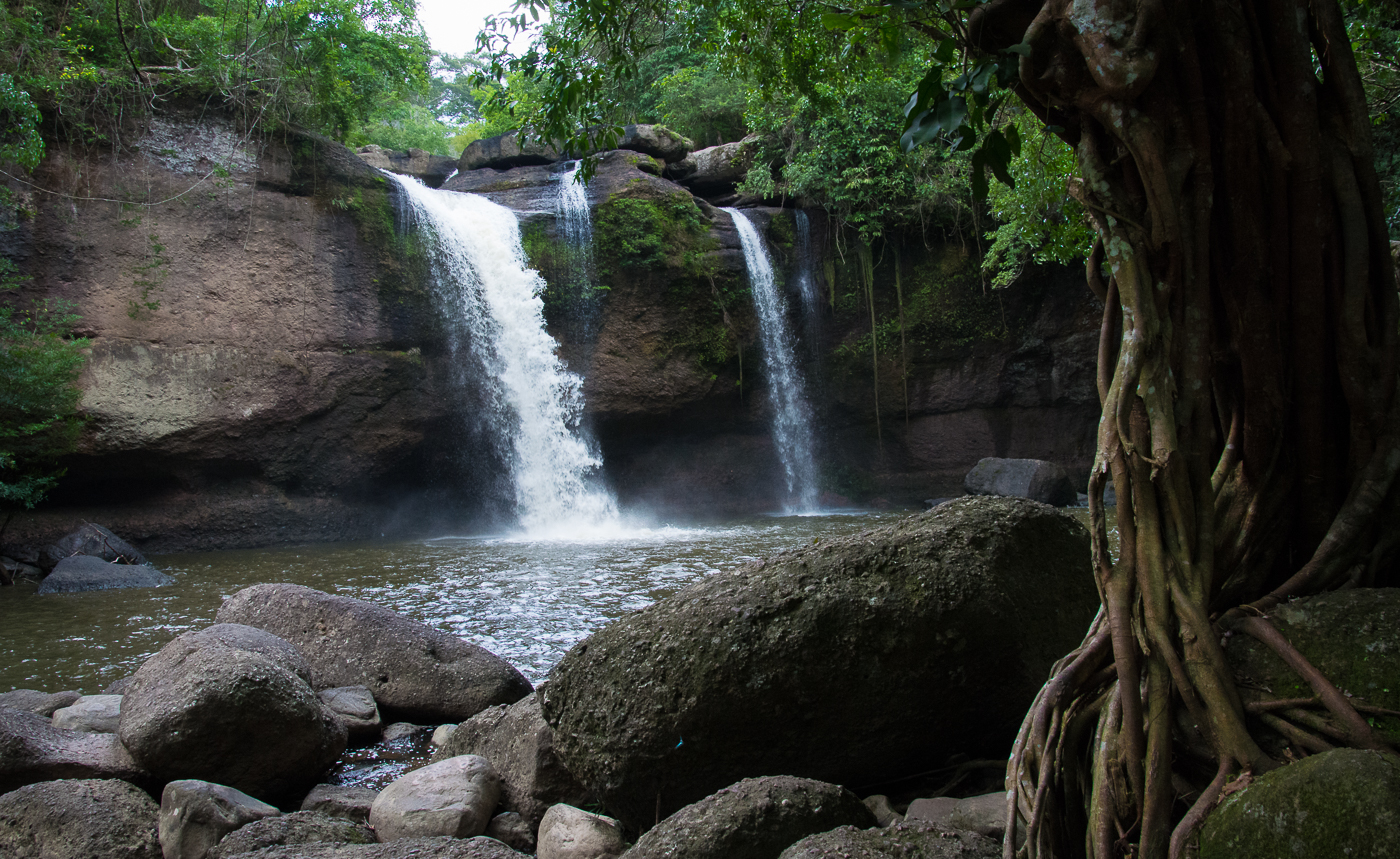
Christian shared stories about parasitic plants, huge ‘telephone trees’ and birds carrying seeds from one part of the rainforest to another. He’d learned these things from skilled guides who had led us on our many previous rainforest visits, as well as through his own considerable interest in tropical wildlife and plants.
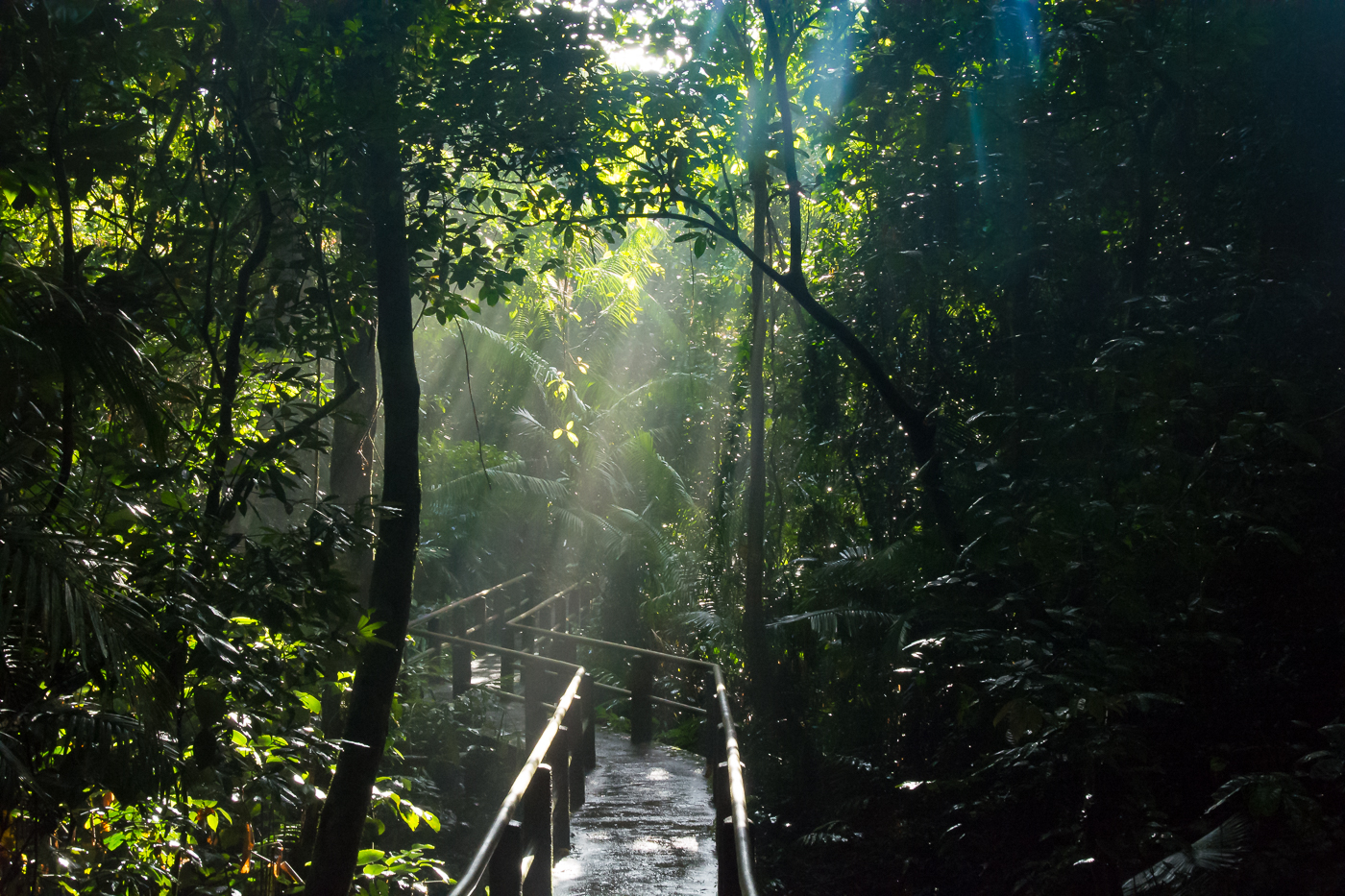
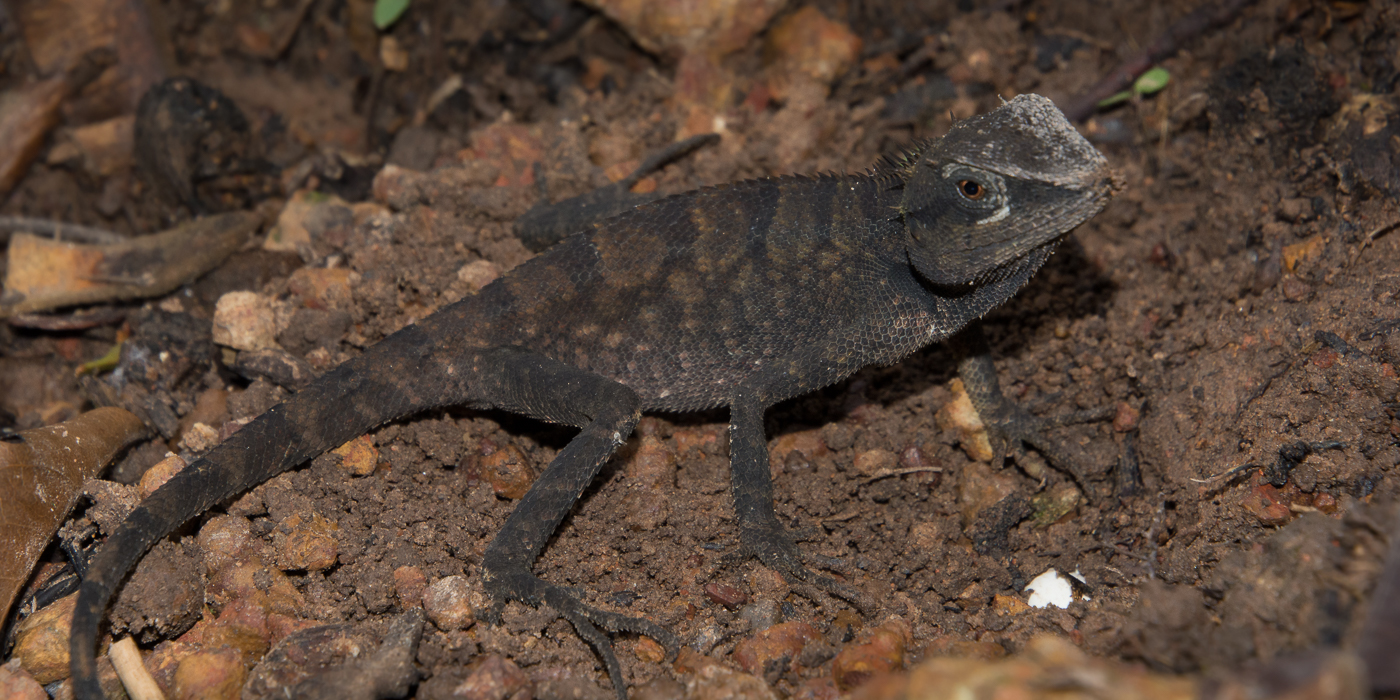
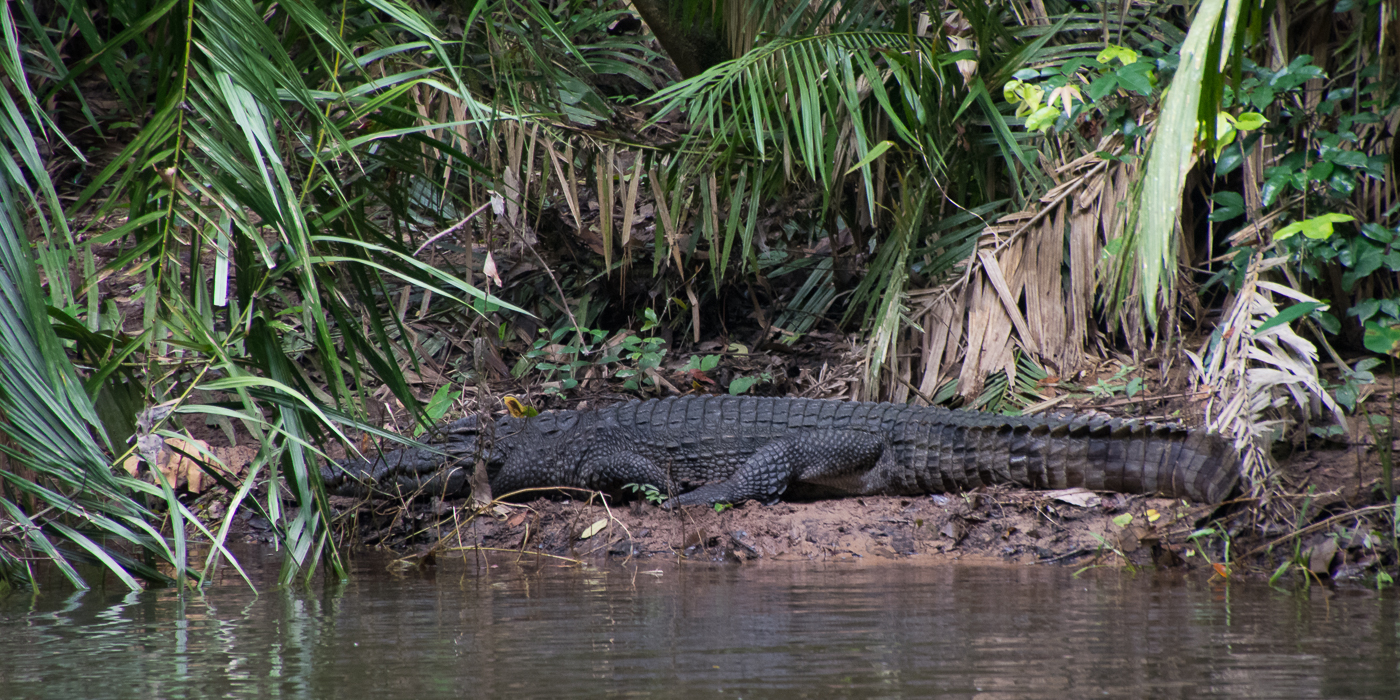
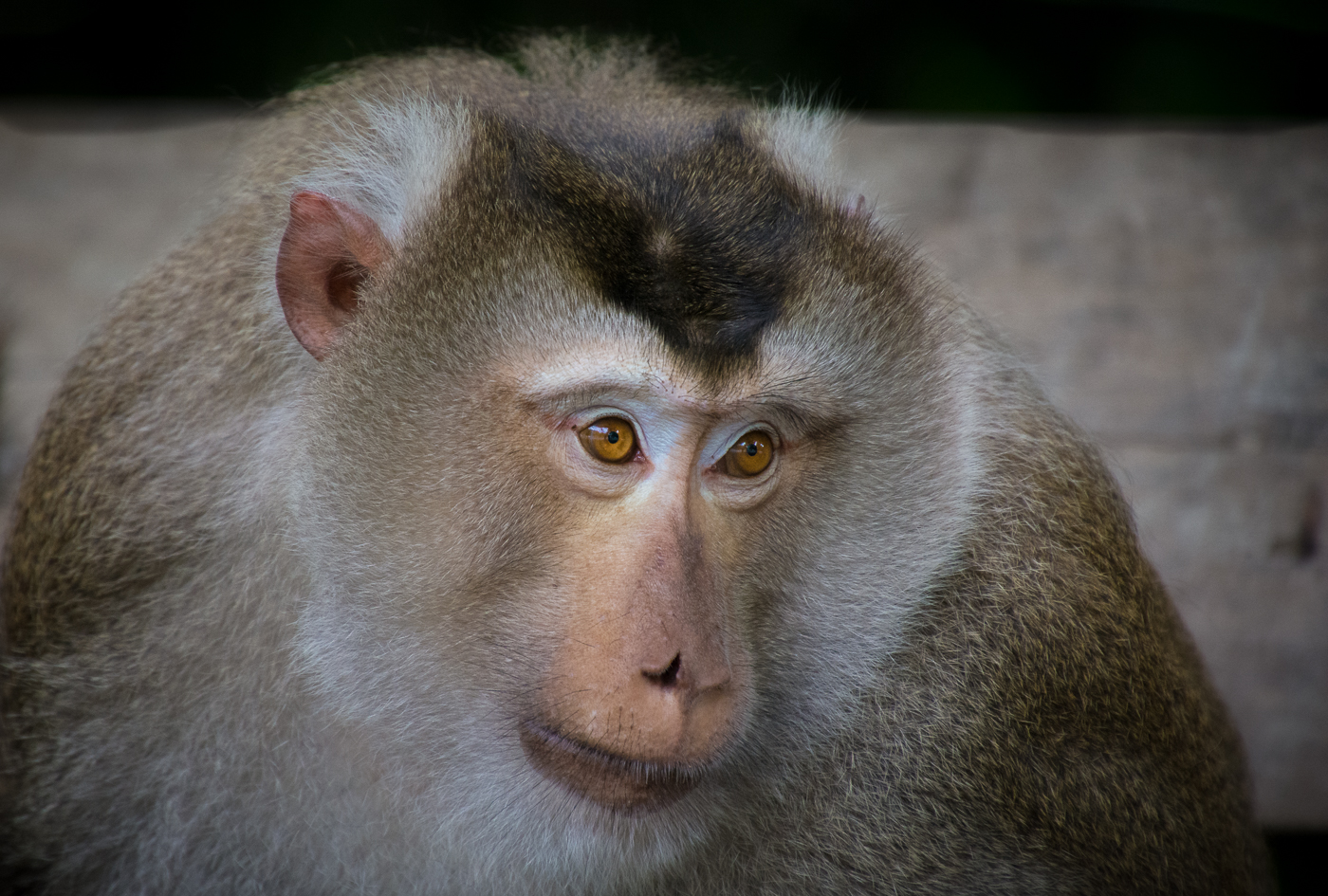
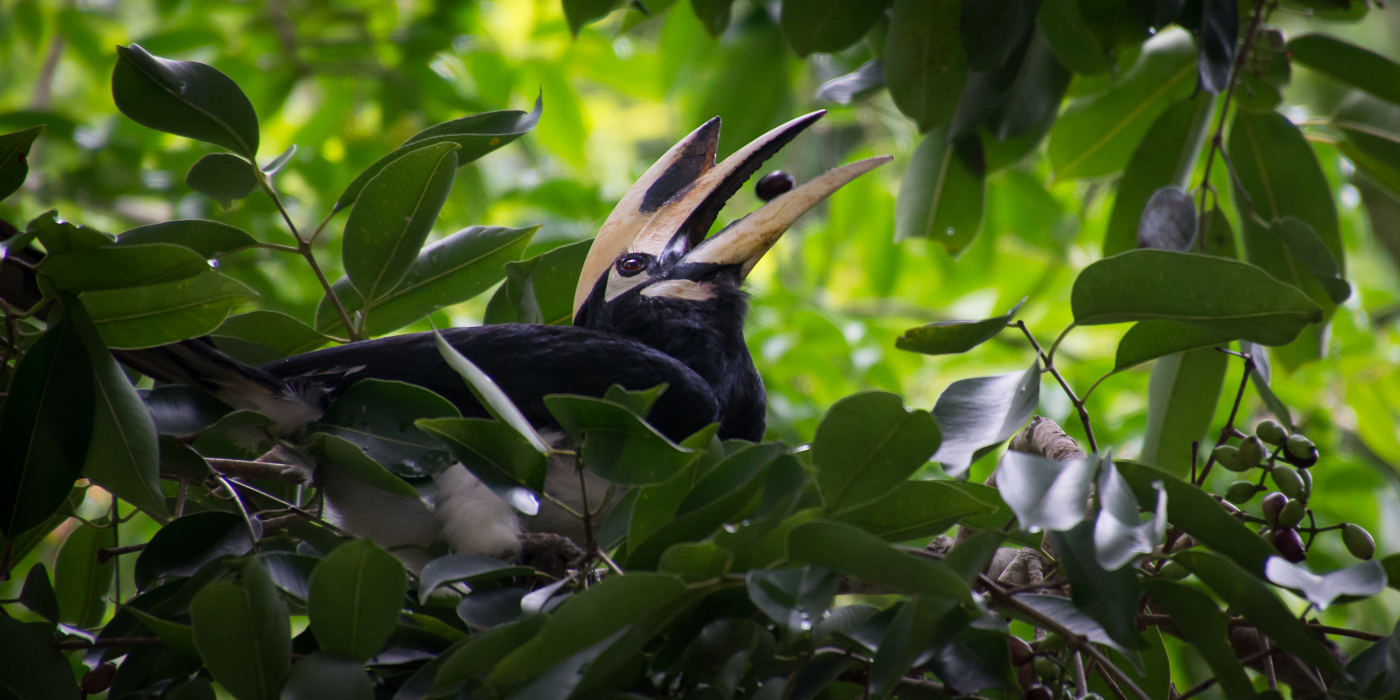
We see birds, monkeys and reptiles. Our guide finds a snake for Sarah and Christian: a green pit viper (Pope’s pit viper). From a respectful distance, Mathias and I watch them admiring the snake and taking photographs. We also see a Siamese crocodile and a lizard guarding its eggs.
We see groups of butterflies in yellow, blue and purple, with all sorts of patterns. It’s interesting how the butterflies seem to stick together according to their colours: all the yellow butterflies gather in one place and the purple ones in another.
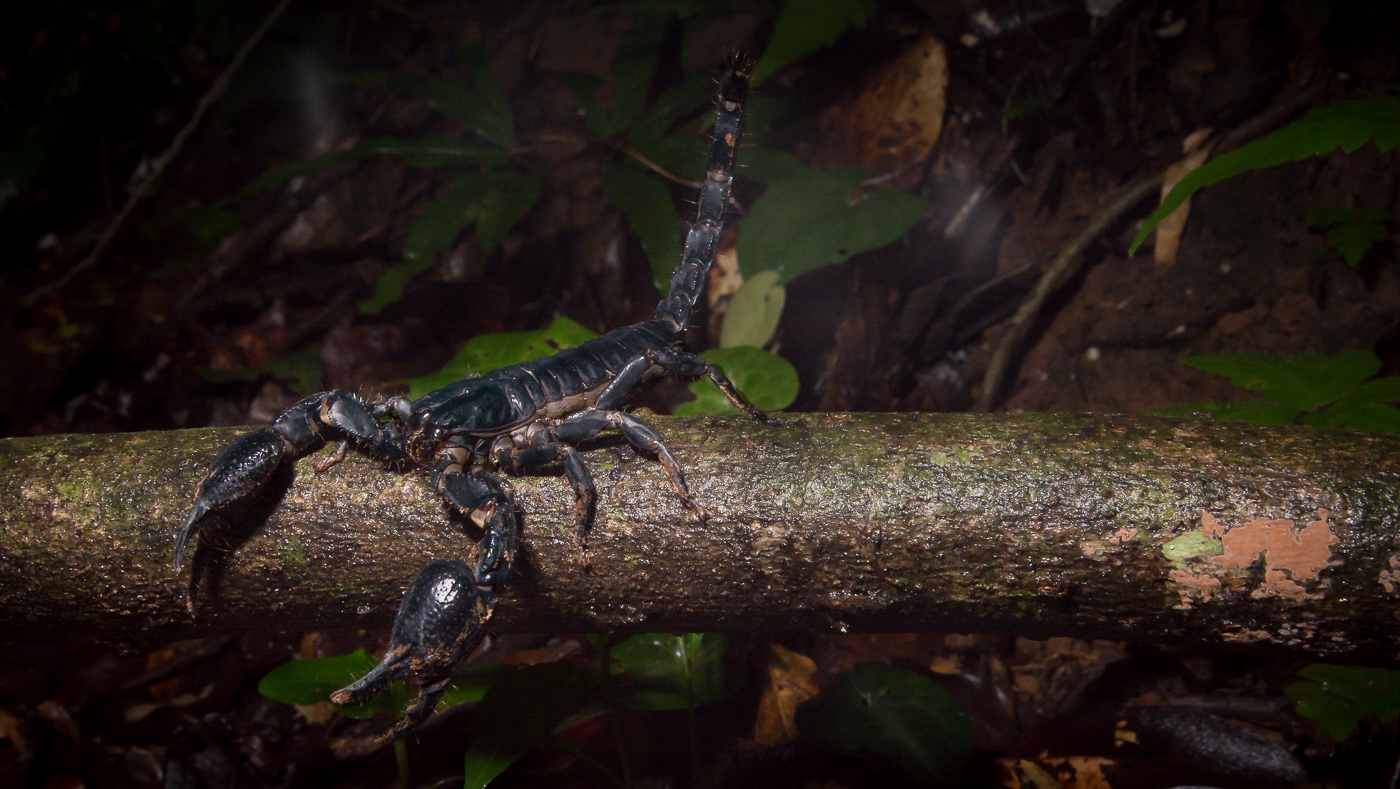
We see large, hairy butterfly caterpillars and even bigger, shiny millipedes crawling across the forest floor. There are also strange, colourful insects with long, lantern-like horns.
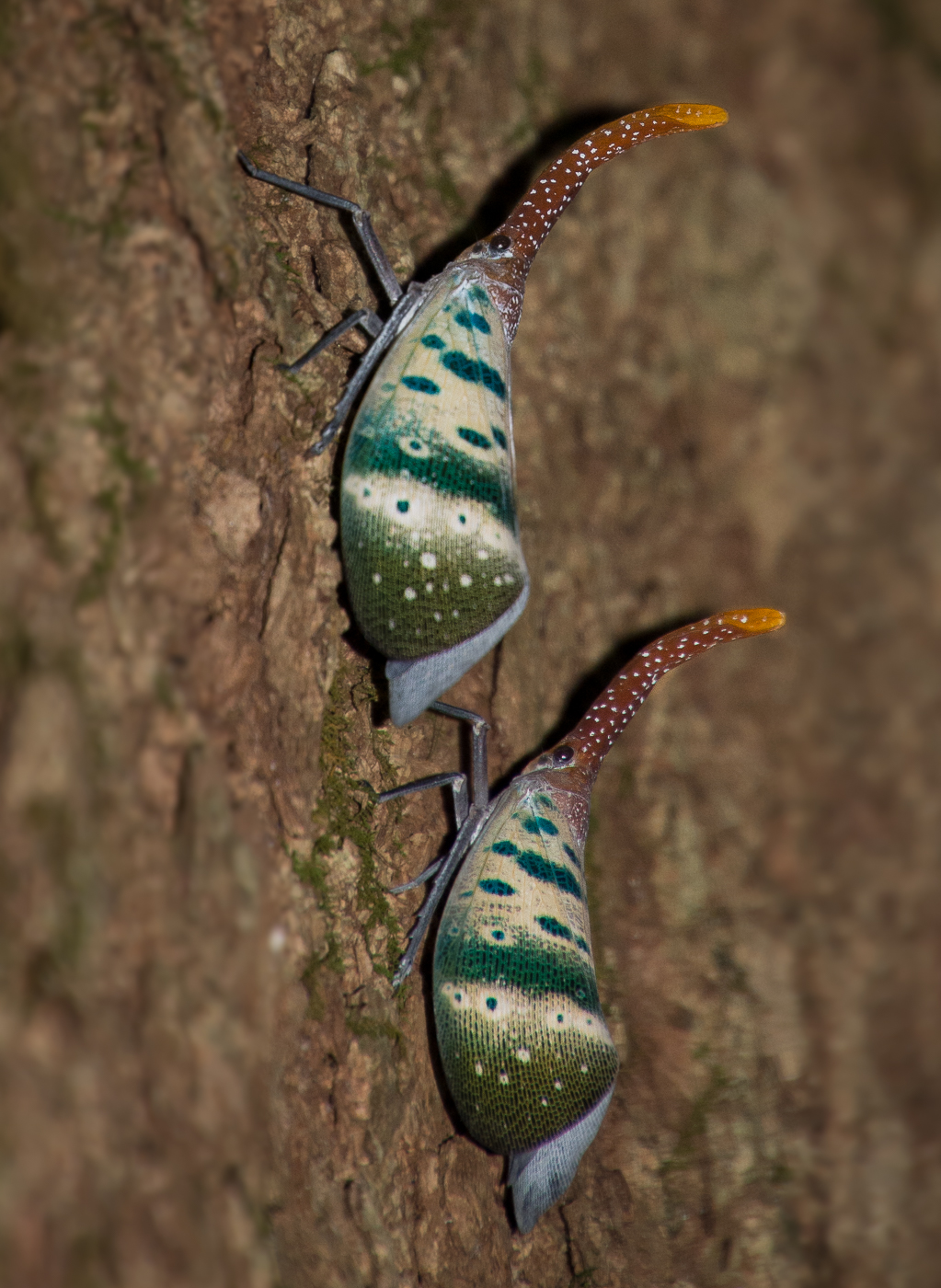
The sounds of the rainforest are something special. There’s a constant hum, a little like electricity buzzing, but it’s actually large cicadas singing. Every now and then we hear birds calling — some with short, sharp cries, others with long, beautiful songs.
We’re in a highland rainforest, so it’s a little cooler than the places we’ve visited before. The thermometer at the visitor centre shows just 24.8 degrees Celsius. But the humidity is still high, and it feels considerably warmer inside the rainforest.
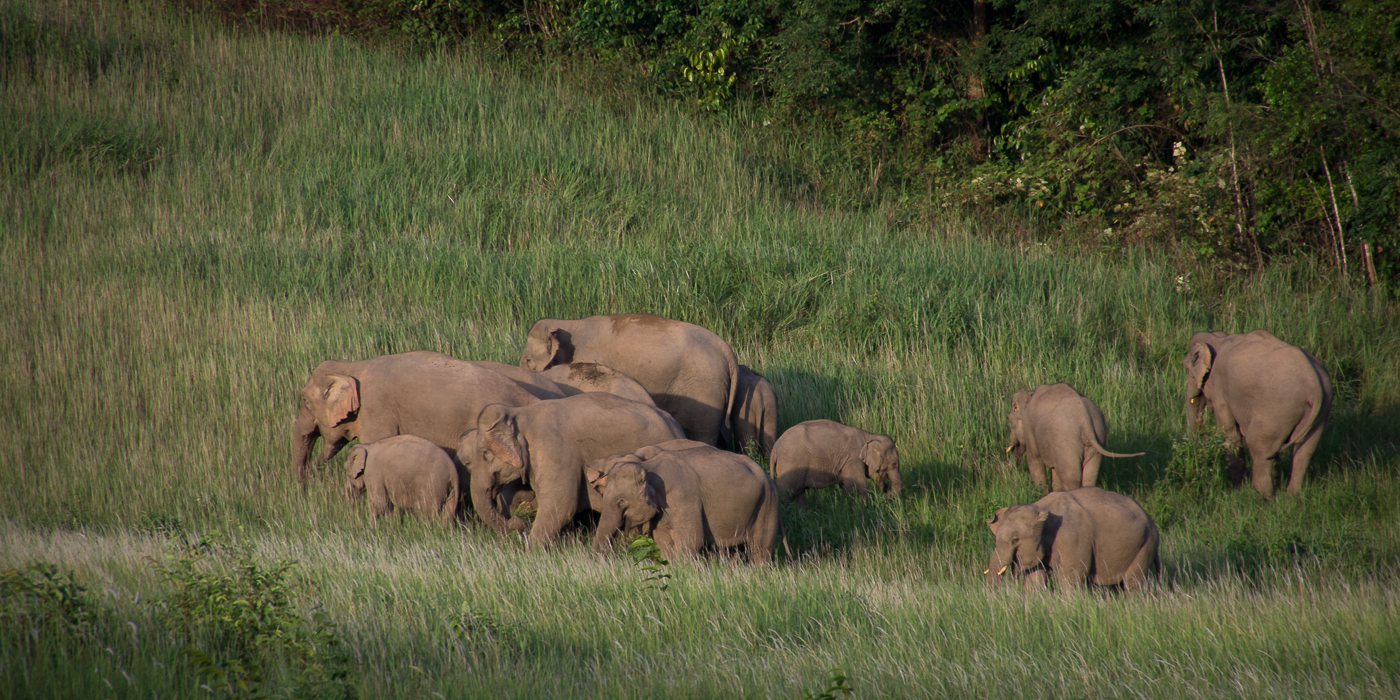
Just before dinner, we’re lucky enough to see a herd of wild elephants spending time together in a meadow.
In the car on the way back to the hotel, Sarah says, ‘Well, this probably won’t be the last time we visit Thailand.’ She’s been very pleasantly surprised by the country. She doesn’t remember much from our earlier trips, although she was only six years old when we first came here.
After much consideration, online research and conversations with local guides, we decide to stretch our budget a little and fly from Bangkok to Siem Reap instead of taking the bus across the border. We’ve heard plenty of stories about theft and travellers being scammed at the border, including people having to pay a lot of money to get their passports back.
We arrive by Cambodian tuk-tuk at our four-star hotel in Siem Reap, full of expectations. It’s clearly the low season. There aren’t many tourists around, and you can get a room at a four-star hotel for next to nothing. We’re not entirely sure, though, that they use quite the same star-rating scale we’re accustomed to.
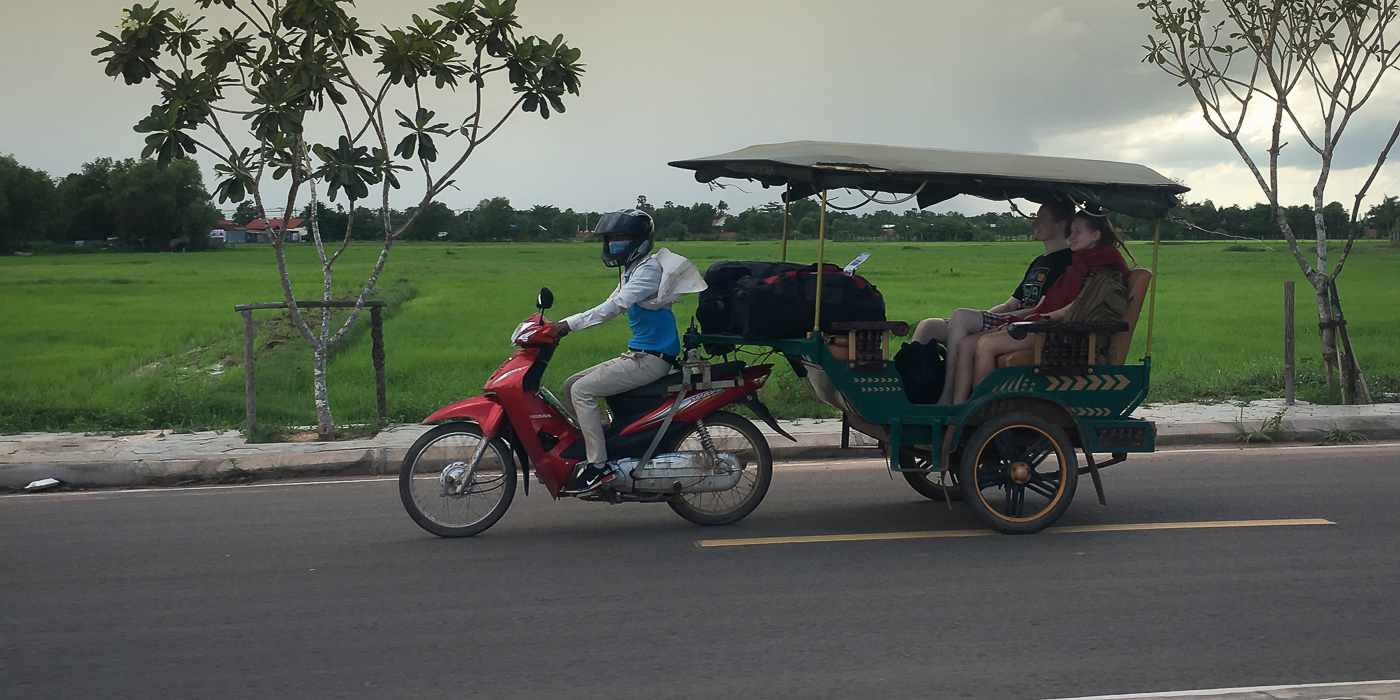
Our first impression is that the place is perfectly fine, if a little run-down. But at five in the morning we’re woken by a deafening barrage of music — a mixture of their tinkly music and singing. And it goes on until nine! We later discover that the music is for a wedding. In Cambodia, wedding celebrations last several days and involve an enormous number of guests.
The toilet in our room smells dreadful. And no, it’s not because one of us has an upset stomach.
After two nights we change hotels, which turns out to be an excellent decision. For our remaining nights in Siem Reap we stay at Chez Moi Hotel, a wonderfully welcoming place. Here you really do get luxury for your money — from the room and swimming pool to the staff, who are always ready to help.
Our first evening in Siem Reap is all about traditional Khmer BBQ. Kangaroo, snake, frogs, crocodile and much more are cooked over a little charcoal grill placed on the table. A delicious treat and a fascinating experience that we would definitely recommend as a must-do on a visit to Cambodia.
There is an extraordinary stillness, and an immense sense of history, surrounding the temples in and around Angkor Wat. We’re on a day trip with our own English-speaking guide.
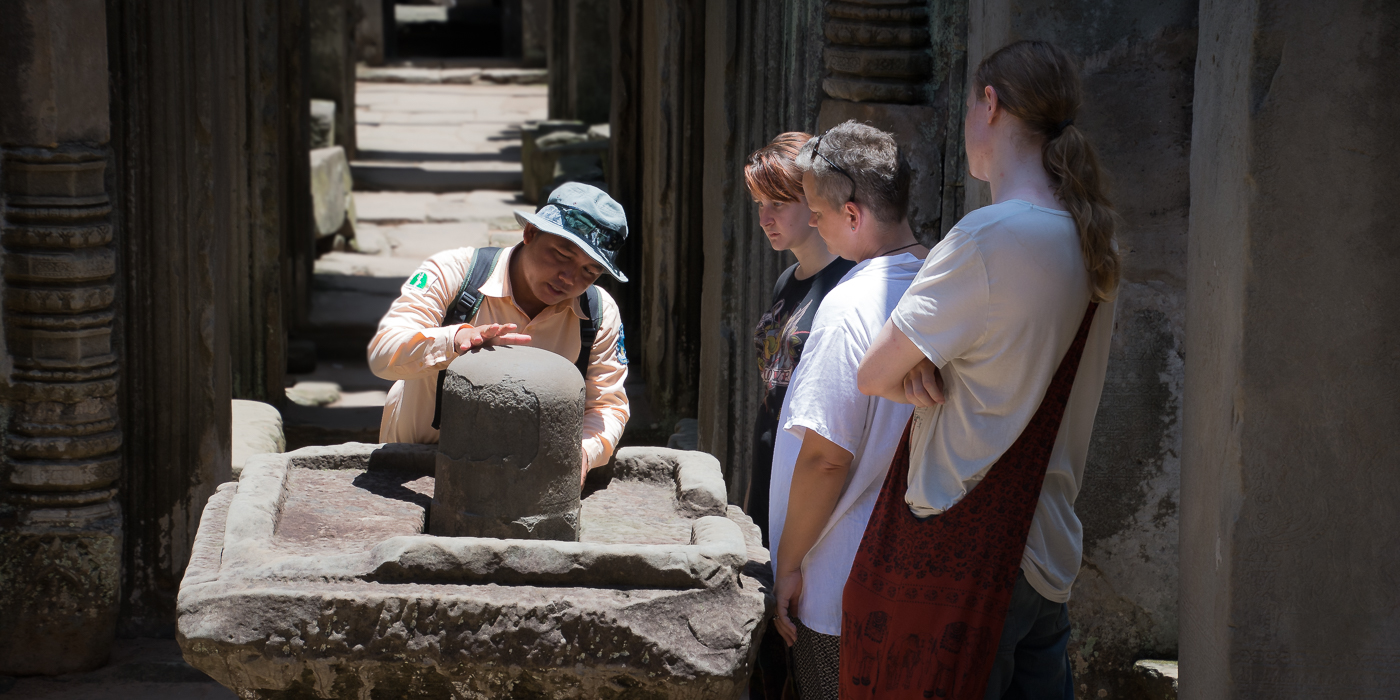
We spent a long time debating whether to book tours of Angkor Wat in advance. In fact, we had already looked into it while we were in Vietnam and received a quote from a local tour operator in Hanoi. But goodness, we’re glad we decided not to book anything ahead of time! Finding tours to Angkor Wat couldn’t be easier, and there’s something to suit everyone. You can hire a local tuk-tuk very cheaply, tuck your Lonely Planet under your arm and head out to the temples. Or you can hire a car and an English-speaking guide, as we did. We were so pleased to hear all the stories our guide shared — and to be able to ask the thousand questions that sprang to mind.
We booked a car and guide for two days, giving us time to explore both the surrounding temples and Angkor Wat itself. We watched the sunrise over Angkor Wat after the whole family had got up at five in the morning to take in that beautiful sight.
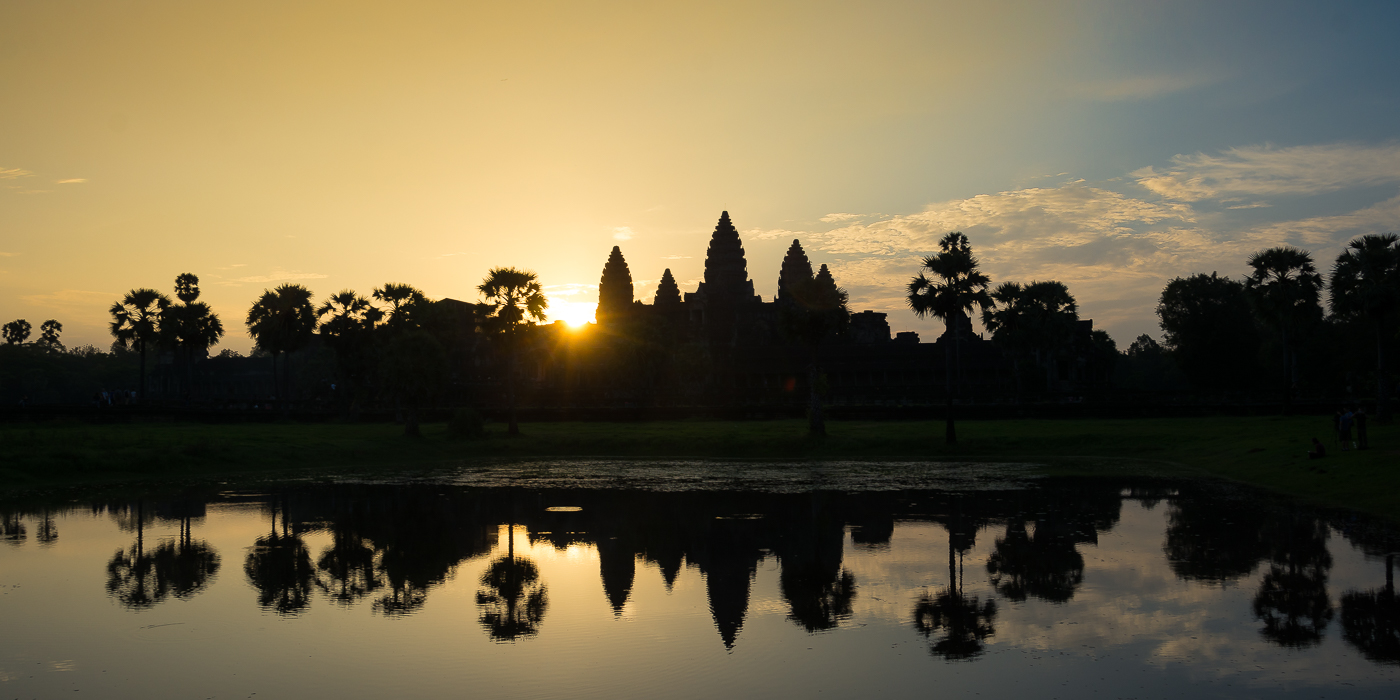
The temples are graceful. The ruins tell of an age of splendour when kings, gods and demons were part of everyday life — an age long since swept away. This is a place that civilisation has abandoned, where the forces of nature have taken over again, as though they are slowly erasing humanity’s existence, achievements and buildings. Is this what would remain of our civilisation in a thousand years if we left our cities behind?
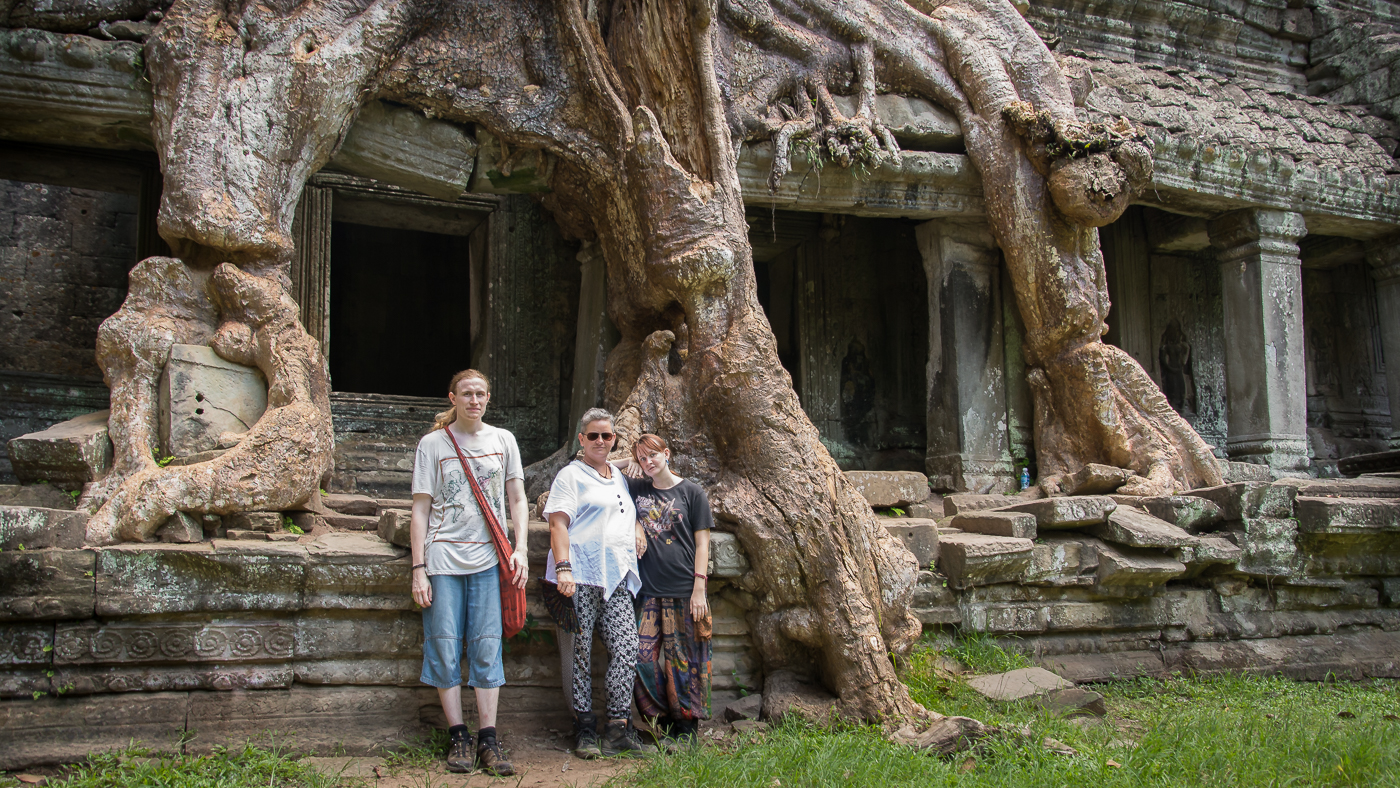
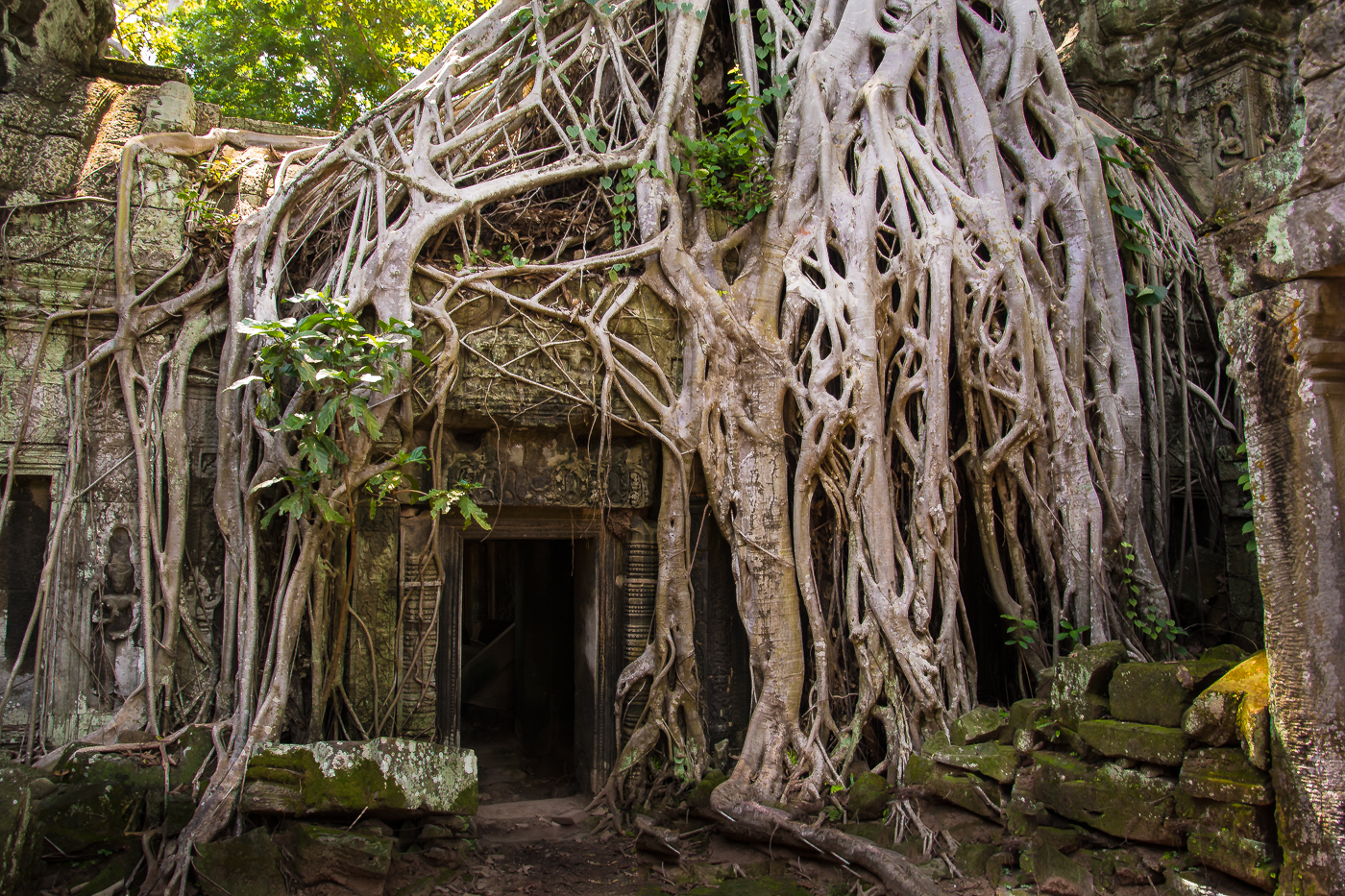
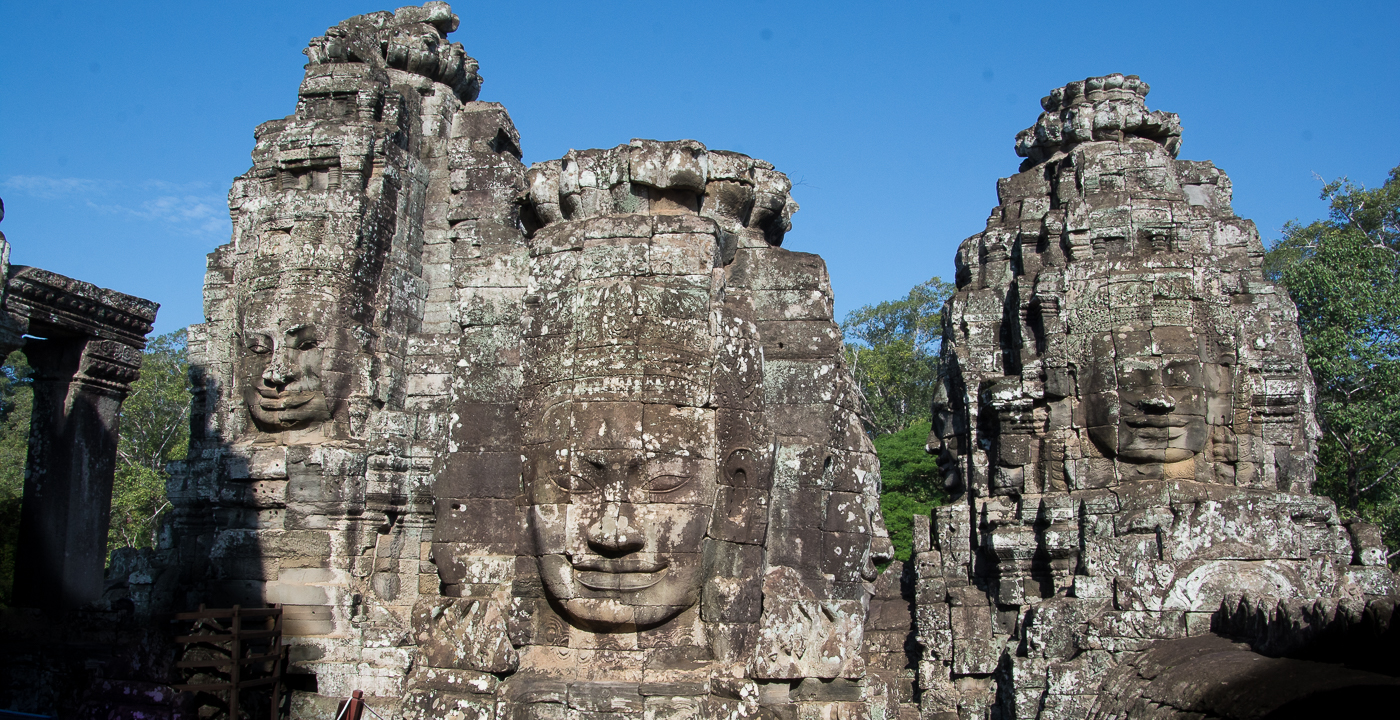
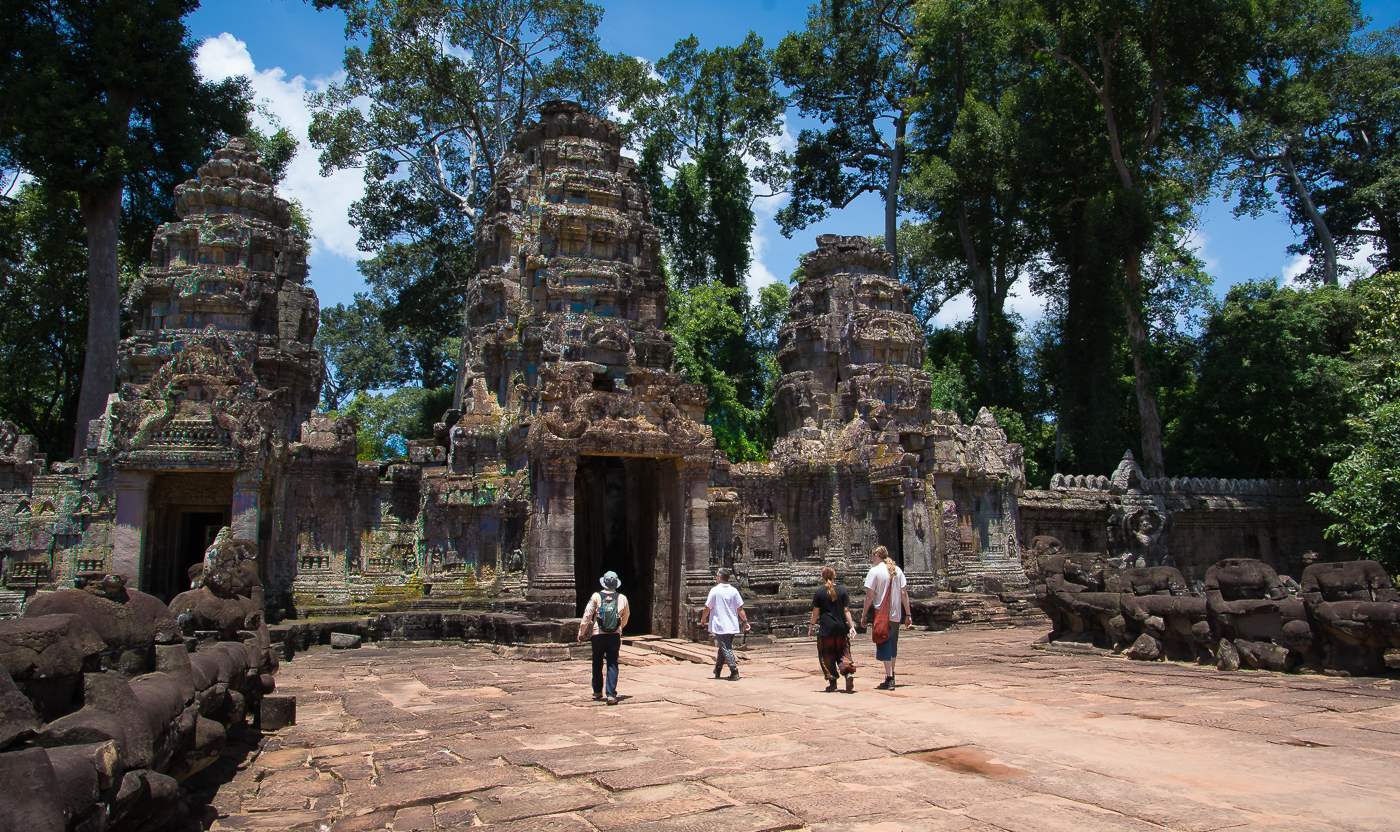
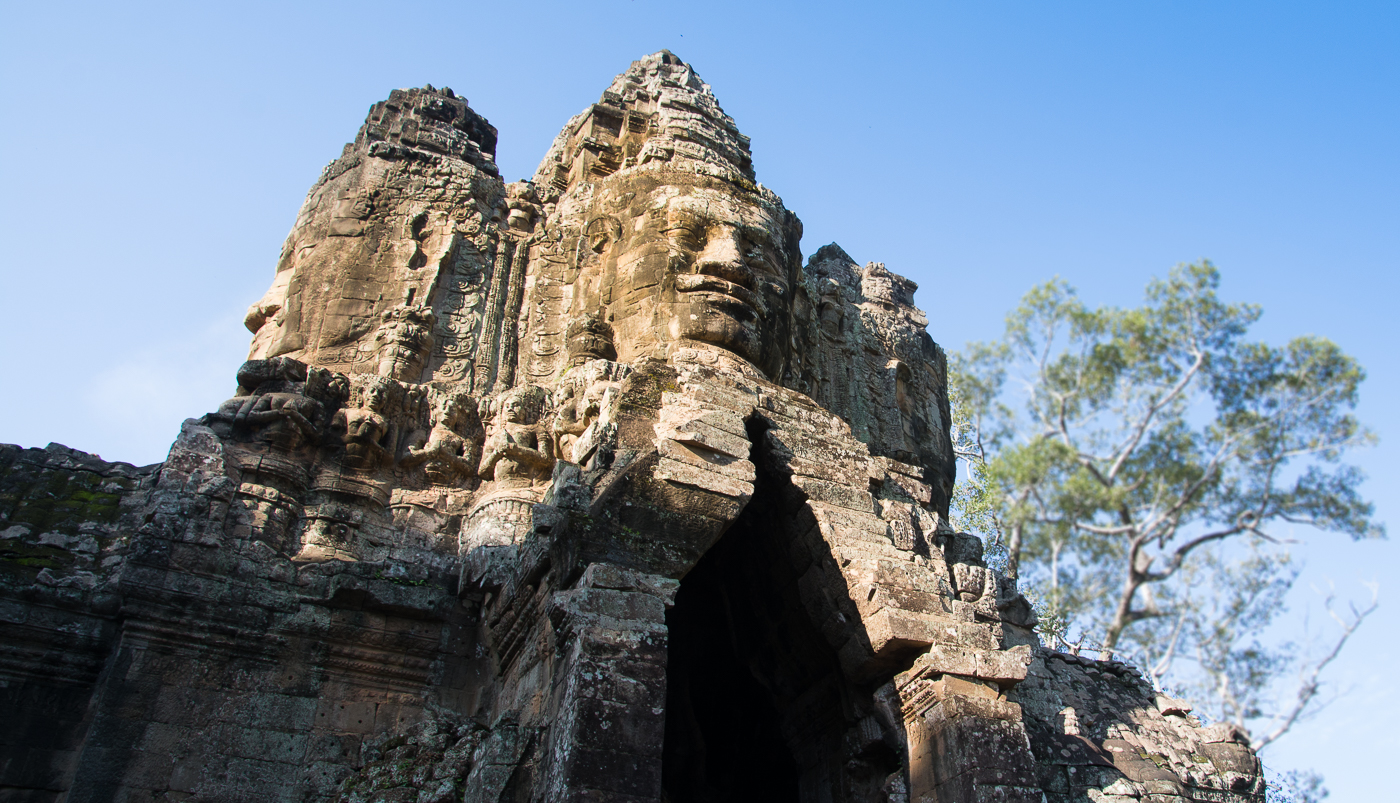
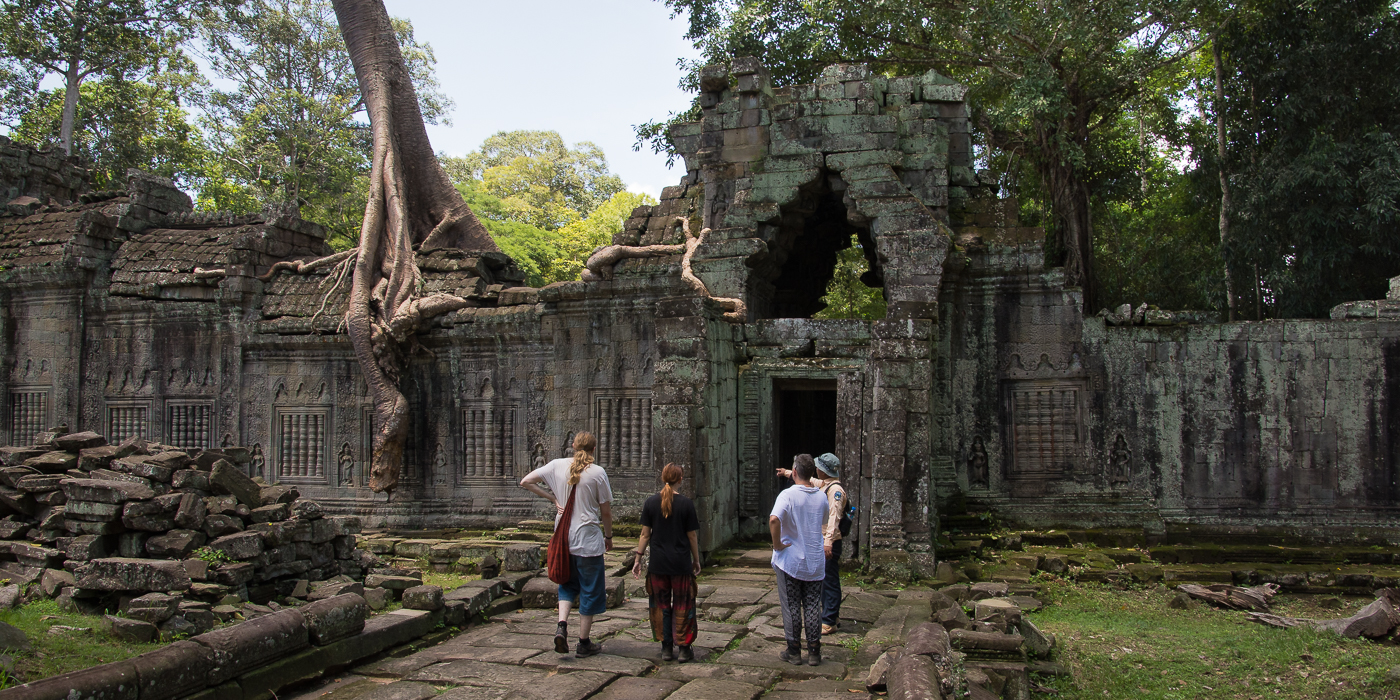
The voices of the past seem to speak through the temple walls and the surrounding forest. For a moment we become spiritual ourselves: we light an incense stick and say a prayer at a Buddha statue.
Cambodia is beautiful and raw in so many ways, but also incredibly poor. The country has surprised me in the most positive way. As we leave Siem Reap by bus, heading for Saigon, we all agree that this certainly won’t be our last visit to Cambodia.
The bus rattles along. We feel incredibly lucky. We’d booked a nine-hour bus journey from our hotel to Saigon and expected to be picked up by an old, worn-out bus. We’d armed ourselves with all the patience in the world for the long trip.
But here we are, travelling in a VIP bus with room for 21 passengers. It has soft seats and plenty of legroom. Surely we can manage nine hours through Cambodia in this!
We’re delighted we chose this way of travelling. It gives us the chance to see more of the country, too. We pass rice fields stretching as far as the eye can see, rubber plantations and flat countryside dotted with small villages.
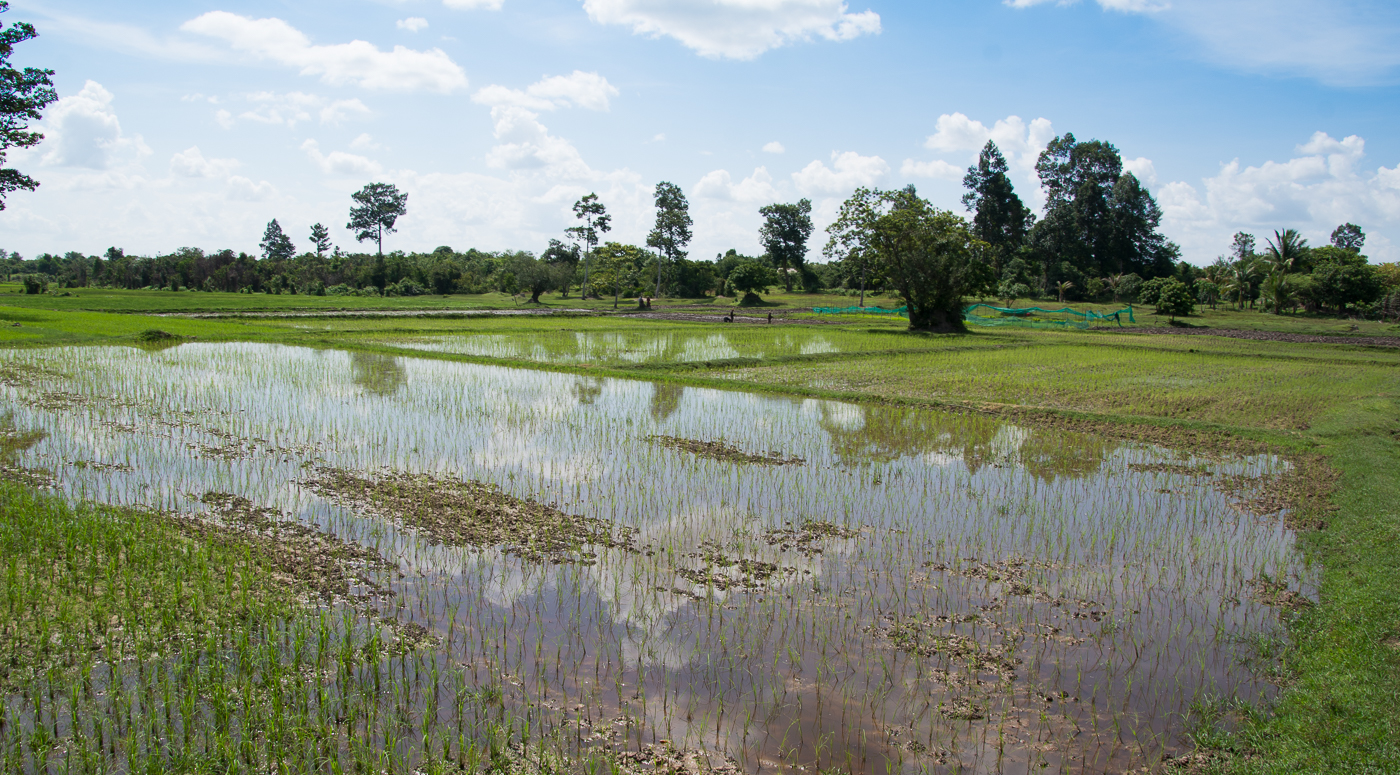
What stands in stark contrast to all this, though, is the poverty, on a scale we haven’t encountered anywhere else on our journey. There are many simple wooden houses built on stilts, and as we pass them, you can sometimes see that inside there’s little more than a bed and a couple of chairs.
Spirits are high, and we’re enjoying the journey through Cambodia. We feel we’re in safe hands, and all those stories about travellers having things stolen or running into trouble at border crossings seem a distant memory.
We arrive at the Vietnamese border. It’s a different crossing from the one most people use, and there are hardly any people here. In fact, our bus is the only one arriving to cross. ‘Fantastic,’ we think, and we accept that we have to unload all our luggage for passport control and have our bags scanned.
But suddenly everything changes. They won’t let Mathias through. They keep insisting that he needs a visa. As Danish citizens, we’re entitled to up to 15 days in Vietnam without paying for a visa, so there shouldn’t be a charge. It turns into a big argument because the Vietnamese authorities had stamped Mathias’s passport when he was in transit through Saigon. That causes a great deal of confusion: the border officials believe he’s already been in Vietnam and has therefore used up his 15 days of visa-free entry.
But there’s no reasoning with them. They don’t really speak English, and the voices are getting angrier and angrier. In the end, we agree that Mathias will get a visa, which they then set about issuing for a fee.
A little shaken and angry, Mathias and I return to the bus after an hour of arguing, during which the bus driver threatened to leave the border without us. But we get through, and a couple of hours later we’re back in Saigon.
It feels a little strange to be back in Saigon. This is where we started four months ago. For a moment we reflect on all the experiences we’ve collected along the way, both good and bad. It’s been an incredible journey in which we’ve learned a great deal about the countries we’ve visited, but also a great deal about ourselves and what we want from life.
We enjoy our final days in Saigon, visiting our good friends, wandering around the city and introducing Mathias to our favourite places to eat.
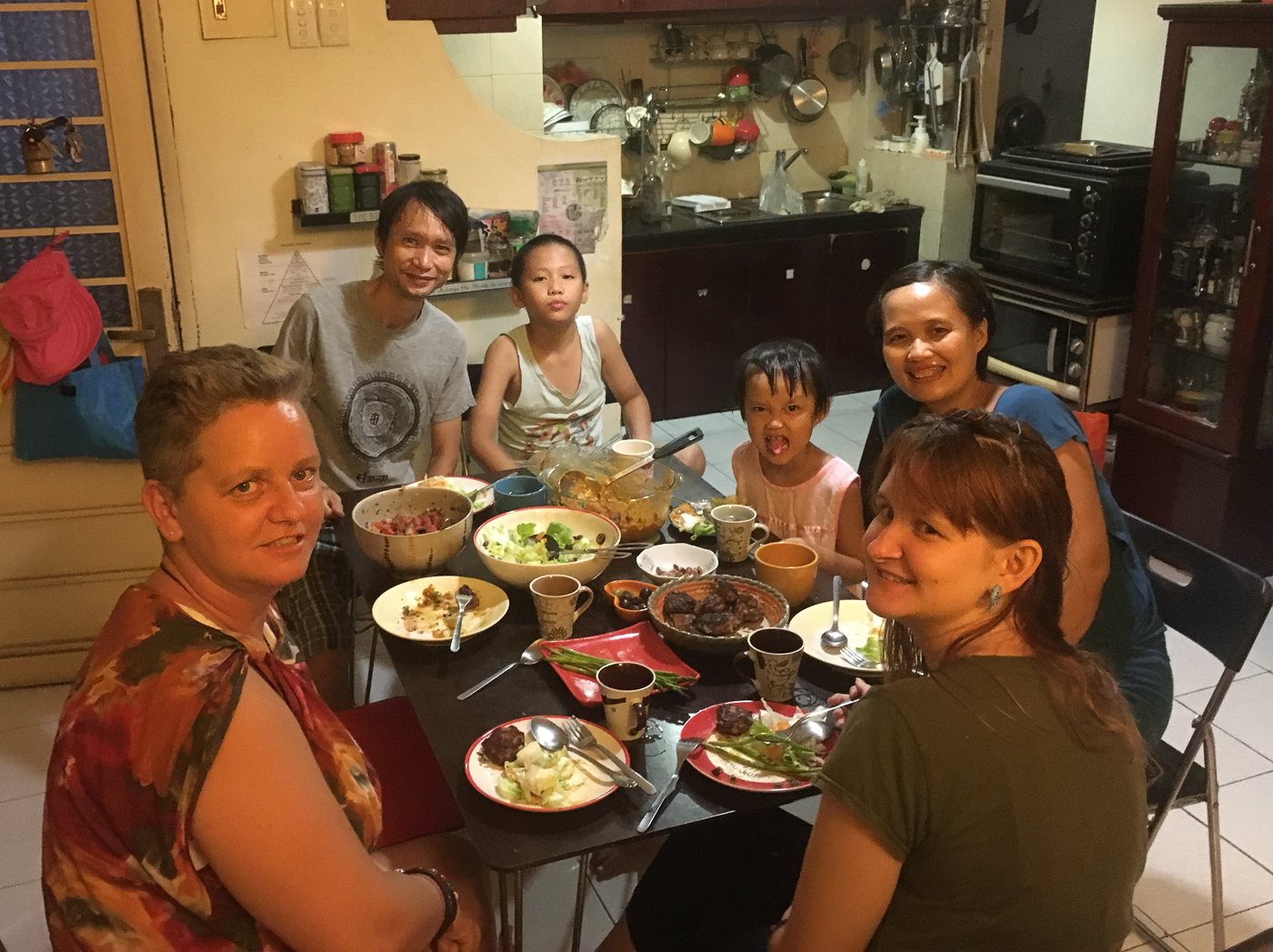
We say goodbye to Mathias and prepare to close a chapter in our travel diary.
We’ve now spent seven months travelling around Southeast Asia, meeting so many different people and experiencing different cultures and landscapes. But now we’re opening a new door, and our flight will soon take us ‘home’ to Australia.