Everything is packed. The large backpacks are staying at Villa 63, and our little wheeled suitcases are bursting at the seams. We take one last look at the birds in the garden before setting off with our private driver.
Our driver is the best in the world. He knows how to weave his way through the streets of Colombo, between lorries, tuk-tuks and motorbikes, up the mountains through narrow hairpin bends and back down again, somehow making room for a local bus with barely a millimetre to spare. Not once does he get stressed by the honking traffic or the street dogs that refuse to move out of the road. I suspect most European men would have had a little outburst by now. But not here. Somehow, the traffic keeps flowing. Every now and then I simply close my eyes and hope for the best as the oncoming cars get a little too close. But driving is his dream job and his passion. He has made this journey many times before, and he loves driving his brother’s seven-seater van, which will be our transport for the next fourteen days.
He is also eager to tell us about Sri Lankan culture and nature, even though he sometimes struggles a little with English. The conversation flows with Christian in the front seat, and it doesn’t take Christian long to tell our driver about our journey, our thoughts about the future and our plans. The foundations of a good friendship have been laid.
Once we leave the streets of Colombo behind, the road slowly winds its way up into the mountains towards Kandy, into “the Hill Country” of central Sri Lanka. The scenery changes as we approach, revealing every imaginable shade of green. Valleys and mountains alternate along the way. Roadside stalls sell everything from local fruit and vegetables and street food, such as boiled corn, to cheap plastic toys. Our driver also thinks we ought to support the local farmers when we pass his home. This results in Christian buying an entire pineapple, which isn’t particularly easy to eat in a car. We enjoy it later at our hotel instead. Nothing beats fresh fruit.
Kandy lies 500 metres above sea level, and a cool mist can settle over the town. The guidebooks recommend bringing a warm jumper. But the town shows us its most beautiful side when we arrive, and yes, we do eventually have to dig out our long sleeves — although not until later in the evening. Kandy was the capital of the last Sri Lankan kingdom, which fell to the British in 1815.
For these two weeks, we are travelling as tourists and learning an extraordinary amount about Sri Lanka. Our programme is packed with experiences intended to introduce us to this diverse country. Buddhists, Hindus, Christians and Muslims live here, each with their own traditions and cultures. It is difficult to speak of a single Sri Lankan culture when the country’s history tells of separate kingdoms and periods of Portuguese, Dutch and British rule, with each nationality and religion leaving its mark. The civil war, from 1983 to 2009, has left its scars too, although it is remarkable how quickly the country has been rebuilt.
Sri Lanka lies in the tropical climate zone, and its weather is shaped by two annual monsoon seasons. With plenty of advice from our host at Villa 63 in Colombo, we have planned our route to experience the island’s extraordinary variety — mountains, ridges, peaks, plateaus, valleys, cliffs and beaches — without getting caught in the heaviest downpours. People say the weather is always good in Sri Lanka, and so far we can only agree.
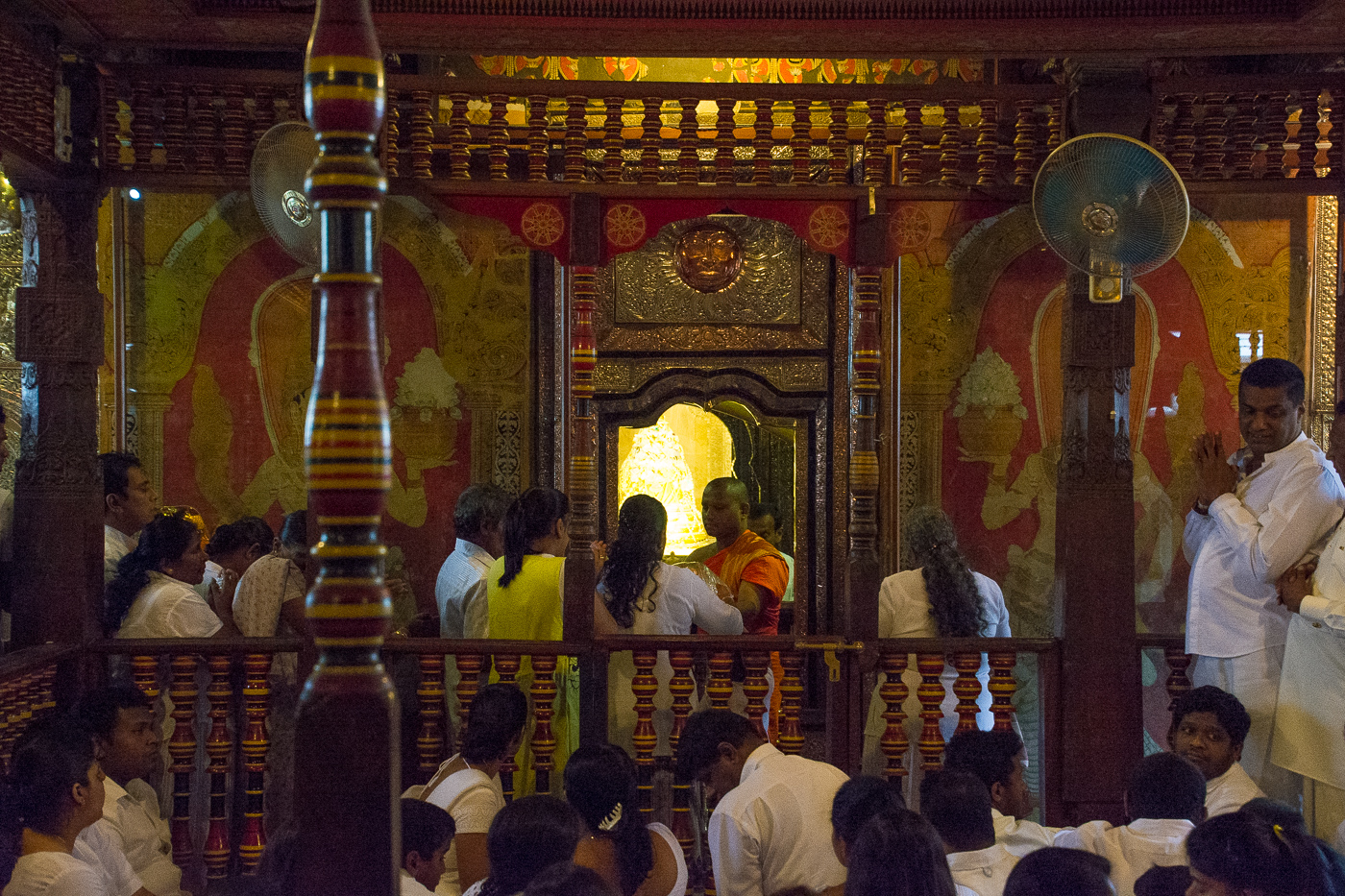
We encounter Buddhist culture and history at the Temple of the Sacred Tooth Relic in Kandy. With confidence and a wealth of knowledge, our local guide leads us through the temple and its stories. We are lucky to be there at just the right time. A minister has announced a visit, and many people have gathered to pray. Normally we would probably have relied on Lonely Planet, but having a guide turns out to be a tremendous advantage. He tells us stories that aren’t in the guidebook and makes sure we stand in exactly the right place when the monks open the chamber containing the Buddha’s Tooth Relic, gleaming with gold. We would never have got so close without him. Definitely something we would recommend to others.
The diversity of Sri Lanka’s flora can be seen at Peradeniya Botanic Garden, just outside Kandy. In earlier times the gardens were reserved for royalty, but today they are a beautiful oasis for anyone who needs a break from the noise of the city.
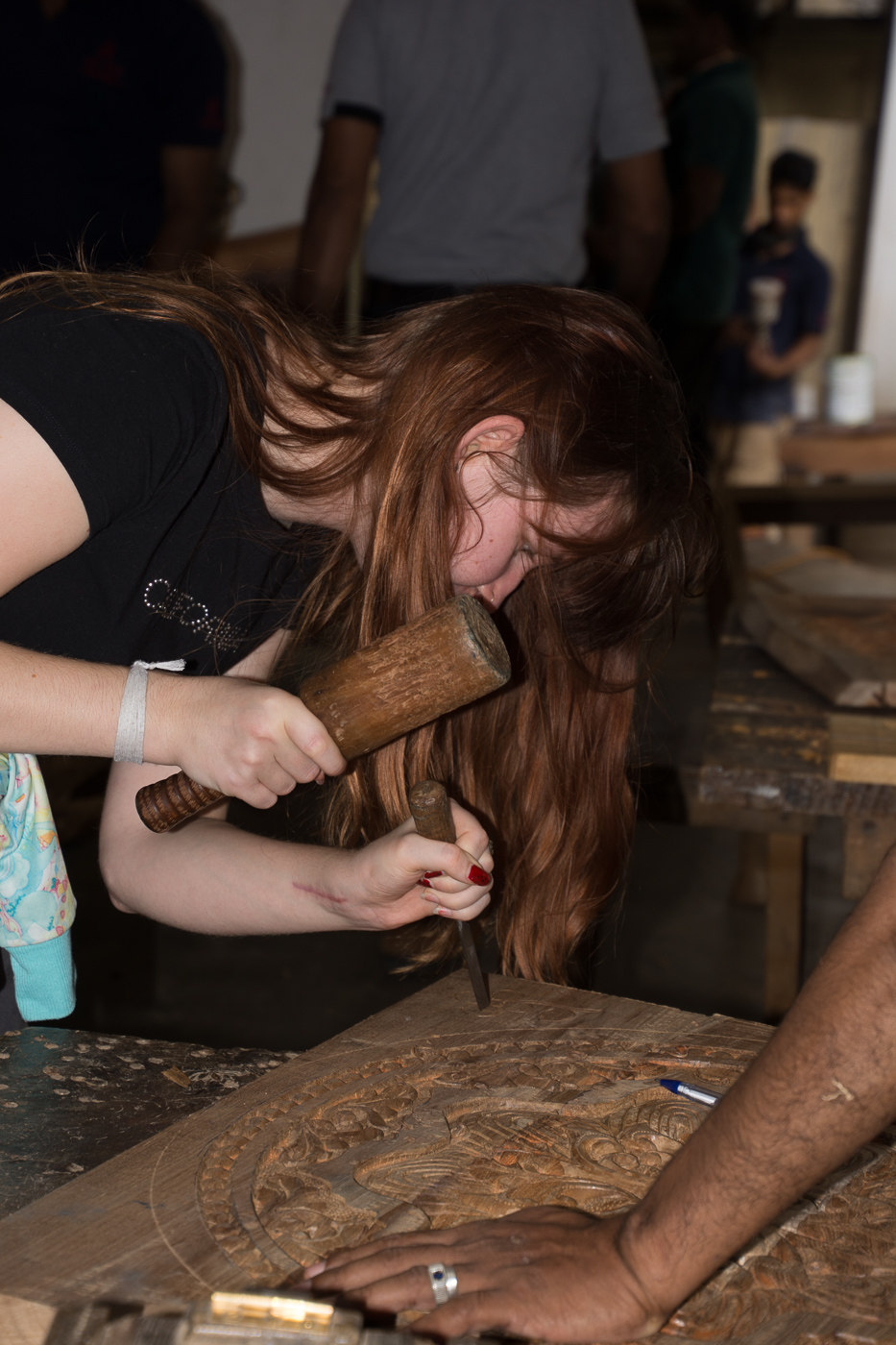
Our itinerary naturally includes a few tourist traps as well. You can choose to be annoyed by them or simply take away whatever you find interesting. Sometimes you think you’ve worked it all out, but these people are remarkably skilled salespeople. We visit a spice garden, where we are told about the island’s many healing herbs — including herbs that supposedly make varicose veins disappear without surgery. We visit a batik workshop and see beautiful craftsmanship in fabric and pictures. We learn how to make paper from elephant dung — Elephant Poo Paper — and visit a woodcarving workshop with wonderful carvings and furniture. We watch traditional dancing featuring both wicked and amusing spirits, and visit a jewellery workshop where we learn about the island’s wealth of gemstones.
But Sarah has a goal, and she is pursuing it with determination. During our journey she wants to explore how art made for tourists has influenced traditional handicrafts. So everyone gets interviewed about materials, methods and the origins of different shapes and designs. To the locals’ considerable surprise, she suddenly finds herself holding the tools at the woodcarving workshop. I’m sure all this will lead to some constructive reflections for her portfolio. Our thoughts also turn to her art teacher, and I have promised to write that Vibeke would have loved the batik workshop.
Christian has a goal of his own. He wants to learn more about the island’s snakes and reptiles. So far, however, only Sarah has seen a snake disappear into the bushes. Or rather, Christian has also spotted a rat snake from the car. But we’re still looking — and we still haven’t found that elusive book about Sri Lankan snakes and reptiles. (A reward has been offered to the first person who finds it.)
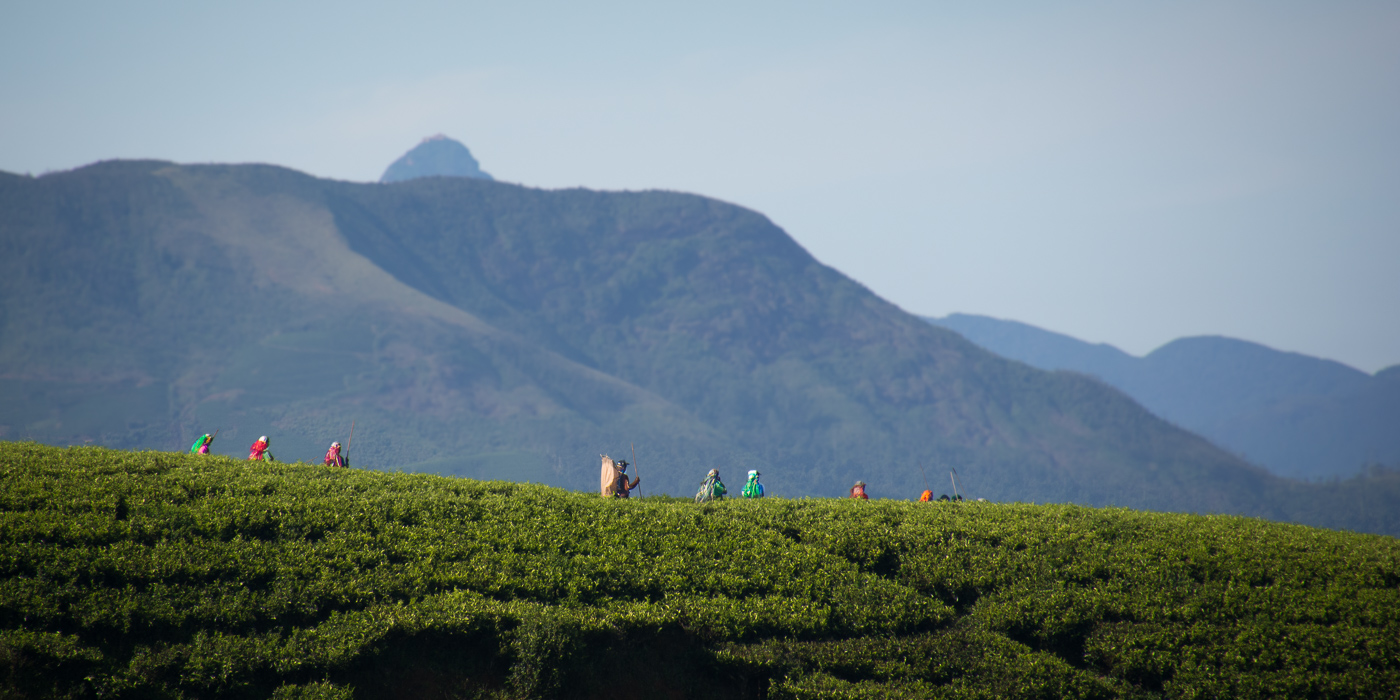
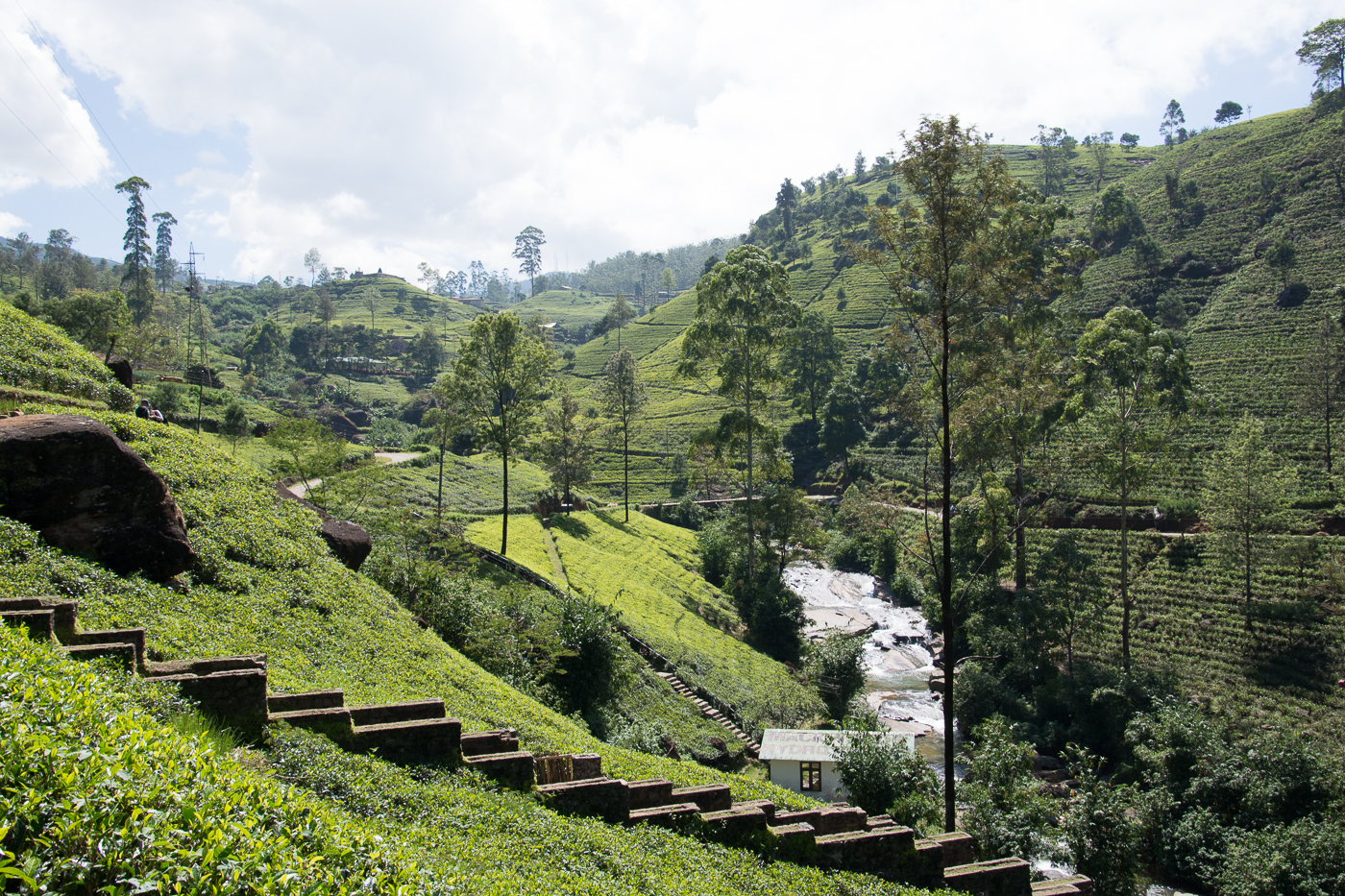
Our journey continues into the Hill Country, where the landscape gives way to tea plantations and busy tea pickers who never seem to take a day off. We visit one of the plantations, Geelong Tea Estate. It is rather like going on a winery tour in Australia. First you see how everything is produced, and afterwards you settle down in the café, with a fantastic view across the tea fields, enjoying a cup of the local tea.
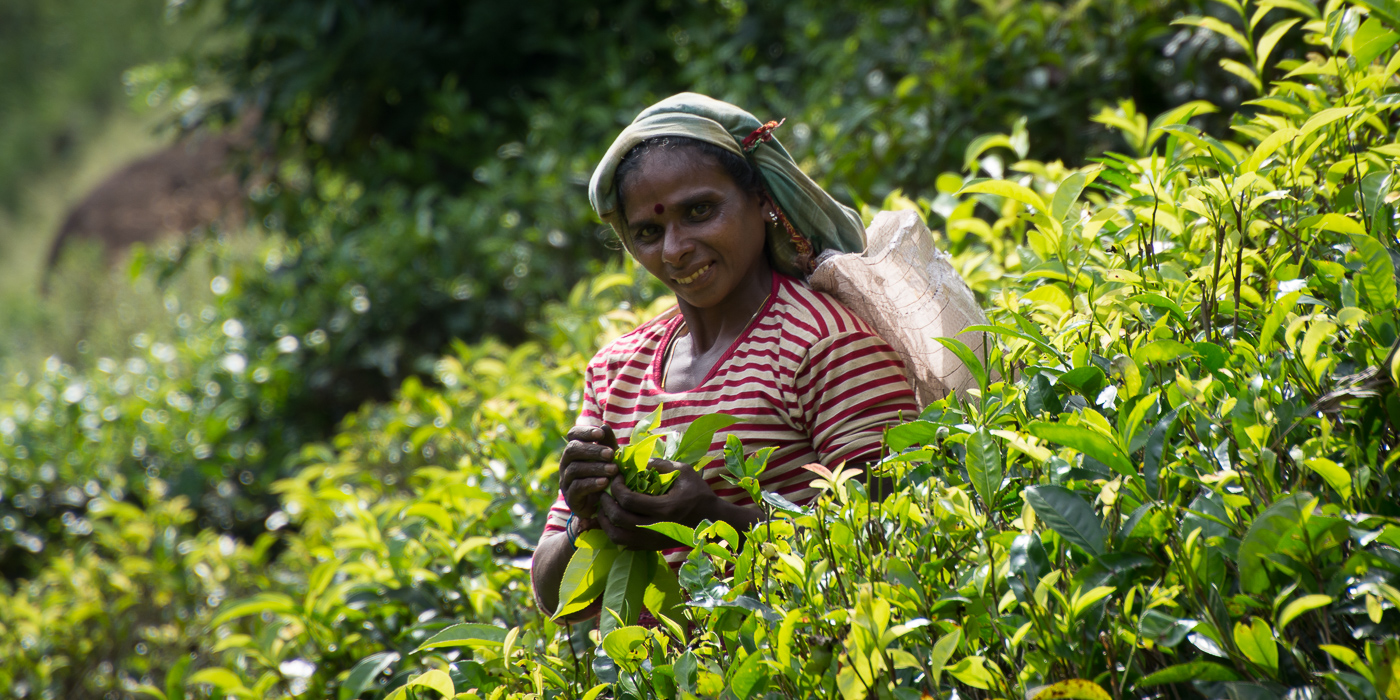
After a long day of driving through the mountains — at times best described as white-knuckle driving — we arrive in Nuwara Eliya, a mountain town 1,889 metres above sea level. Nuwara Eliya is known as “Little England”, and in places you can still see why it was a favourite cool-weather retreat for the British. It is chilly here, and there is not a great deal to see. One unusual sight, though, is the little ponies roaming freely. They are used for trail rides, but they are certainly not a pretty sight. Sarah starts making grand plans to rescue the poor, thin and emaciated ponies. But perhaps they are simply living their lives as they always have — at least they have their freedom.
We end up at Pello Lake Hotel, one of the worst hotels we have stayed in. We are travelling on a budget, and that goes for our 14-day tour as well. Yet every evening we are impressed by what our host in Colombo has managed to arrange for us. We have stayed in local guesthouses where people cooked traditional dinners for us, hotels with the most beautiful views of waterfalls and countryside, and treetop houses where our cabin stood on stilts. But Pello Lake Hotel was cold, clammy and full of damp and mould. It was a cold night, and out came the sleeping bags that had taken up so much room in our backpacks all the way from Denmark. Fortunately, we only had to stay for one night.
We had planned our activities before setting off, but we also had to learn along the way. If we were not careful, entrance tickets to the various attractions would quickly eat up our budget. Visiting the national parks is expensive, so after a little family meeting we rearranged the itinerary. We decided to focus more on nature that was free to enjoy, leaving more room for slow travel, relaxation, drawing and time to absorb everything we were experiencing.
It is Sunday. Hindus are on their way to the temple. It is a special day, and the cars are packed to bursting and decorated with flowers, rather like the annual graduation celebrations back home. The tea pickers never take a day off and are already busy with their work. The road winds between the hills, and we are on our way to Adam’s Peak, which we will climb later tonight.
We check into a backpacker hotel, White Elephant, very close to the foot of Adam’s Peak. We arrive just in time for a little dinner and a little sleep before starting our ascent at two in the morning. We do not get much sleep. All three of us are rather worried about the long walk ahead. It is seven kilometres up the mountain and the same distance down again, with a total of 5,400 steps. None of us is in particularly good shape, but we are determined to “give it a go”.
Still rather dazed with tiredness, we begin the climb. The first stretch goes surprisingly well. It is not all stairs; there are some flatter sections too. But then the steep climb begins, with nothing but steps. The whole route up the mountain is lit by lamps, making it feel almost as though we are walking all the way up to the stars. Christian takes the lead, and we each follow at our own pace. There is plenty of time to reflect, and with every step we get a little closer to our goal.
Along the way we meet tourists doing the climb in gym clothes and trainers, and others equipped with every piece of specialist gear imaginable. But the locals — for whom this journey matters most — make their way up and down in flip-flops. They take the breaks they need and give the climb the time it deserves.
For local people, the journey to the summit has been a sacred pilgrimage for the past thousand years. For us, the aim is simply to reach the top and watch the sun rise. Yet somewhere along the way, your spiritual side makes itself known. It becomes more than a climb to the top of a mountain: it is a special process of reflection, and a feeling of gratitude for being here, together, in this particular moment, in this extraordinary place.
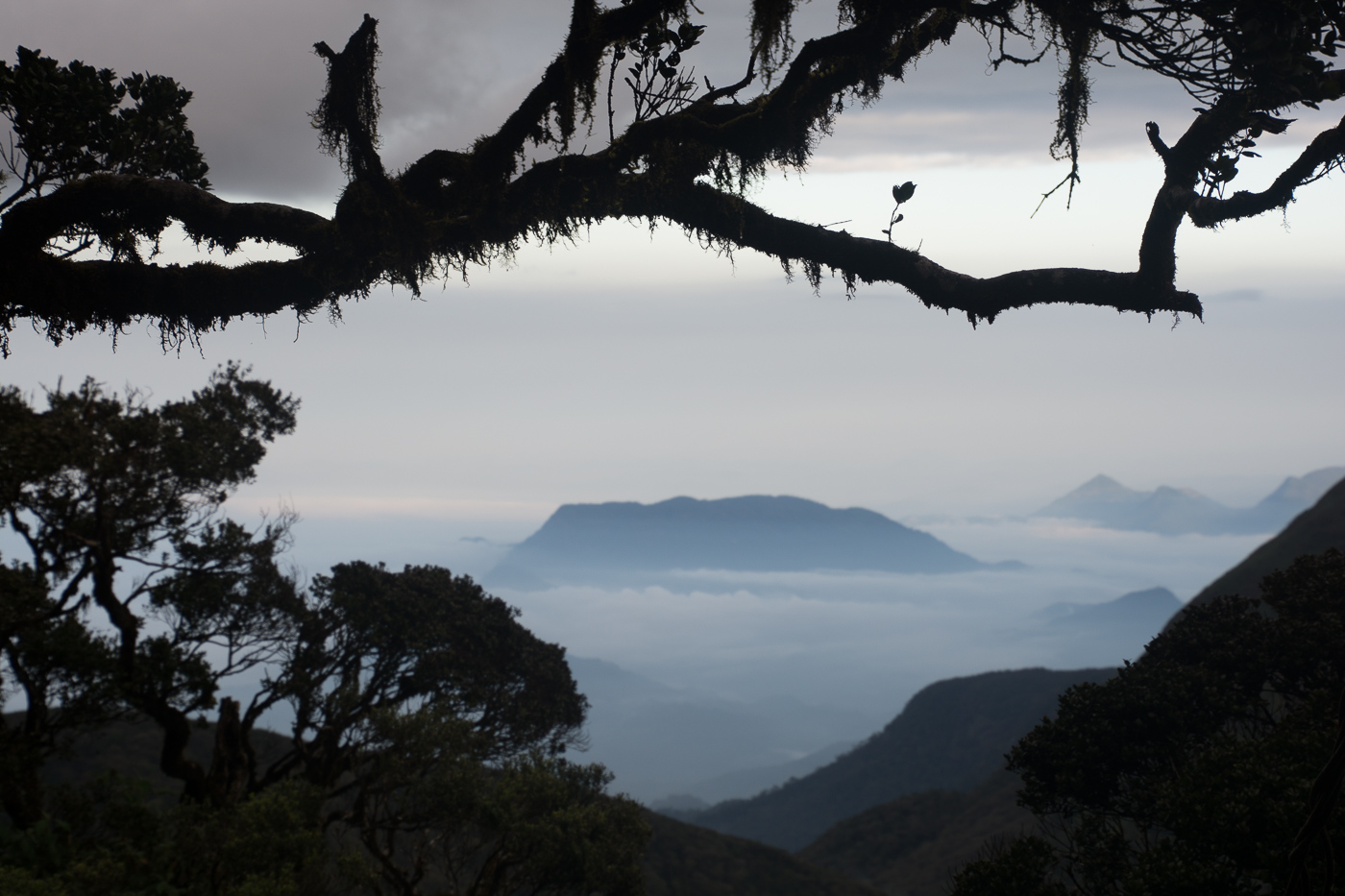
The sun breaks through at 6.30 am, revealing a landscape of mountains and lakes. A kind of Hobbit-land, as Sarah puts it. Smaug the dragon could easily have his cave down there.
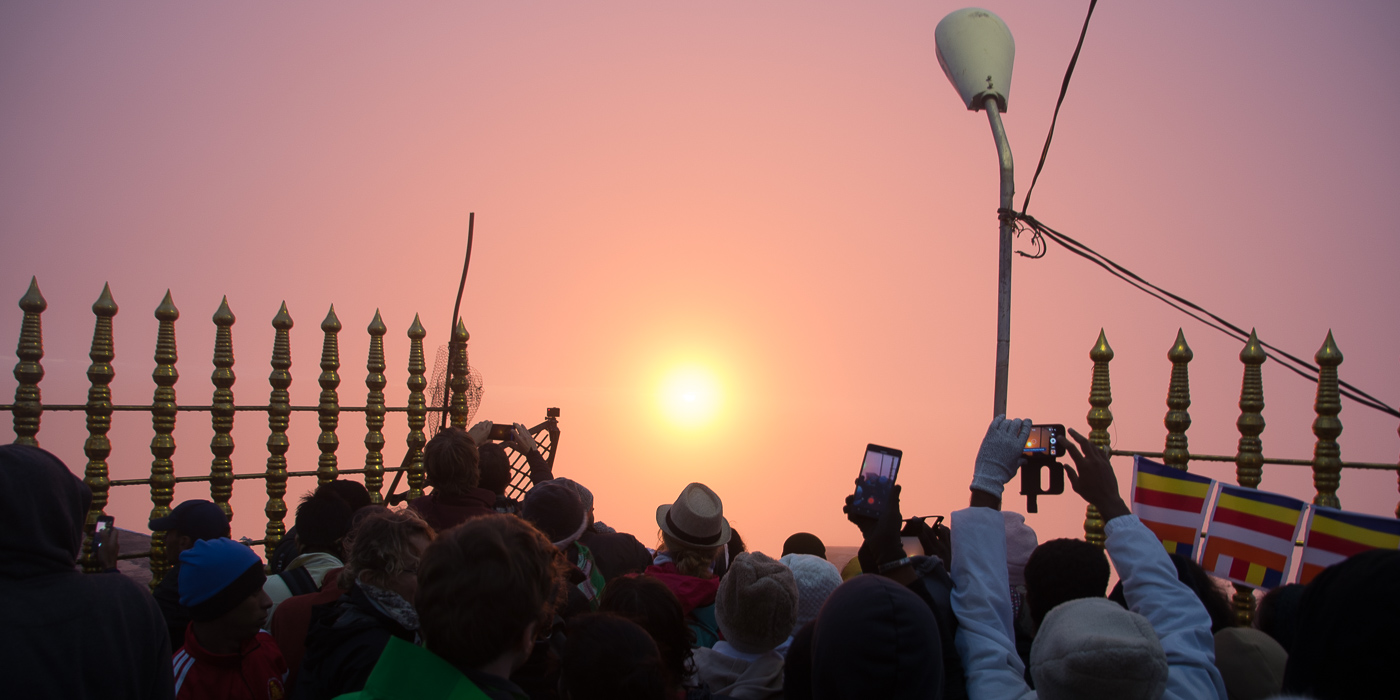
But now comes the descent, and our calf muscles and knees protest at every step. Walking to the summit and back down again was a truly beautiful experience. But it was hard work, too.
As we leave the White Elephant, our driver has invited a good friend along for the journey. His English is a little better. We ask a thousand questions: “Why do people do that in Sri Lanka?” and “What is that?” Our new friend makes a real effort to explain the complexities of the Buddhist faith.
It turns into a long evening at our next hotel, Waterfall View Guesthouse in Ella, where once again we are staying somewhere wonderful. We have a direct view of Rawana Falls. The conversation with our two local friends flows freely, with plenty of explanations and illustrations along the way.
For the next few days, Christian and I waddle about like ducks. Our calves and knees are screaming, proof that we walked 14 kilometres. Some say anyone can do it, and I’m sure they’re right. But I’m only doing it once.
Many people take the train through the mountains to Ella, and we don’t want to miss that experience. Our train journey takes us from Ella to Haputale, a trip of about an hour. We can sit back and watch everyday life unfold: children lined up in the schoolyard, ready for their lessons; a farmer keeping a watchful eye on his rice fields. The train winds steadily through the landscape, gently slowing the rhythm of your heart. Perhaps we should travel by train a little more often.
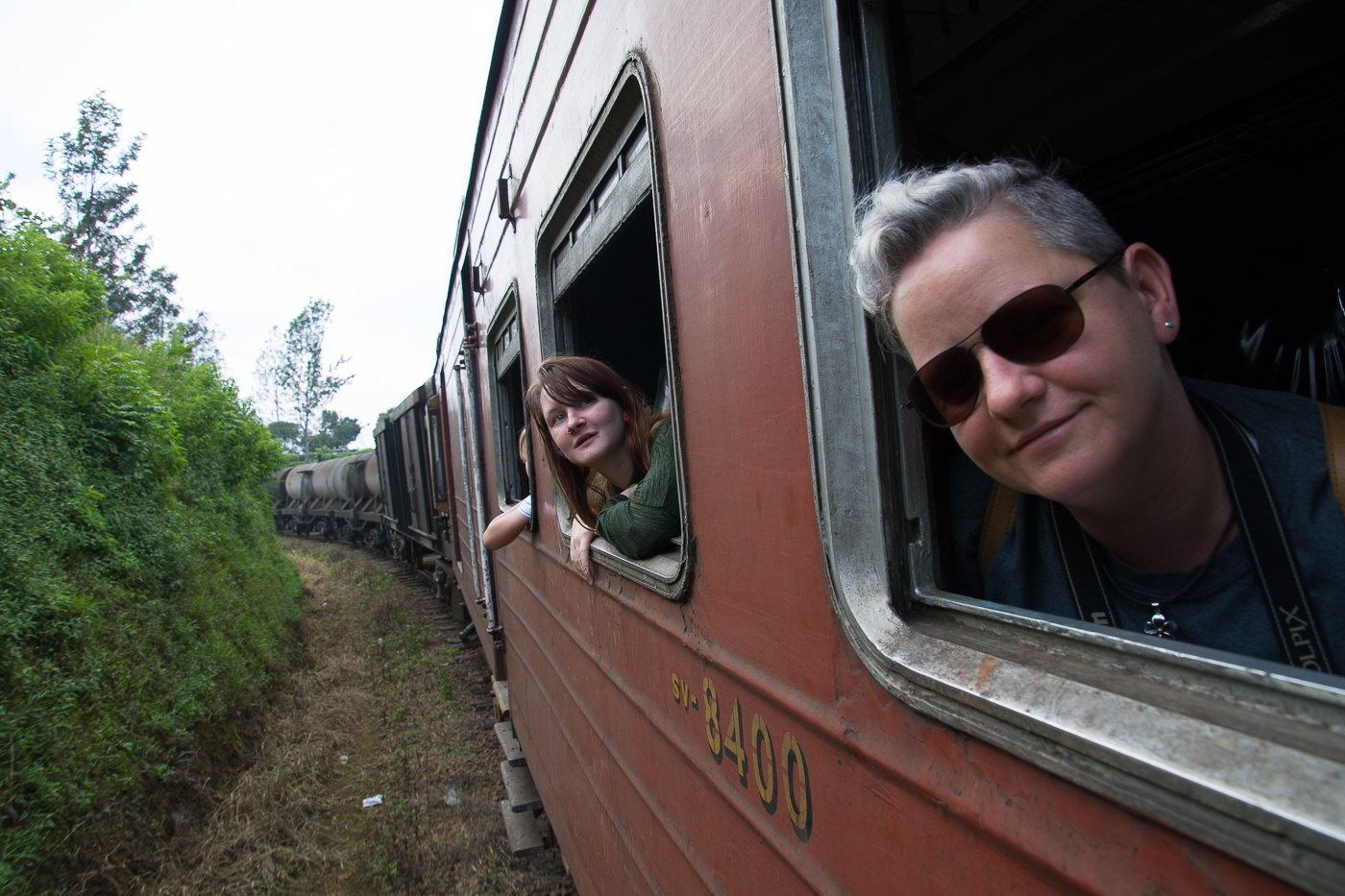
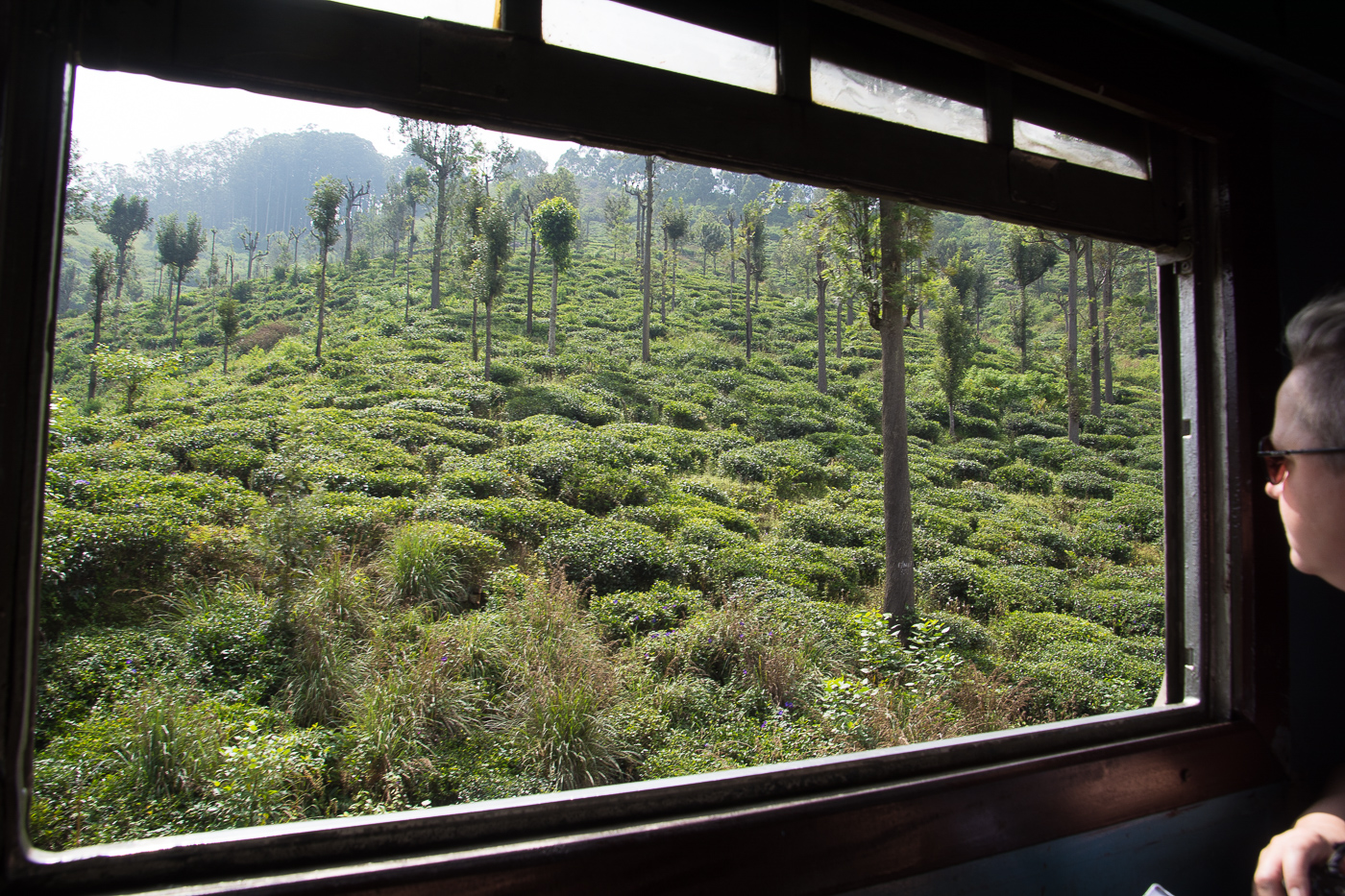
It was hard to say goodbye to Waterfall View Guesthouse. We could happily have stayed several more days. But that has become something of a standard remark, along with the exclamation, “It’s beautiful HERE too!”
Slowly but surely, we make our way down from the mountains. Thank goodness we have the best driver in the world, who also knows how to find those special local places. We’re heading for the east coast, where it is supposed to be the low season and the risk of a downpour is high.
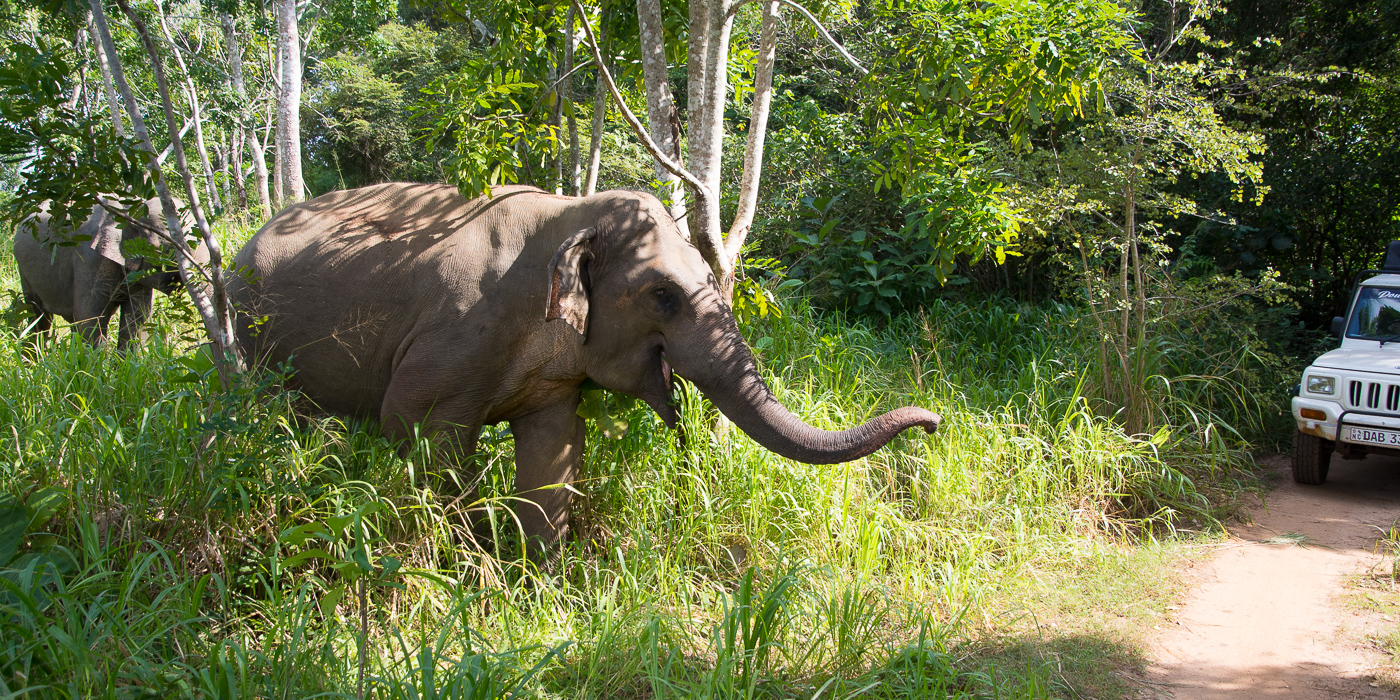
Our driver finds a little side road leading into a national park. The locals say, “Drive 200 metres down the road and you’ll see wild elephants.” A remarkable landscape opens up as we leave the main road. There are birds everywhere and nature in its rawest form. And suddenly, there among the bushes, they are: wild elephants. It’s an extraordinary and slightly strange sight, seeing them simply standing there, not far from the road.
The drive from Ella to the east coast is long but very special. We pass through wetlands teeming with birdlife. The final stretch of road to Passikudah is terrible, almost like a bad gravel road in East Africa.
Our host in Colombo had told us that if we didn’t like the guesthouse by the beach in Passikudah, we should just call him and he would try to find somewhere else. But the mama of the house was waiting with open arms, so excited to welcome us to Holiday Beach.
Sometimes it’s the people you meet who leave the strongest impression. Up in the cool mountains we met a French couple who seemed to have already given all their love to India, where they had travelled for several years. They found a hundred different things to complain about in Sri Lanka. Their negativity was rather overwhelming. Perhaps there simply wasn’t room for Sri Lanka in their hearts.
In Ella we met an English couple who had made a life-changing decision. They had both lost their jobs and had decided to live more cheaply so they could afford to travel more. They were quite remarkable, very meticulous people who had planned everything before setting off.
At Holiday Beach in Passikudah, we meet an English hippie from Birmingham. He is 68 and has spent his life travelling to escape England’s cold winters. He plans to spend four months at Holiday Beach in Sri Lanka. Despite lung disease and considerable difficulty breathing, he still travels, so he can enjoy life from the veranda and walk down to the beach to watch the waves.
The mama at Holiday Beach is a very special woman. She survived the 2004 tsunami. When she saw the black water coming towards her, she says God told her to run. She was one of the few who survived, and with her family’s help she has since rebuilt her guesthouse.
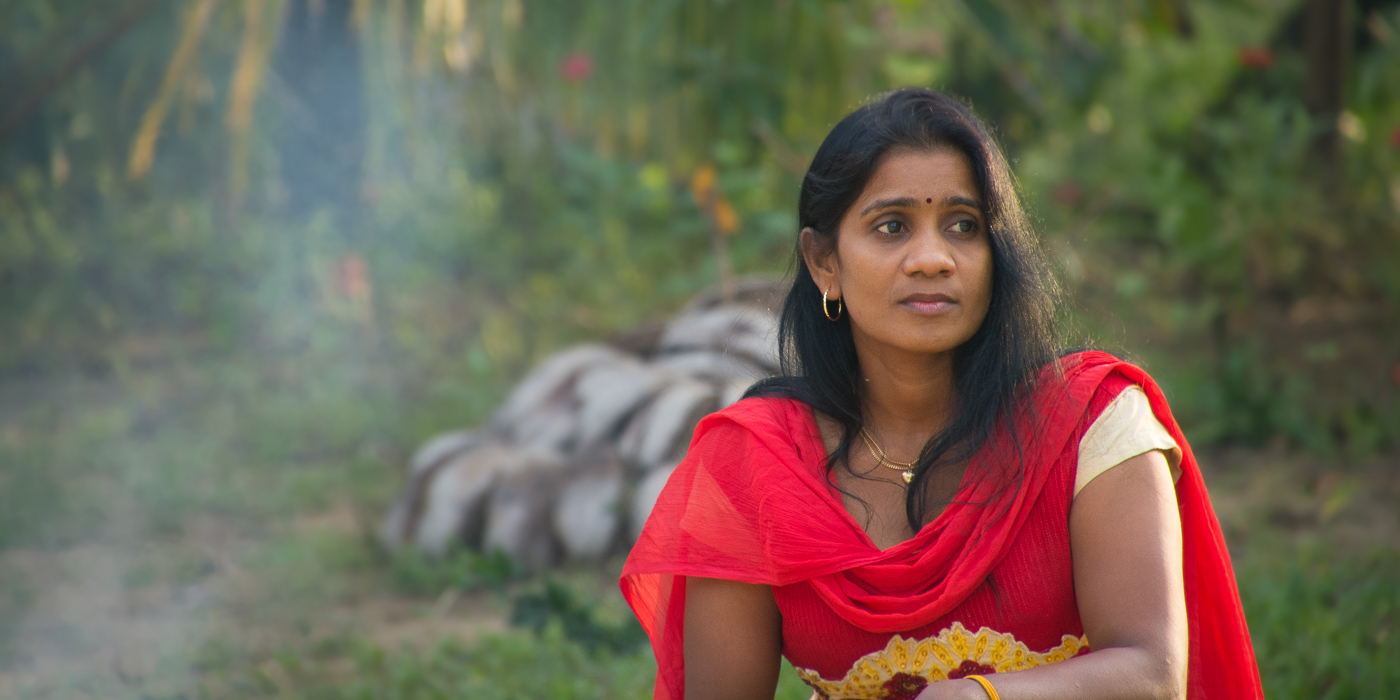
Passikudah Beach is one of Sri Lanka’s three best beaches. It is long and deserted, with a forest of palm trees along the shore. There are not many hotels; only two have opened in the past couple of years. But the wind in the trees also seems to whisper stories of the past, when the tsunami took 700 lives in this town. The coastline is very flat, allowing the wave to surge far inland. Our new guide friend tells us that people had no idea such a thing could happen in Sri Lanka. When the sea withdrew, people ran out to see the extraordinary sight and claim the land that had appeared. But the water returned, taking many with it. The hotels and houses along the coast have disappeared; only nature remains. The birds have returned and rebuilding is under way, but perhaps it will take a few more years before people fully trust Mother Nature again.
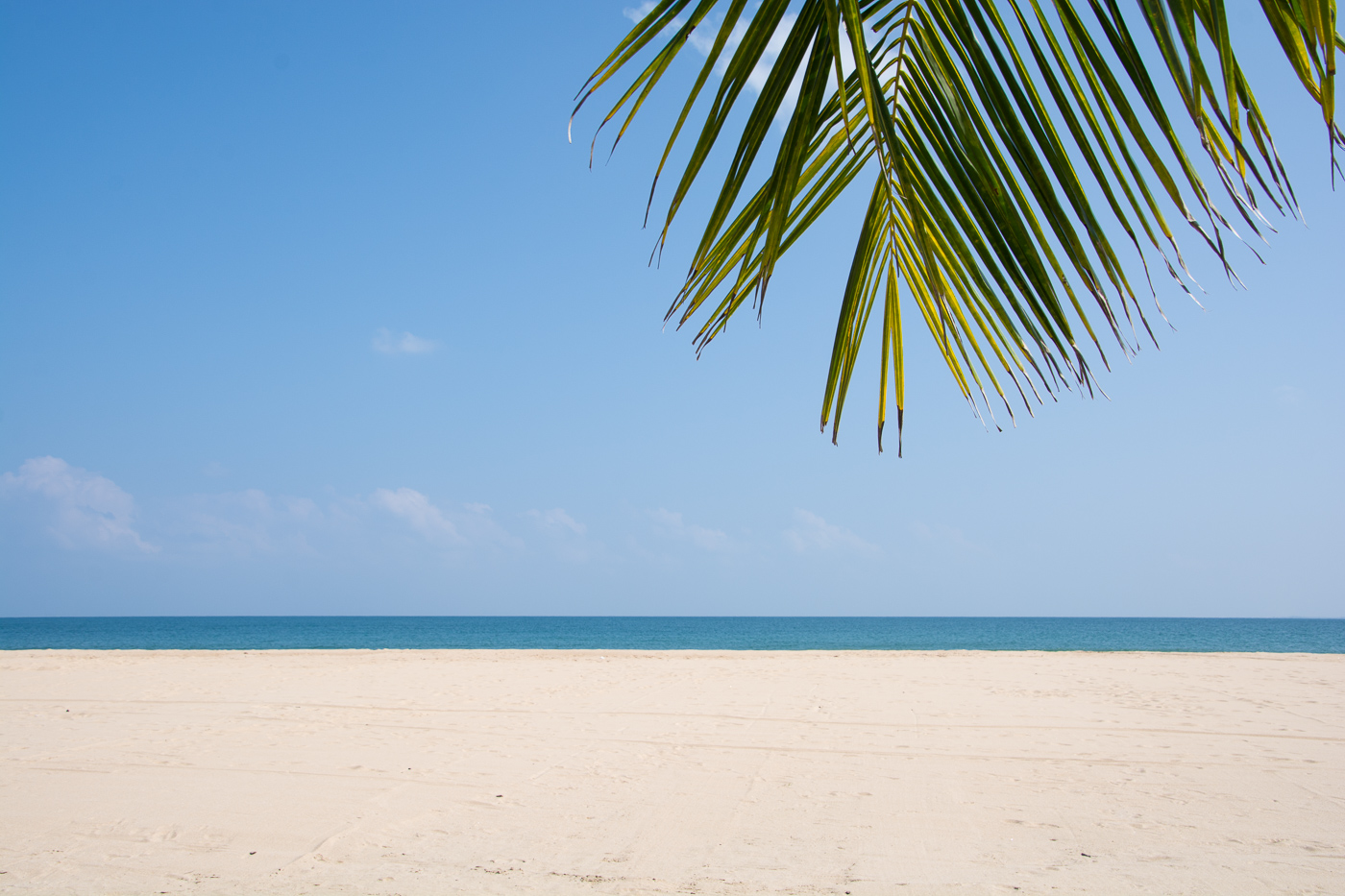
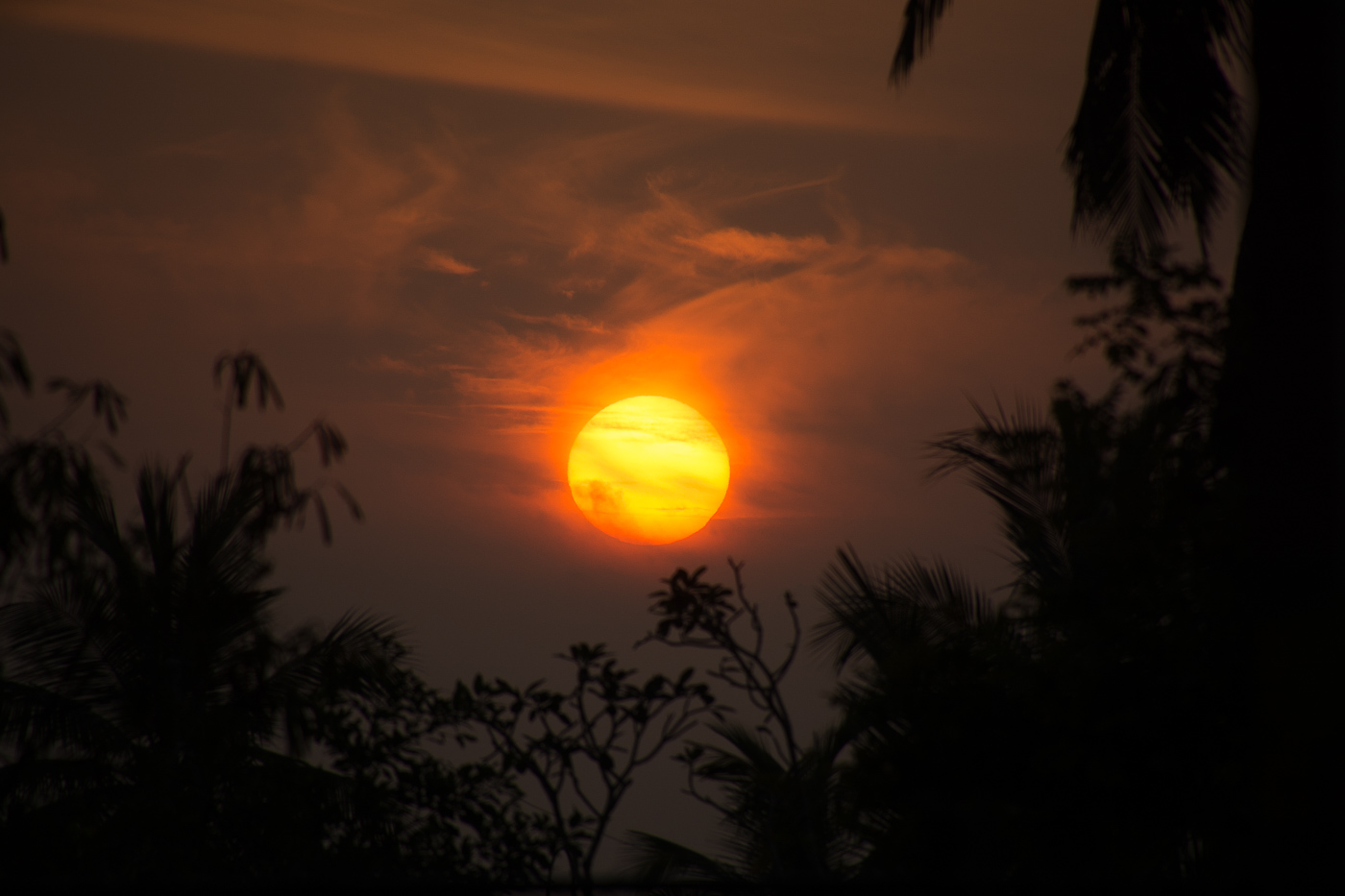
It is Hindu New Year’s morning. Everyone at the little Holiday Beach Guesthouse has risen early to celebrate the sun god at sunrise. Offerings of rice, coconut, candles and banana leaves are arranged around a small fire. A special rice dish for breakfast is prepared over the flames as the first rays of sunlight break through.
We exchange hugs with both Mama and the English hippie. This has been a very special place, filled with very special people.
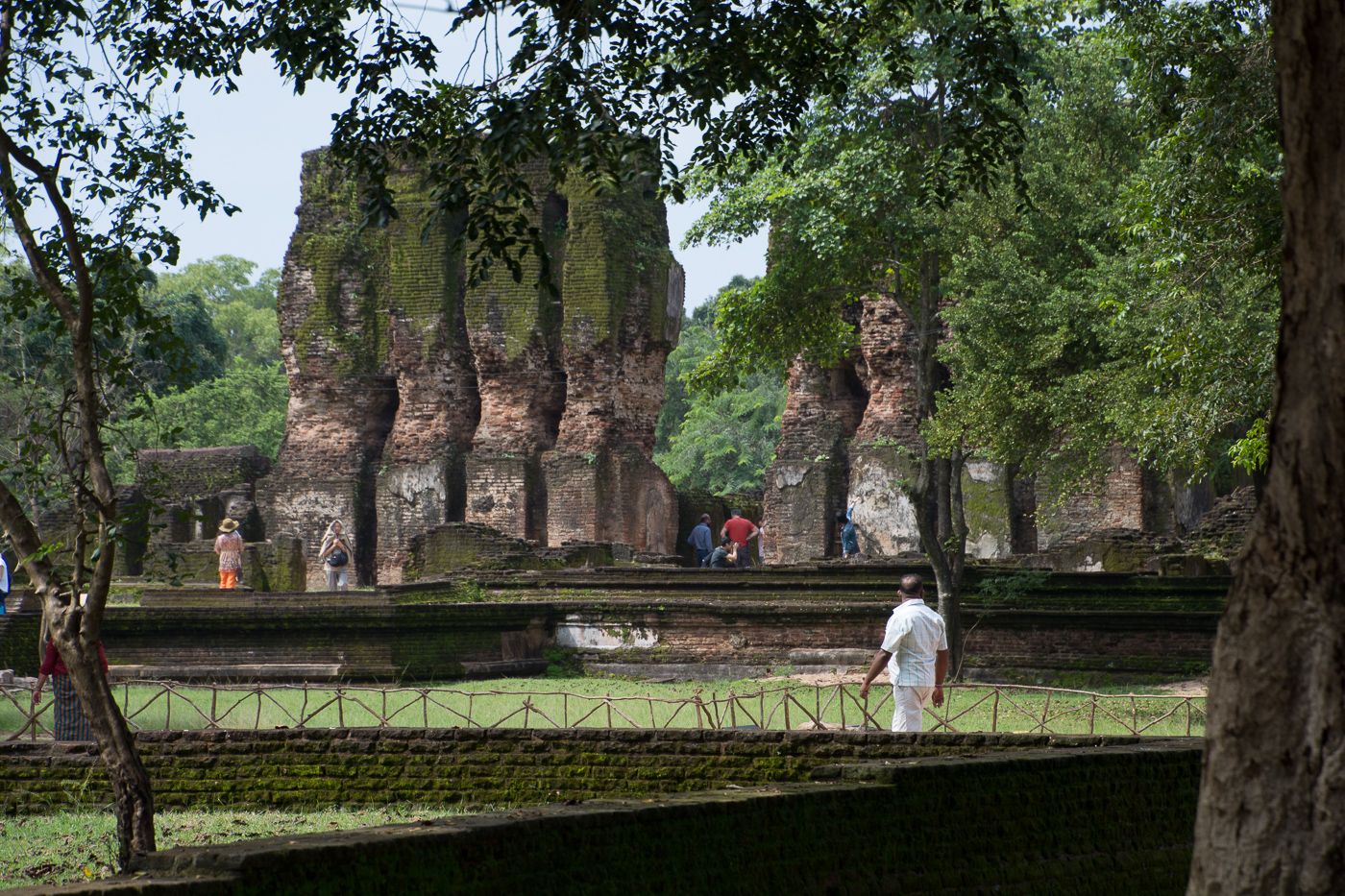
Our next stop is the ancient city of Polonnaruwa, a royal capital from which central Sri Lanka was governed 800 years ago. Special goods from overseas were traded here, and the king built a temple especially for his Thai visitors. The queen was Hindu and the king Buddhist, so there are temples of both kinds. Today only the ruins remain, and the site was added to the World Heritage List in 1982. Once again, I recommend hiring a local guide who can explain the most relevant facts. Lonely Planet alone just isn’t enough.
We had planned to visit Minneriya National Park, but there had been a lot of rain the previous week, making it difficult to get around. The locals also told us that the elephants had moved to Hurulu National Park. Full of anticipation, we climb into our hired jeep and, armed with patience, set off along the bumpy, potholed tracks. It turns into a fantastic afternoon, and once again we see several elephants.
The journey from Polonnaruwa to the next royal city, Anuradhapura, takes us past lake after lake. Some were created by kings long ago to ensure a reliable water supply for their kingdoms. Many of these lakes still exist today and play a special role in Sri Lanka’s natural landscape.
Most people go to Anuradhapura to see the ruins of the royal city or to visit Wilpattu National Park. For us, it becomes a few days of relaxation, and we’ll have to save both attractions for another time. Both charge admission, and after hearing how difficult it was to spot wildlife in Wilpattu, we quickly decided to spend our money on other national parks we would rather visit.
But now our 14-day journey with our two local friends is over. We are back in Colombo, home again at Villa 63. It is amazing how quickly you become attached to a place and its people. It really does feel like coming home. Even the people at the local supermarket greet us.
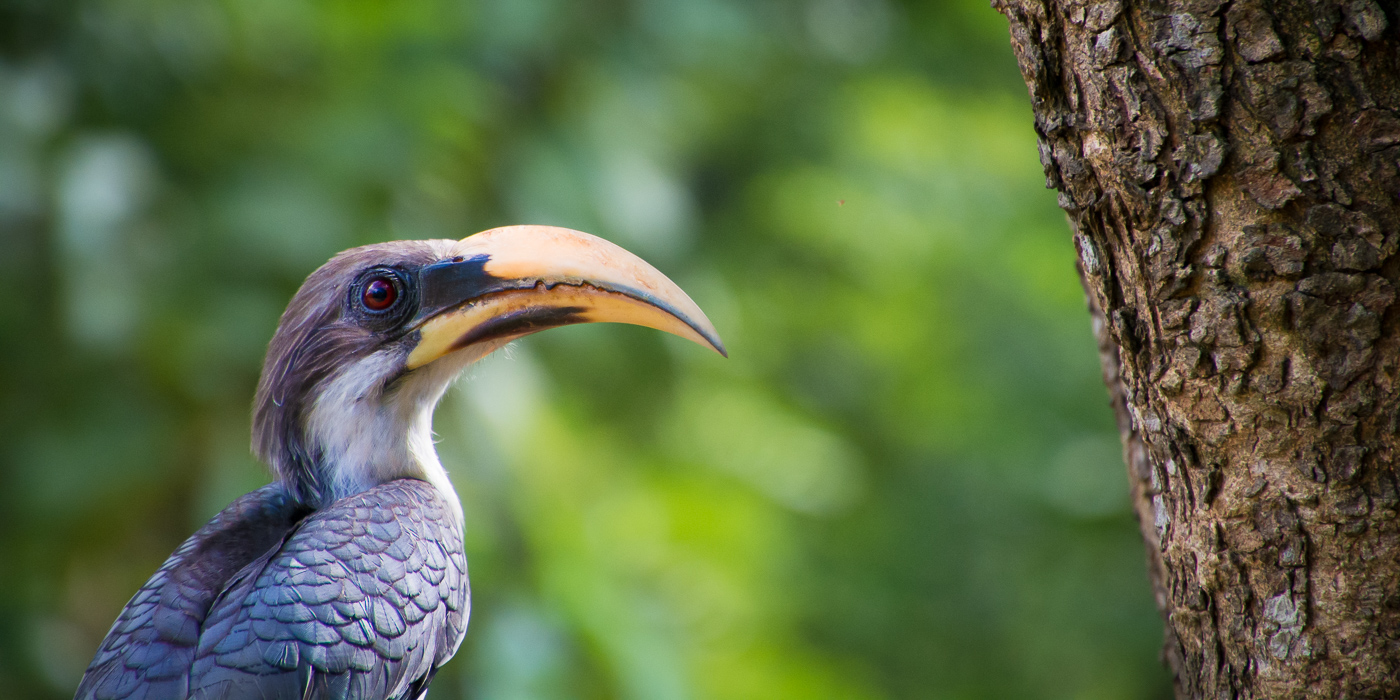
Right now we’re enjoying the peace and the view from our balcony, a truly remarkable spot surrounded by birds and wildlife. We’re back in our routine: the monks chanting their morning prayers before sunrise and again at sunset, and the green parakeets arriving in flocks at around four in the afternoon. The little squirrels dash about as if thinking, “We’re busy, we’re busy!” But we aren’t. There is a little work to do over the next few days before we head south, where we have rented a house for a month.
It’s extraordinary how much these two weeks have given us. We have learned so much in such a short time. Among other things, we’ve discovered that people carry umbrellas not because of the rain but to protect themselves from the sun, and that rice and curry comes in many levels of spice depending on how locally you eat. (Very local means very spicy.)
This has turned into a long newsletter, and they won’t all be this long. But there were so many things I wanted to include. I hope you’ve had time to read it all with a cup of tea — perhaps even tea from Sri Lanka.
And now it’s time for a visit to our local Indian restaurant.