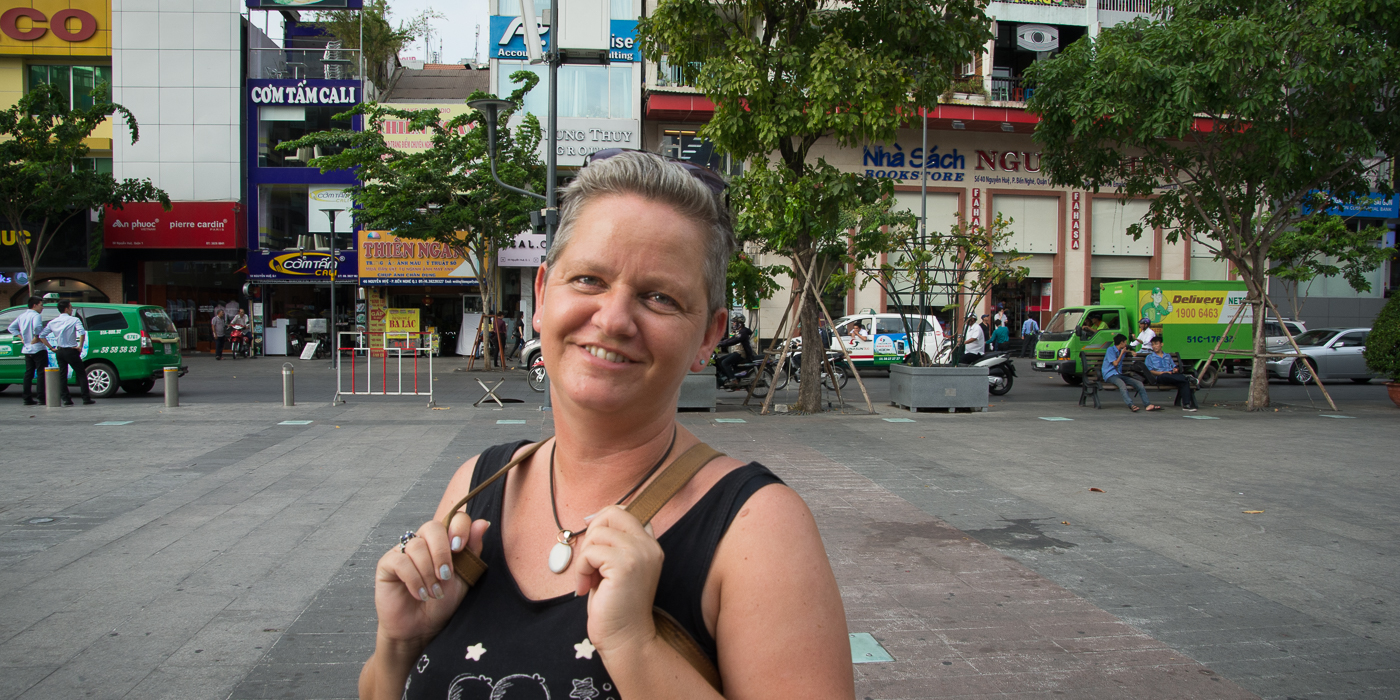
If you walk to the end of our little street and turn right, you can see the locals practising tai chi. “Madam, you want to dance?” I think that’s the first time I’ve ever been asked to dance at seven o’clock in the morning.
We live in a very local neighbourhood of Ho Chi Minh City, in a two-room apartment on the second floor. In the mornings, before the heat really sets in, and again in the afternoons when it eases a little, families with mothers, fathers and young children sit in the small park in front of the high-rise apartment buildings. This is where you catch up on the neighbourhood gossip, and there is always lively conversation as we walk past. After a week, one of them finally has to stop Christian and ask, “Where you from, mister — you work here?”

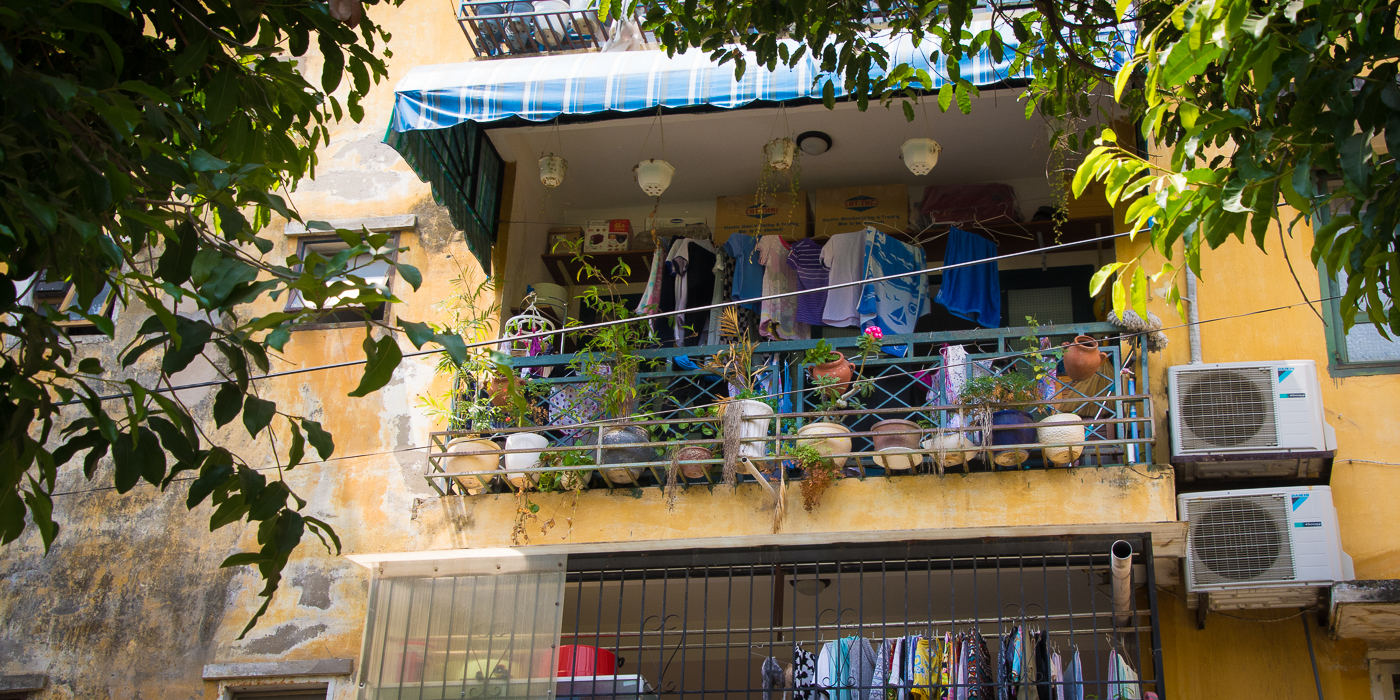
The little balconies, close together, serve as extra space for the small apartments and as miniature gardens. Today’s washing hangs out to dry, vegetables for dinner are washed and chopped, and a jumble of plants sometimes fills the entire balcony. It is like an open window into family life.
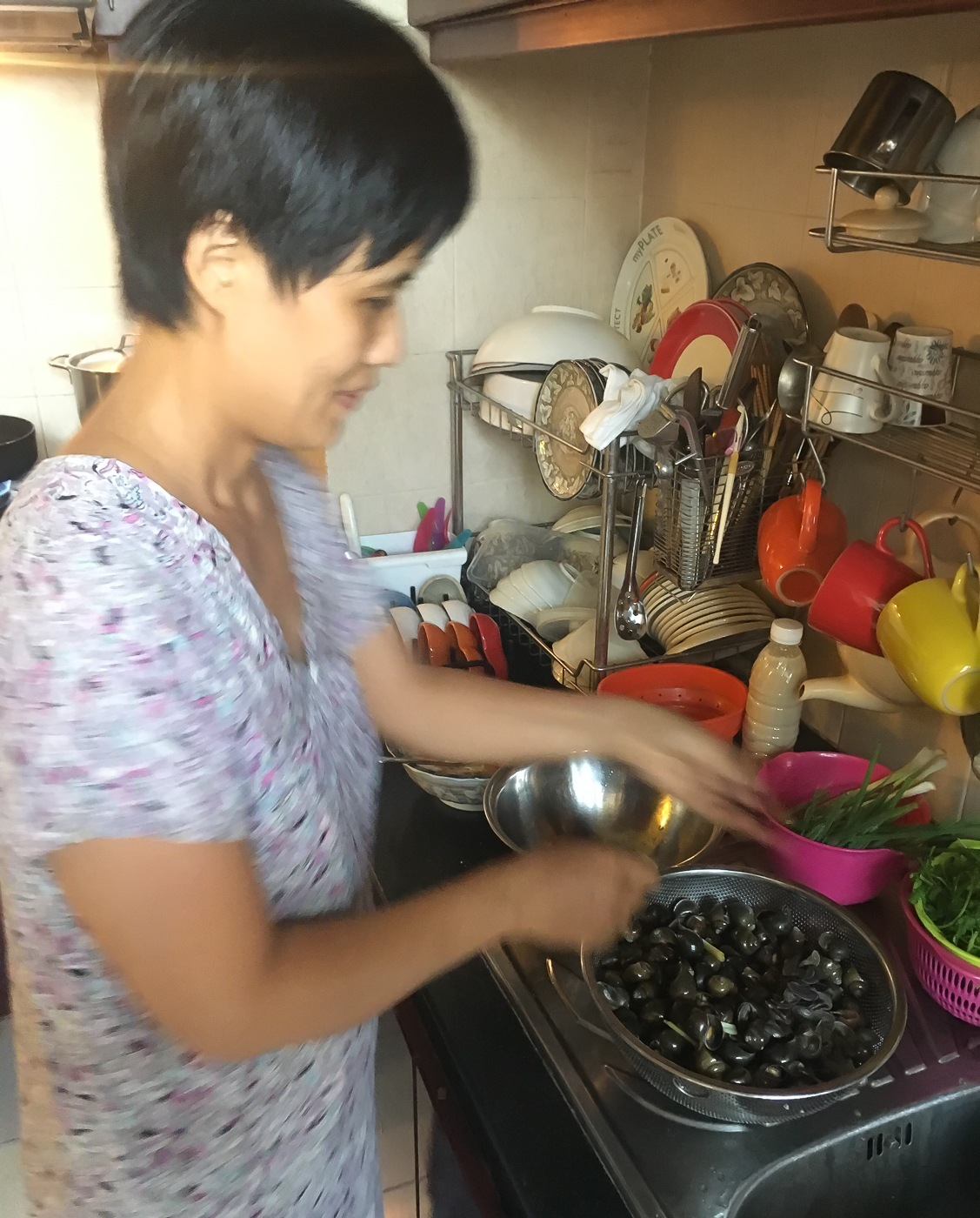
We get close to local life and are invited to dinner by our landlord, who lives two floors above us. We gain an insight into their lives, dreams and values. “Don’t eat white bread, drink bean coffee and lotus tea before you go to bed, and value the moment.” We exchange ideas, experiences, cultural differences, shared dreams and philosophies. The foundations of a lasting friendship are laid.
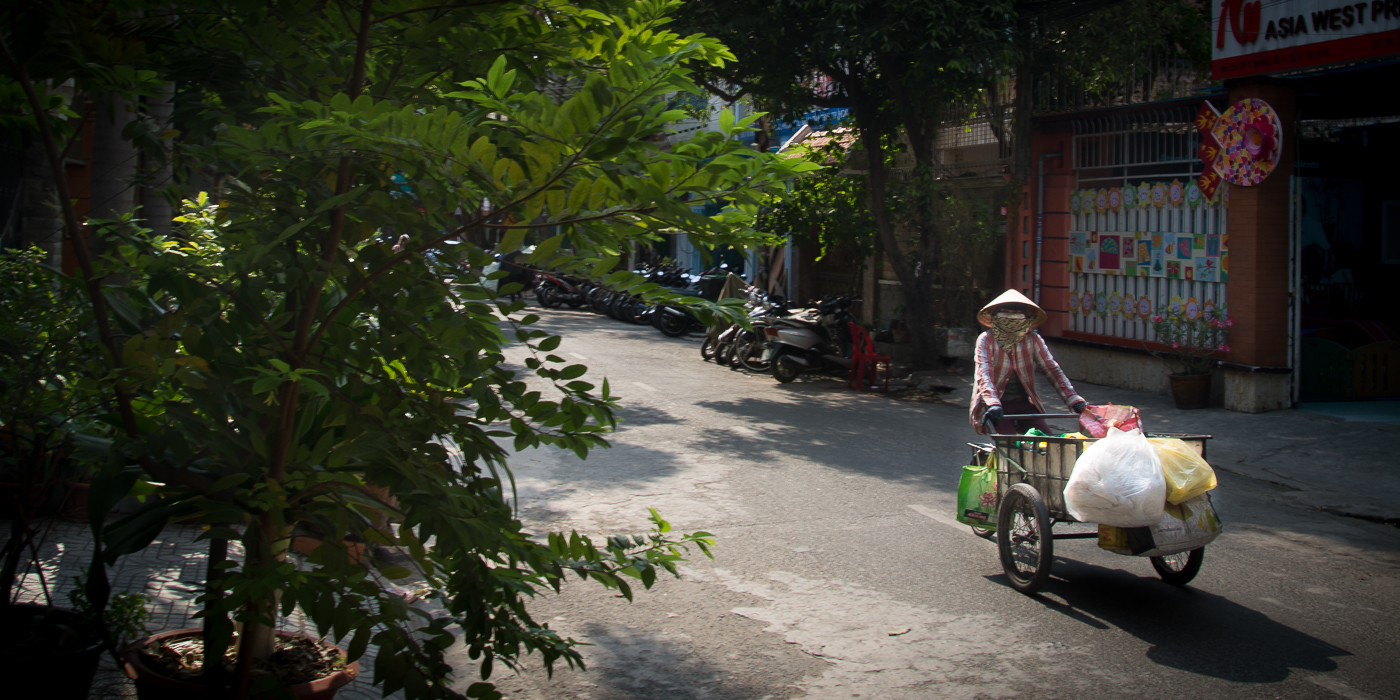
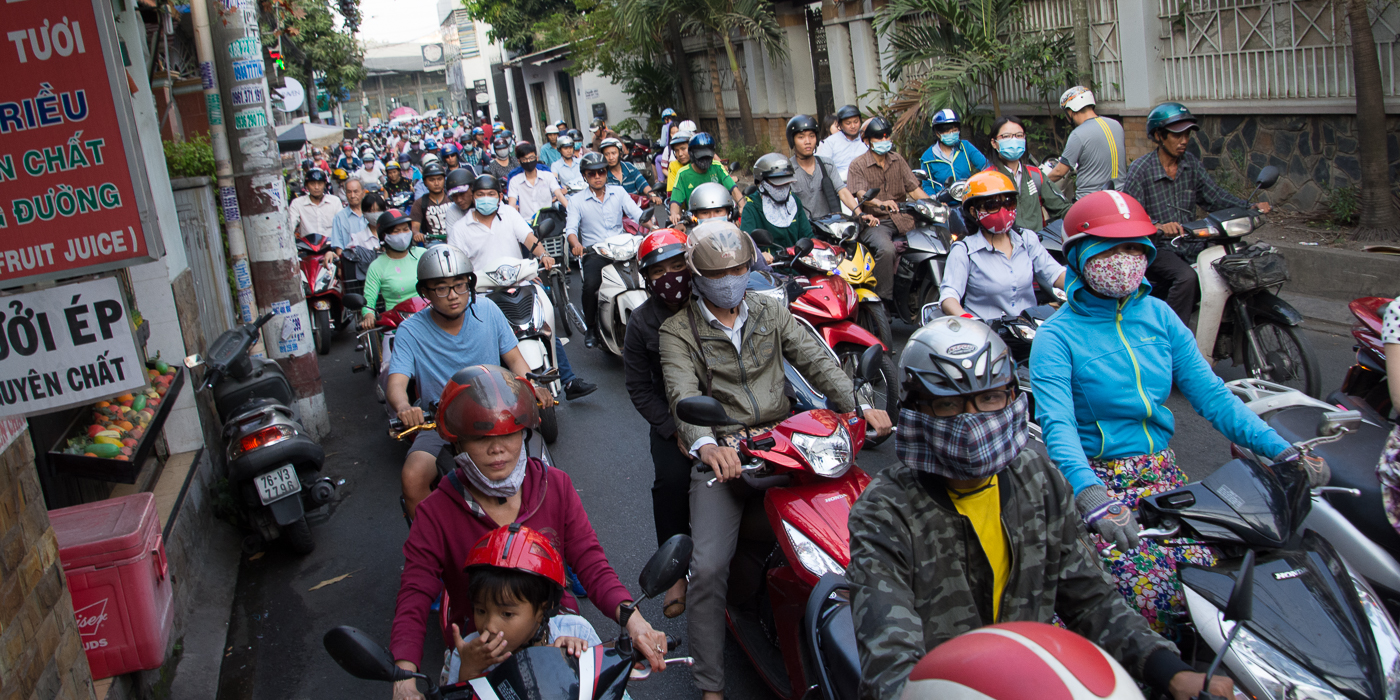
Nine million people live in Ho Chi Minh City. By comparison, Denmark has 5.7 million inhabitants. This is a city that never sleeps, always buzzing with life. The street has a sound all its own: a man cycles past with a small loudspeaker announcing something in Vietnamese — he is selling bread. A woman wearing a traditional Vietnamese hat calls out loudly, and an elderly woman buys herbs from her for the day’s soup. There are millions — trillions! — of motorcyclists filling most of the road. They have traffic rules of their own, which take some figuring out. Crossing the road on foot sometimes feels like risking your life. But you learn either to cross with a local or to step confidently into the road when you spot the slightest opening. You must not hesitate: the motorcyclists will watch you and steer around you … or so you hope.
Every morning we can hear sparrows singing from our little balcony, which also serves as our kitchen. It almost sounds like a Danish summer’s day, but that is where the comparison ends. Vietnam really is something special, with a very particular history.
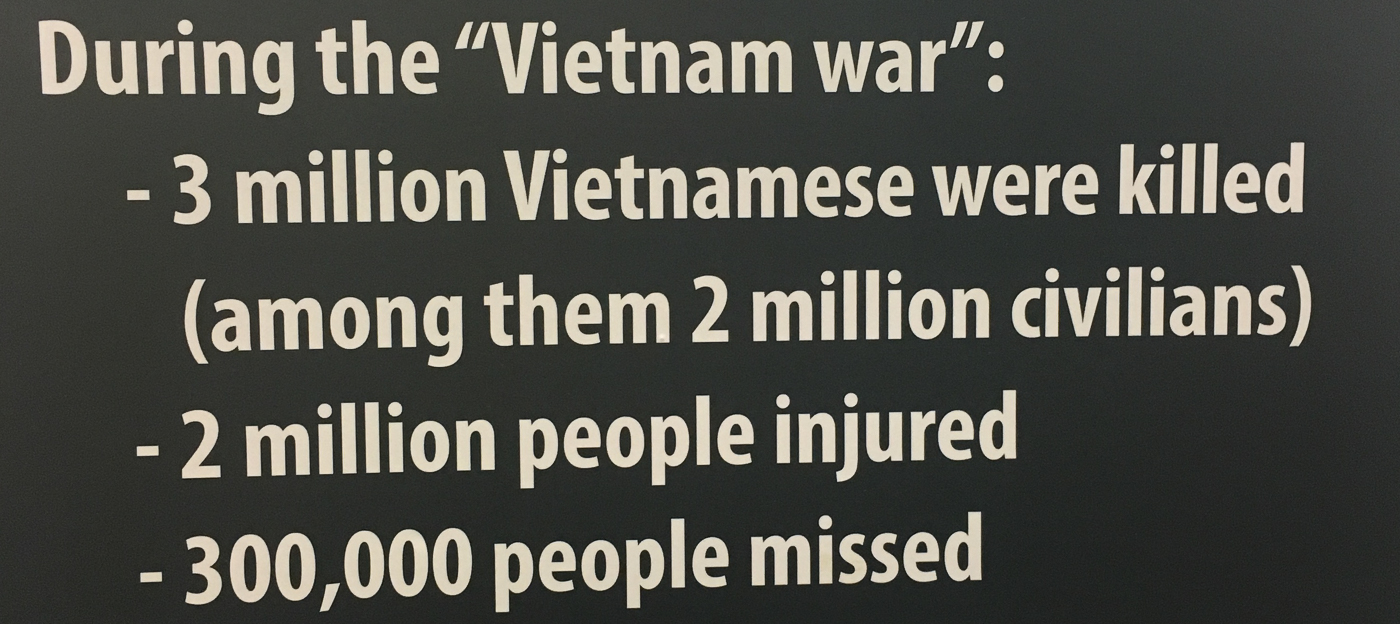
The War Remnants Museum tells the story of the dreadful and deeply disturbing wars involving the United States, France and China, as well as the fighting between North and South Vietnam. Photographs and texts describe how the Americans sprayed vast areas with poison, and how people still suffer terribly from the consequences today, including children born with partially formed arms, misshapen heads and legs, and skeletal deformities. Agent Orange was part of one of the largest campaigns of chemical warfare in the world.
Vietnam is now a united, independent country, with Hanoi as its capital. Yet it is still the north that governs under a one-party political system. The population lives under strict censorship, and criticism of the government is absolutely forbidden. We notice this clearly when we try to ask people about politics: they quickly change the subject or whisper so no one else can hear.
We tell a local guide that we are interested in tours that will show us Vietnam, especially its local culture. Christian explains that we have a website and will post photographs from the trip there. The guide immediately exclaims, “Yes, it’s OK for you to post pictures, but I will tell you what you can write.” It is astonishing that, despite the country’s rapid growth, the government still keeps such a tight rein on things.
On “Sophie’s Art Walk”, we learn how art has been used to document the war. She guides us confidently through small local art galleries and the Museum of Fine Arts.
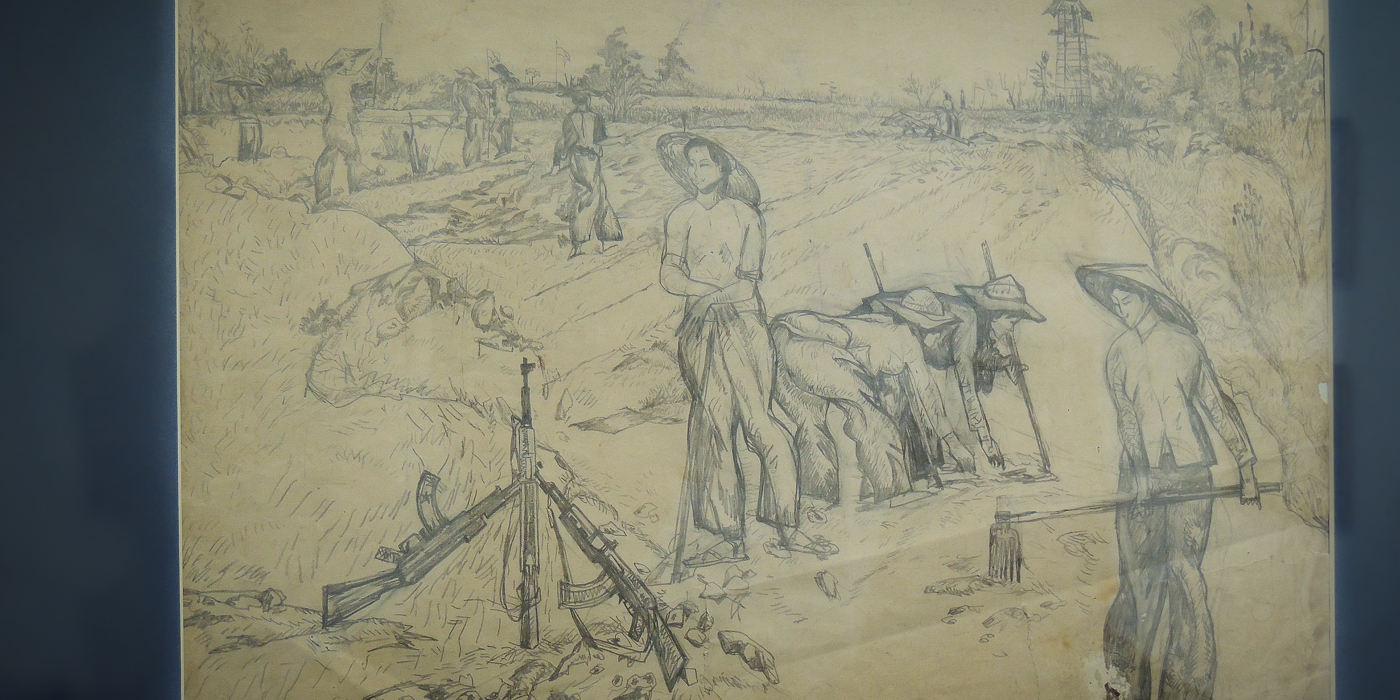
There are pictures of strong Vietnamese men and women at war, intended to show Vietnam as a success story. One particular painting also illustrates the Americans’ greatest frustration during the war. It depicts men and women working in the rice fields, with a pile of rifles lying beside them, ready for them to spring into battle. You could never know who was a fighter and who was a civilian.
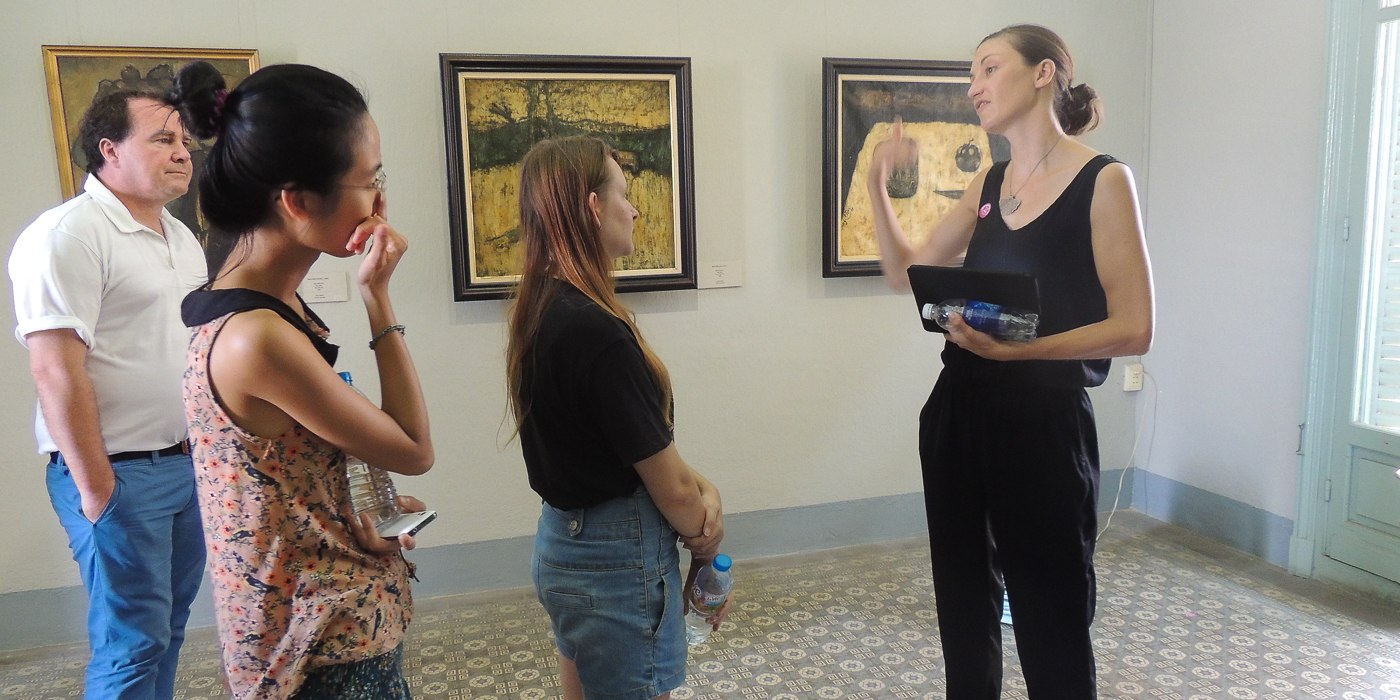
Sophie has lived in Vietnam for seven years and has studied local art and culture. She set herself the goal of reading everything she could about Vietnamese art and gathering knowledge from local artists and the people. She now shares that knowledge on her Art Walks in Ho Chi Minh City and Hanoi. Through the paintings, she tells us how artists were sent, defenceless, into the war to document what was happening. The authorities were well aware of art’s power, and strict censorship rules determined what could be painted. Particularly after the war, paintings were only allowed to depict Vietnam’s successful future. In a small art gallery, she shows us some powerful paintings and sculptures, leaving each visitor to interpret their meaning. One sculpture is a large red fire engine with turtles in place of its wheels. Another painting shows a fortress wall made up of thousands of tiny balconies, complete with washing, pot plants and signs of life. On top of the wall are sandbags, as though it were a trench fortification.
Today, art is also used extensively for propaganda. In many places, the government has put up red posters displaying dates of particular significance. Local people tell us these posters have become such a natural part of the streetscape that they no longer notice them.
We live a little outside central Ho Chi Minh City, in Tan Binh District, just a 15–20-minute drive from the airport and seven or eight kilometres from the centre. Our little street is peaceful and quiet, and we enjoy our small apartment. We can catch a local bus near the large shopping centre, only a ten-minute walk from home. It costs just a few dong to reach the city centre. At first, we had to learn to jump onto the bus quickly before it drove off again, work out when to get off, and figure out how to tell the driver we wanted to stop. The Maps.Me app is definitely useful: you can download a map and keep track of how far you have travelled.
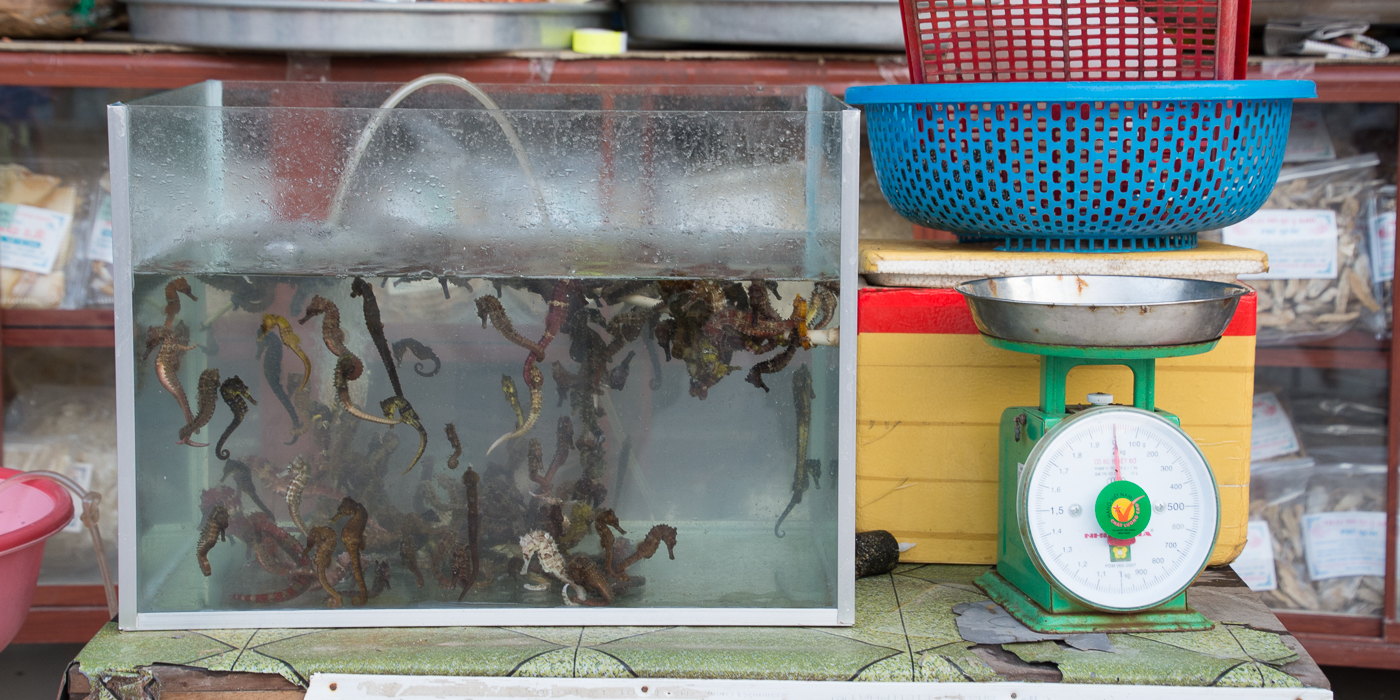
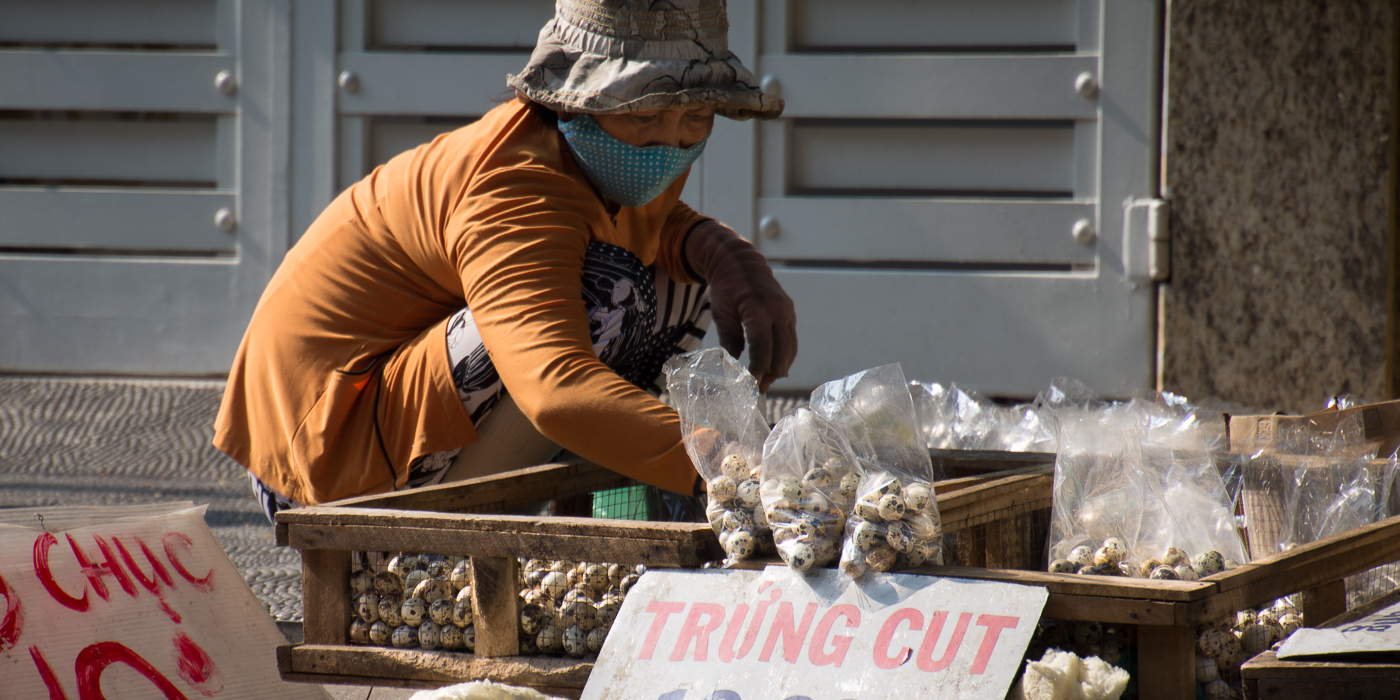
In Ho Chi Minh City, you can find almost anything you could possibly need — dried lizards, starfish, seahorses, tiny snails, larvae, juicy pineapples, salami and pâté (liver spread). There are small street vendors, little shops and enormous shopping centres.
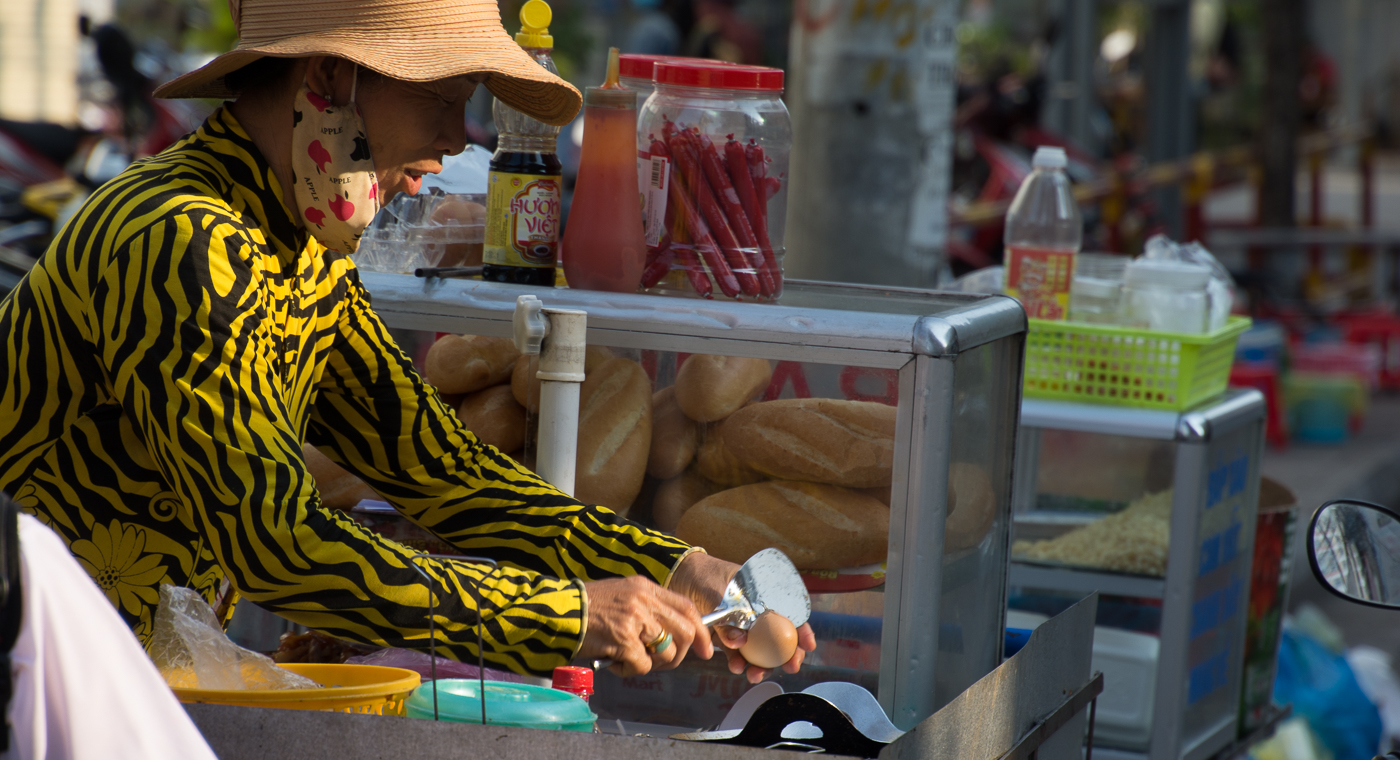
Street food is something quite special in Vietnam. Tiny stalls sell fresh baguettes filled with egg, liver pâté, cucumber and herbs, while others sell every imaginable kind of grilled meat or fish.
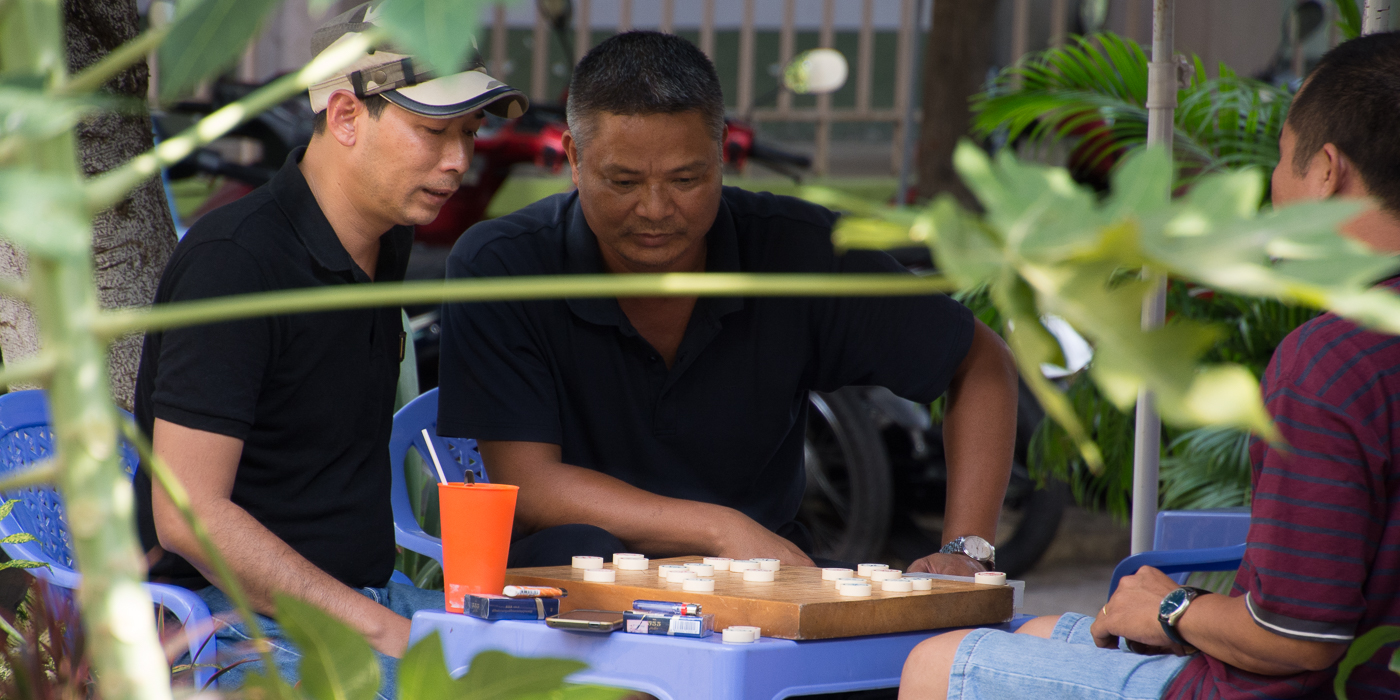
There are also lots of small, cosy cafés where locals spend hours drinking Vietnamese coffee and iced tea. These cafés are little meeting places for families, children and friends. We’ve found our favourite, too, where we enjoy our baguettes with Vietnamese iced coffee — strong coffee with milk and plenty of ice cubes.
We have also planned to do a little work during our stay in Ho Chi Minh City. Sarah quickly gets in touch with a local street-dog rescue organisation. One morning she joins an expat woman for a walk; the woman helps care for street dogs in cooperation with a local veterinary clinic. But the dog-rescue situation here is not quite the same as it was in Sri Lanka. For one thing, the street-dog problem doesn’t seem nearly as widespread. We do, however, see street vendors selling puppies kept in VERY small cages on the backs of their motorbikes. Christian tells us he has read that dogs are eaten, particularly in northern Vietnam. We’ll see that for ourselves when we travel north later on.
Naturally, Sarah also finds the nearest place where she might be able to spend some time around horses. Early one morning, we leave the apartment and explain to the taxi driver where we’d like to go. We’ve learned to use the GrabCar app, which connects passengers with private drivers and is considerably cheaper. It works much like Uber in Denmark. It can still be quite a challenge, though, when the driver doesn’t speak English.
After a couple of hours driving right across Ho Chi Minh City, we finally find ‘HCM City’s Pony Club’. Let’s make one thing clear from the outset, as a strong warning to others: this is not a place you would want to support. Supposedly it’s where expats send their children for riding lessons, but I seriously doubt that. There were around 20 ponies, all standing in stalls with concrete floors, without a single strand of straw, hay or anything similar. They had no access to water, and every one of them was extremely undernourished.
Despite how much Sarah has missed being around horses, our visit is very short indeed, and we leave after just ten minutes. So Sarah will have to wait until we reach Australia to satisfy her longing to ride.
Christian finally gets his business up and running again. A helpful contact at Stevns Municipality lends us a hand, and a very good friend makes it possible for us to have a new address in Denmark.
I have meetings with Danish educational institutions in Ho Chi Minh City, where I hear about some exciting and challenging educational activities here in Vietnam.
All three of us find some work to do, but after two weeks in the big city, we’ve had our fill and are longing to get out into green surroundings again. We buy return tickets to Phu Quoc Island.
Phu Quoc Island lies off Vietnam’s west coast, close to the Cambodian border. It’s about the size of Singapore and easy to explore. Our agenda for the stay is simple: beach, sand, sea and snorkelling. Apparently there are some excellent places to snorkel here — and dazzling white sandy beaches.
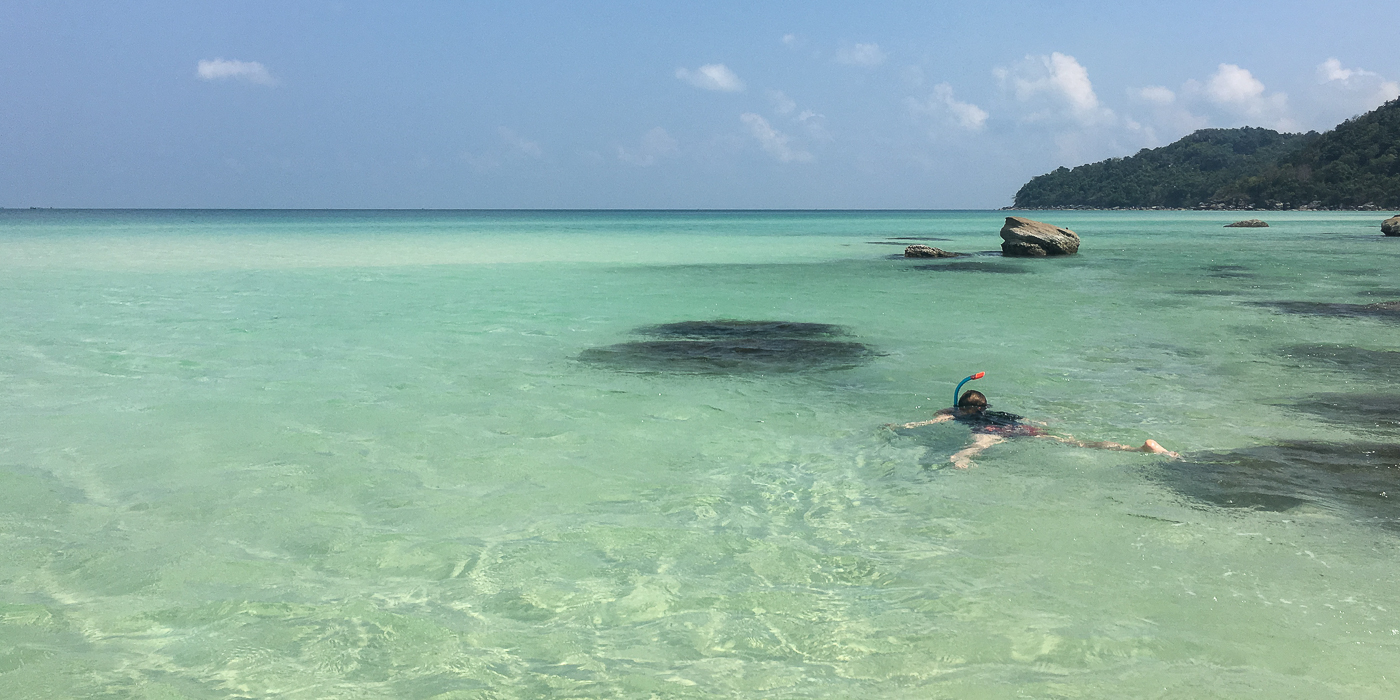
After our very first day trip around the island, we can only agree with the descriptions. We head for what is said to be the island’s best beach, Bao Sao. You always take grand claims about ‘the island’s best beach’ with a pinch of salt — everything is relative and subjective. But we’re pleasantly surprised. The sand is beautifully fine and white, but the best thing is the water. It’s incredibly clear, very calm, wonderfully warm and turquoise blue. It feels like stepping into a scene from the film The Blue Lagoon.
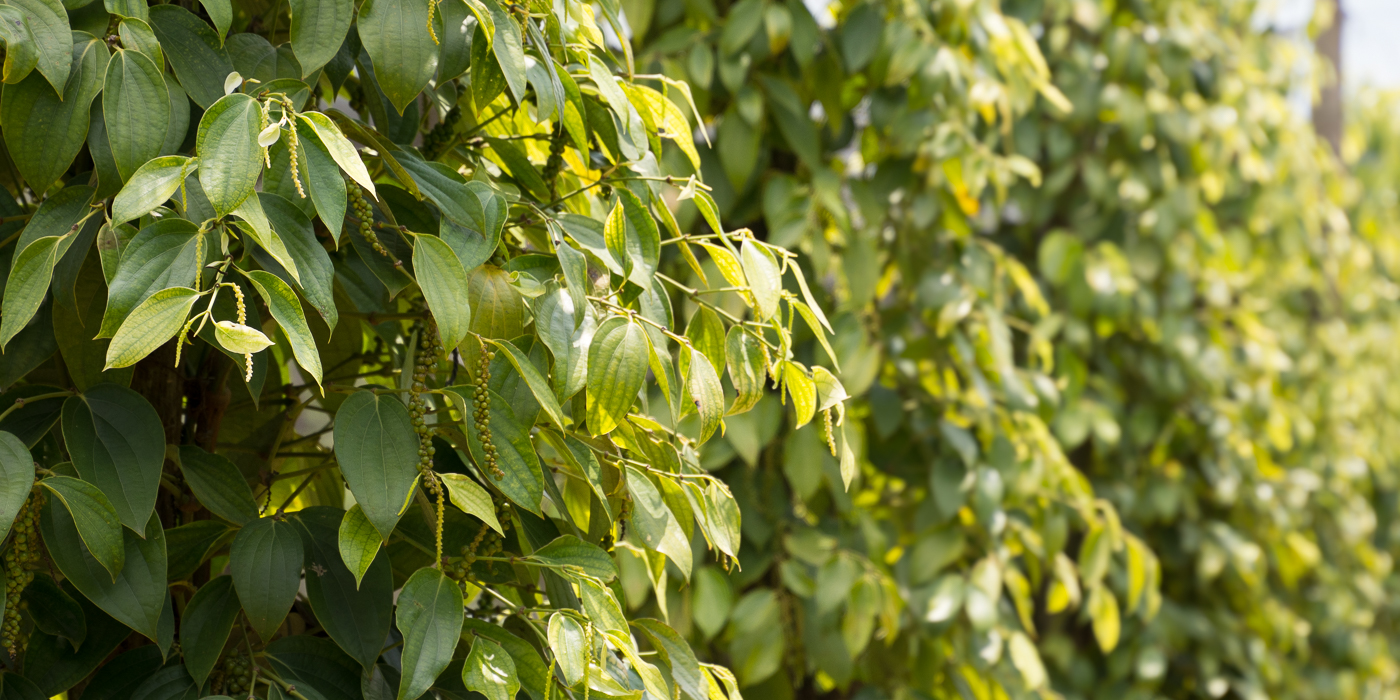
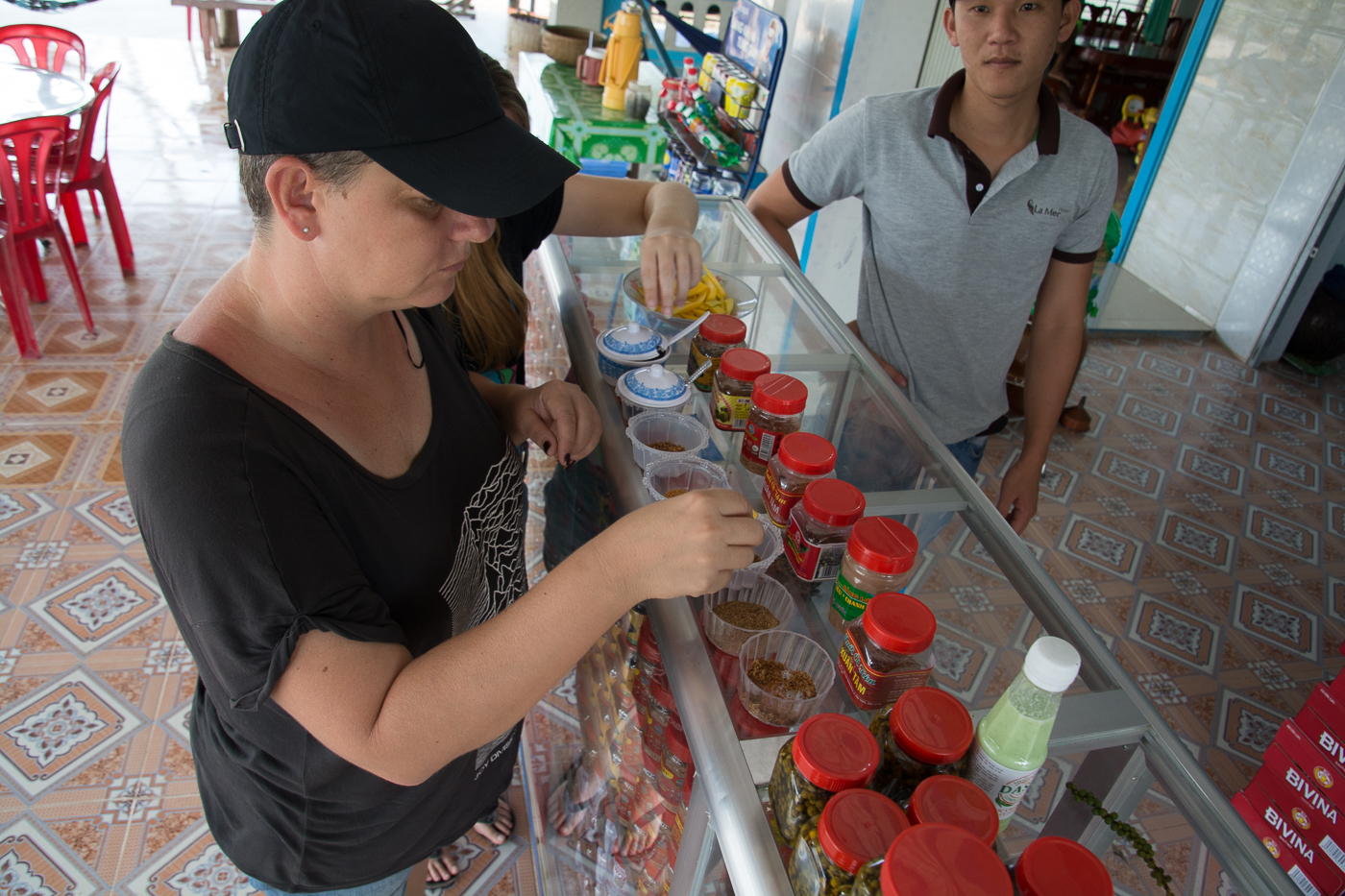
On our tour of the island, we visit two of its major industries: pepper and fish sauce. We’re shown how the pepper is picked and spread out to dry in the sun. We learn that white pepper is considered the best and most expensive. As if we were on a wine-tasting tour, our taste buds are introduced to mild, medium and strong pepper.
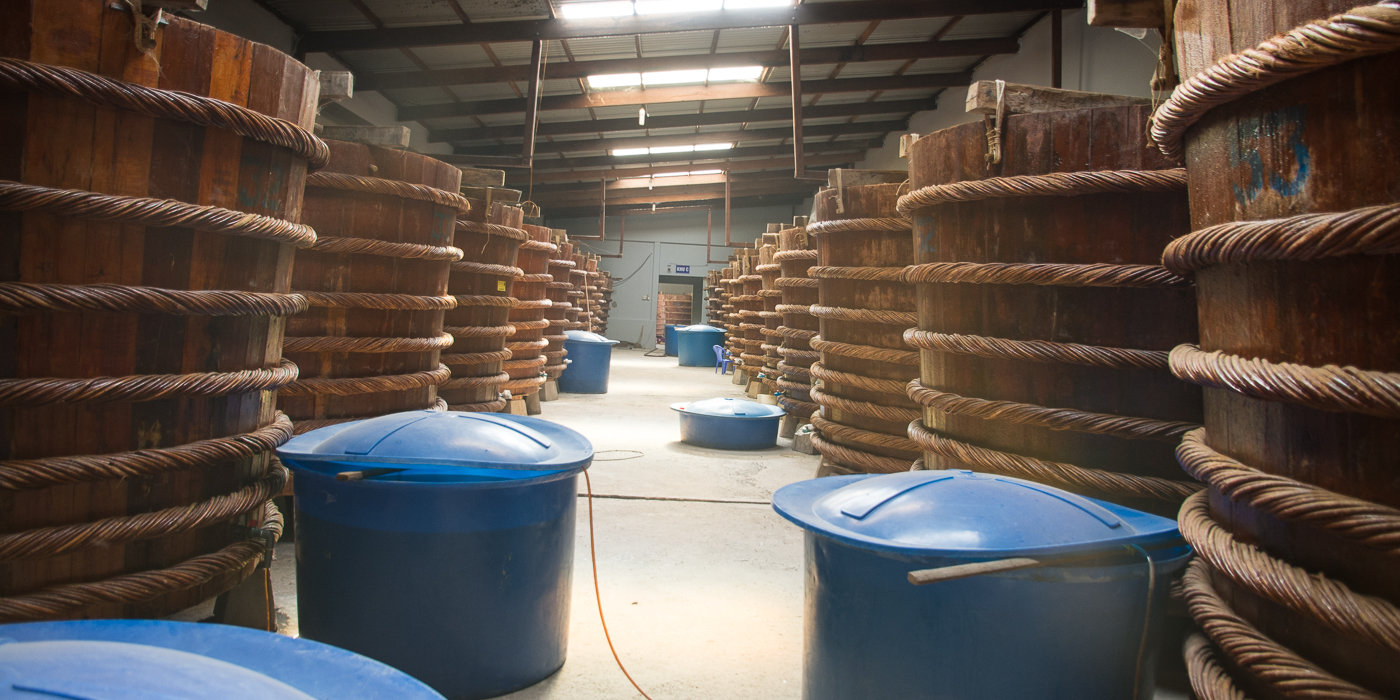
Fish sauce is made from dried anchovies from the surrounding sea and water, left together in large wooden barrels for a year. The smell is terrible, but it’s a fascinating place. Local people travel all the way from Hanoi to buy this particular fish sauce.
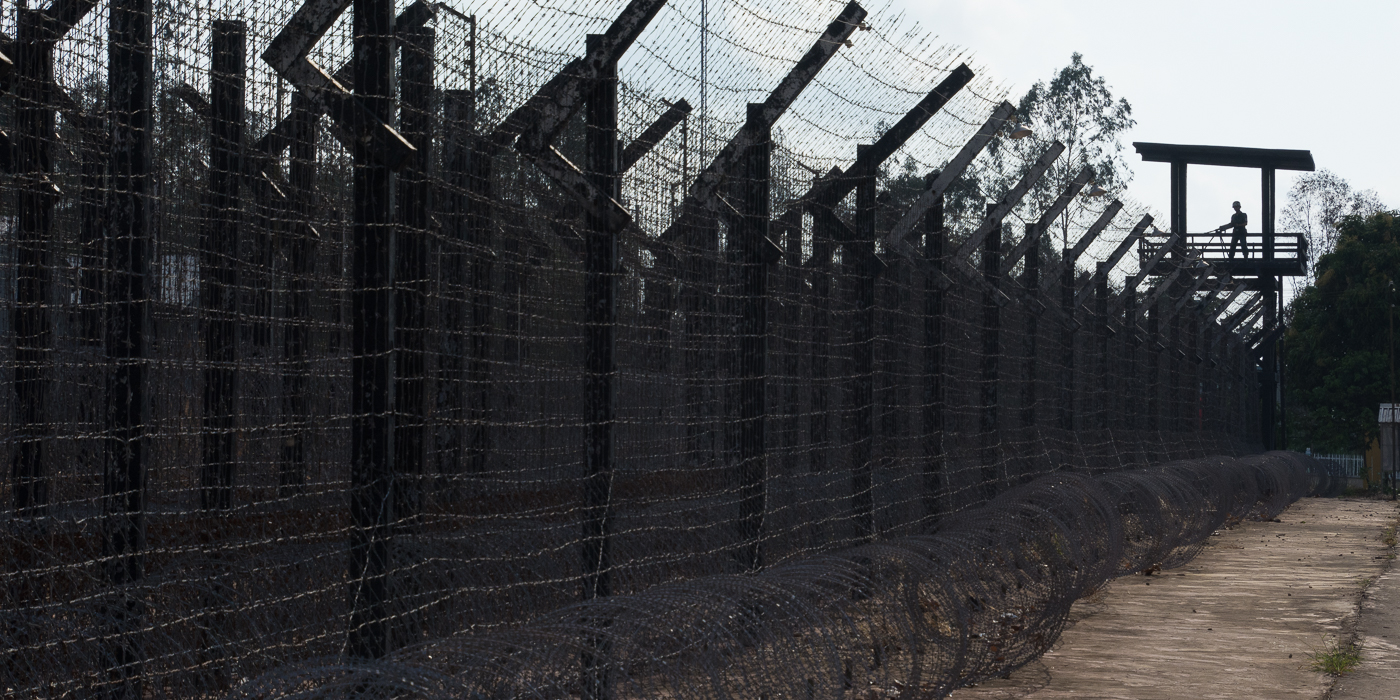
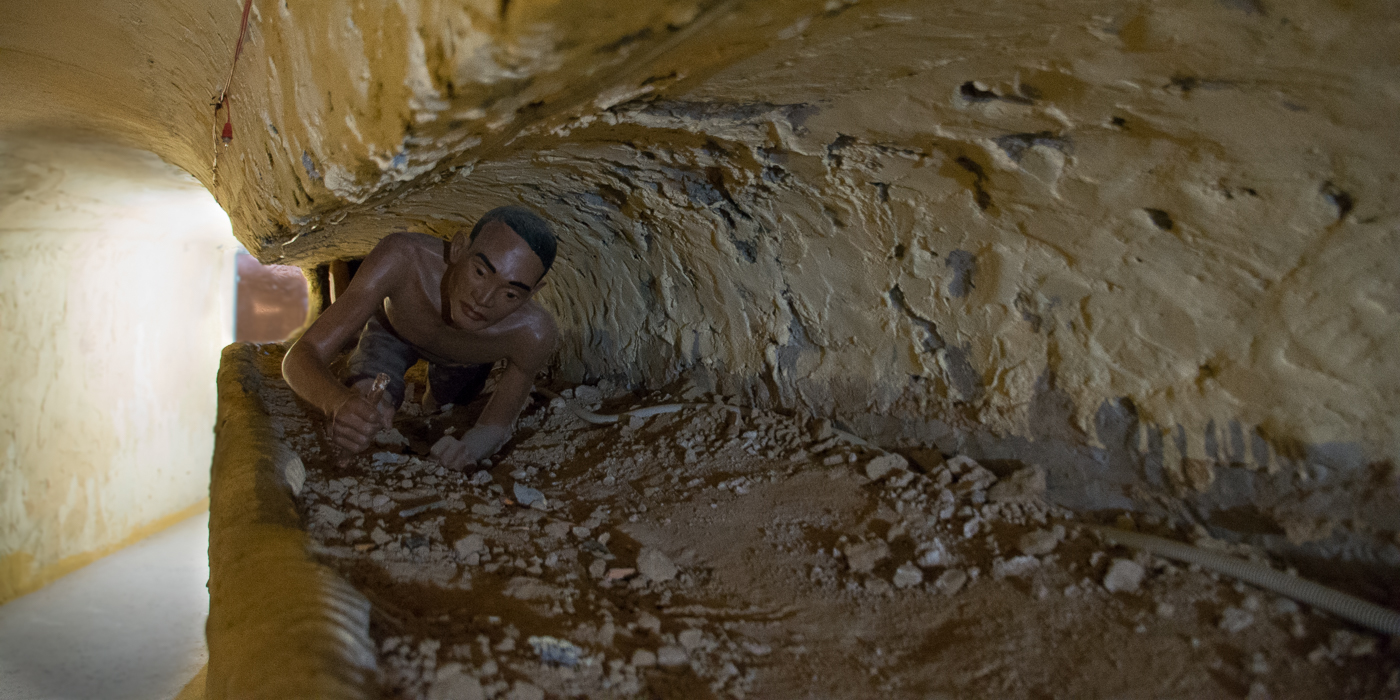
We visit ‘Coconut Prison’. The stark barracks and surrounding barbed wire tell barbaric stories of how the Americans tortured Vietnamese prisoners. There are small wire cages containing mannequins that show how prisoners lay inside them for days in the scorching heat. Inside the barracks are displays of different torture methods, from placing a living person in a large pot over a fire to beating people to death. There is also evidence of how prisoners dug a long tunnel and managed to escape. Our guide tells us there were seven escape attempts in all, five of which succeeded.
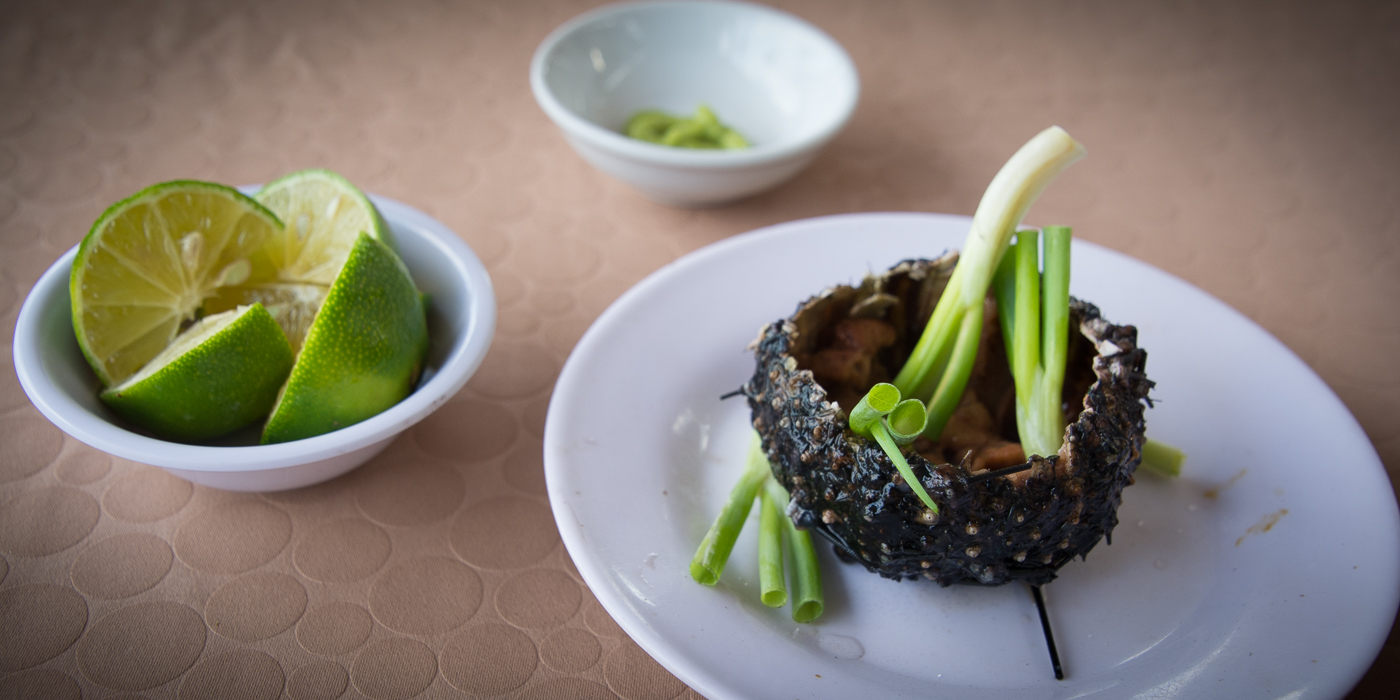
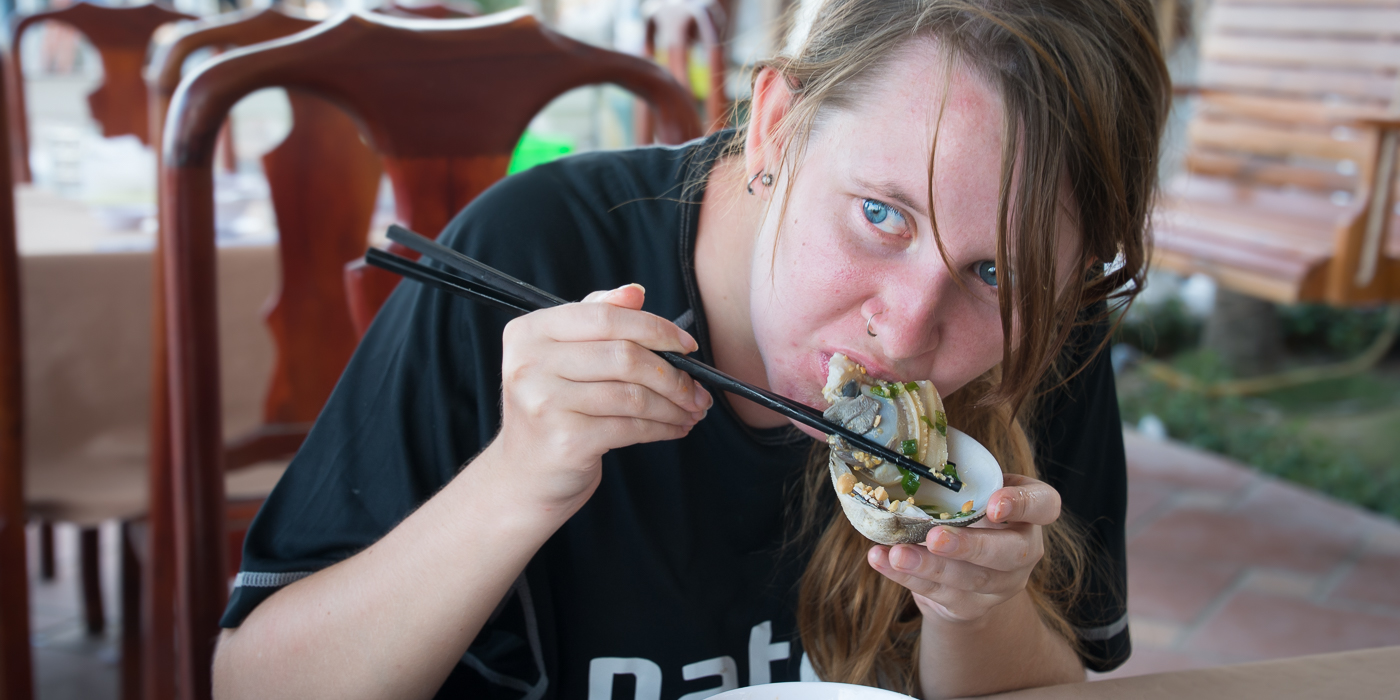
Our taste buds are certainly put to the test when our day trip ends at what is said to be the island’s best seafood restaurant. Large tanks contain all sorts of creatures from the sea: small reef sharks, sea snails of different sizes, sea urchins, shellfish of every size, prawns, crabs and seahorses. Christian and Sarah are determined to try a little of everything. We’re served black sea urchins, enormous shellfish that are far too chewy, something that looks like giant prawns but isn’t, and a mango salad with snails. It might sound delicious, and of course we all have different tastes, so there is something for everyone. For me, however, the result is my first upset stomach of the trip — not bad going after four months.
But there is another side to this beautiful natural environment when tourism gets out of hand. Major investors — including one of Vietnam’s biggest — have established an amusement park on the island. In true Jurassic Park style, they have tried to create a safari park with African and other exotic animals. But something went wrong a couple of weeks ago. As many as 1,700 animals have reportedly died and 500 escaped from the safari zoo. Or rather, there is considerable disagreement about how many animals have died from parasites, malnutrition and poor care. Those responsible do acknowledge that many animals have died and that a large number have escaped. This is also why the nearby national park is closed. Sometimes you have to wonder why humans insist on twisting Mother Nature out of shape, again and again.
We’re staying at La Casa Resort, a small, charming hotel just 800 metres from Ong Lang Beach, north of Duong Dong. It’s owned by the lovely Trinh Loan, who certainly knows how to look after her guests. There are only eight bungalows, but they’re already expanding, so in a year’s time they’ll be able to welcome more guests. That’s something we’ve noticed in several places on the island: everywhere, people are building and expanding, and the locals say there will soon be no land left.
For now, though, we’re enjoying being spoiled and the peace and quiet at La Casa Resort. A long list of tasks awaits us shortly. After ten days on the island, we’ll head back to Ho Chi Minh City. Sarah has an art assignment there: designing a logo and painting a wall for a school. I need to prepare for work at the Danish embassy, and Christian needs to look after his newly restarted business.
On 25 April, we’re flying to Hanoi, where we expect to stay for quite some time, both to take care of some work and to explore the area around the city.
But right now, I’m simply enjoying the view from my ‘Phu Quoc office’, where I’m writing this newsletter at a beach café overlooking the sea. The waves are slowly rolling onto a long, white sandy beach. I don’t think there’s much to complain about here.